• Comet ISON could become Comet of the Century

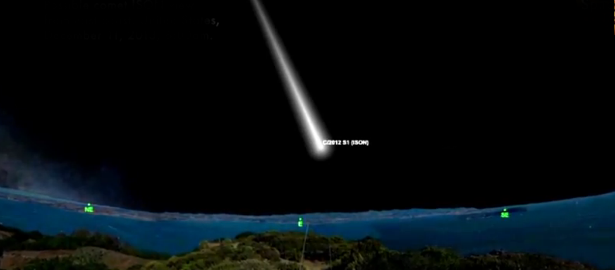
    NASA's  Scientific Visualization Studio released another excellent video of  Comet ISON (C/2012 S1). It is expected to become one of the most dazzling skywatching event while making a passage around the Sun later this year. Based on

  • Comet Pan-STARRS now visible on STEREO Behind imagery

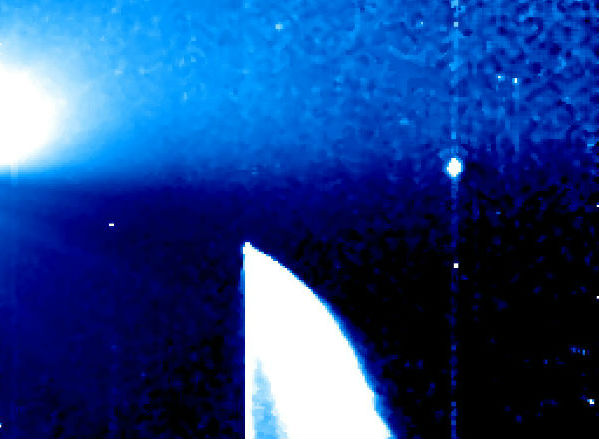
    Comet Pan-STARRS (C/2011 L4) passed inside the orbit of Mercury on March 10, 2013 reaching perihelion (its closet approach to the Sun). Now, it is visible object in the field of view of NASA's STEREO-B Heliospheric Imager.

    An animation of Comet

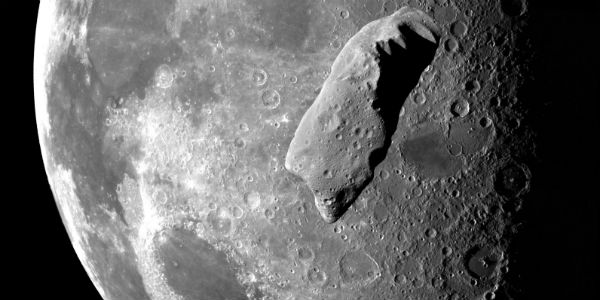
  • SciShow: 3 Ways to save Earth from an asteroid

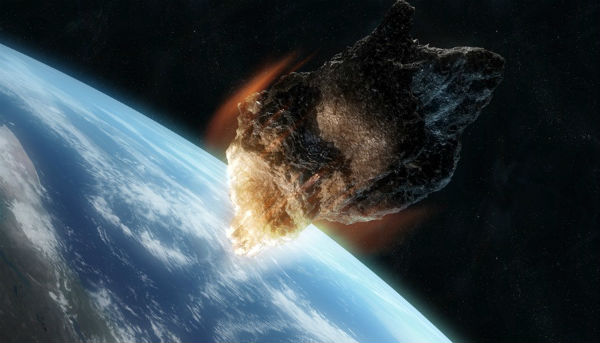
    Hank from SciShow gives us the skinny on three plans NASA scientists have come up with to save Earth from an asteroid impact. NEO/JPLIMPACTSource: SciShowFeatured image: Artist rendering asteroid (Credit:

  • Asteroid 2013 ET to make close approach on March 9, 2013

    A newly discovered Asteroid 2013 ET is making a close flyby, just days after another space rock made an even closer approach to our planet. The Catalina Sky Survey discovered Asteroid 2013 ET on March 3, 2013. and estimated its size at around 100 meters (64 meters…

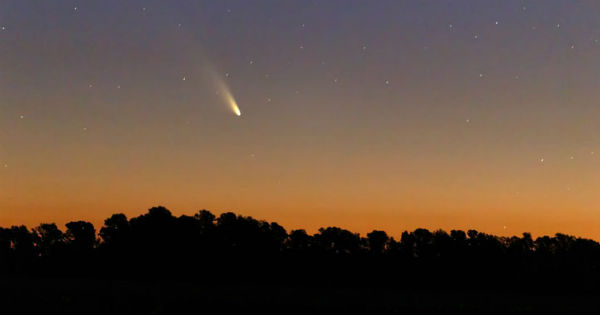
  • Comet Pan-STARRS (C/2011 L4) now visible with naked eye

    Comet Pan-STARRS has been brightening steadily for the past few months. By now Comet Pan-STARRS (C/2011 L4) became a naked-eye object while it makes its closest approach to the Sun, inside the orbit of Mercury. It is now closer to the Sun than Venus. At

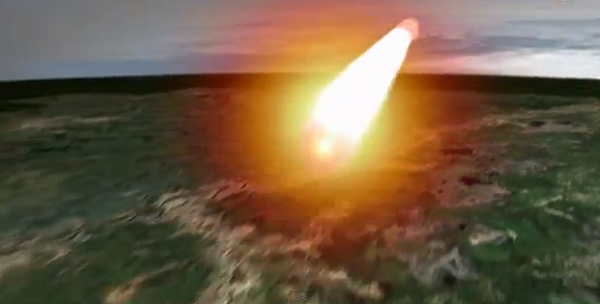
  • Asteroid 2012 DA14 sequence and Chelyabinsk meteor trajectory

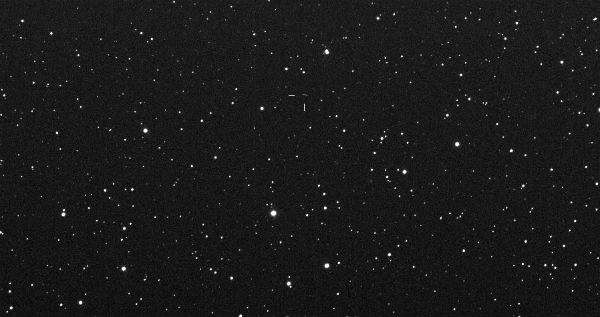
    This exceptional sequence made by the Virtual Telescope, shows asteroid 2012 DA14, soon after its close approach at about 27 500 km above the Earth surface. At the imaging time, it was moving at the amazing rate of 2450"/min (0.7deg/min). The robotic telescope…

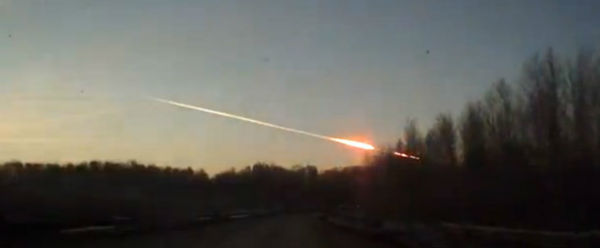
  • Chelyabinsk event – 20m wide asteroid explodes above Russia, damaging 3 000 buildings and injuring over 1 500 people

    A very bright flash was seen in the Chelyabinsk, Tyumen and Sverdlovsk regions, Russia’s Republic of Bashkiria, as well as in northern Kazakhstan, early morning local time on February 15, 2013. The flash was accompanied by a very loud explosion. Officials mention meteor shower and say that it began after a large meteorite disintegrated above the Urals mountain range and partially burned up in the lower atmosphere – resulting in fragments falling earthwards throughout the Chelyabinsk region.