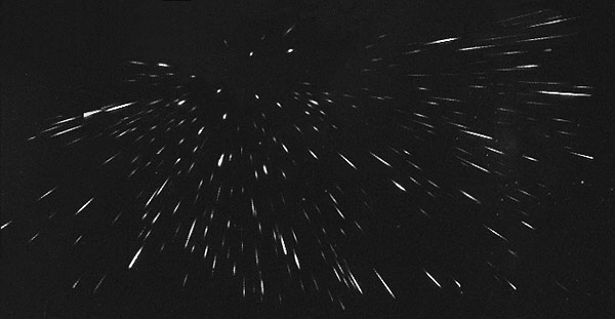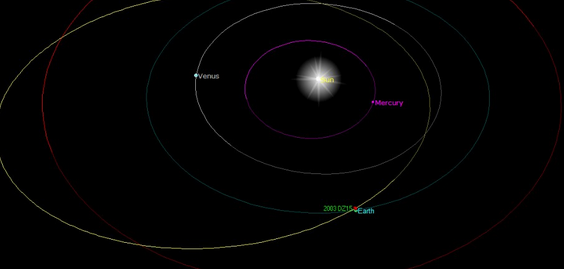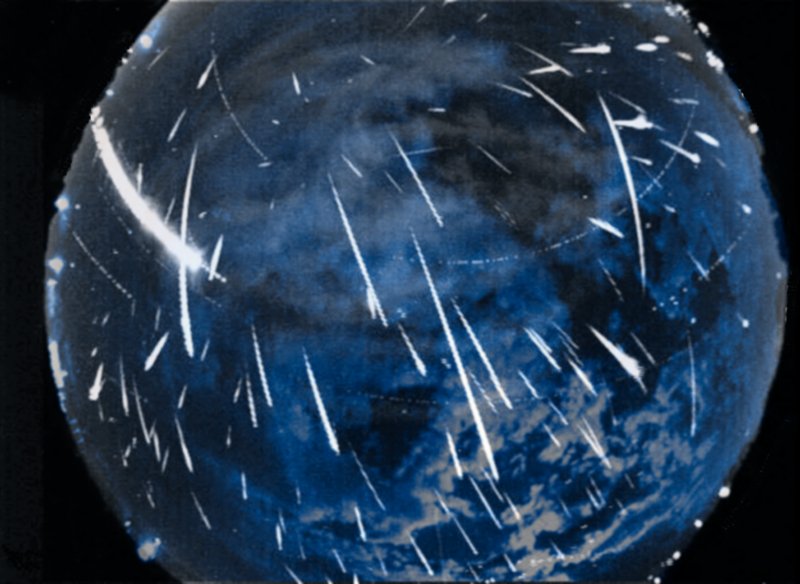
• 2013 Delta Aquarid meteor shower to peak on July 30

    The Delta Aquariids are another strong shower best seen from the southern tropics. North of the equator the radiant is located lower in the southern sky and therefore rates are less than seen from further south. These meteors produce good rates for a week centered on

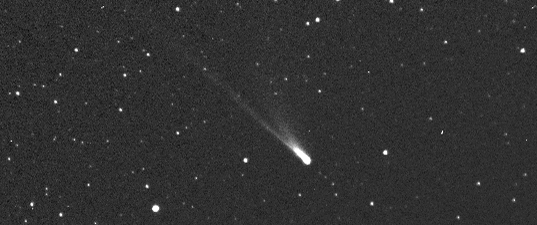
  • Comet ISON spews out dust and carbon dioxide-like gas

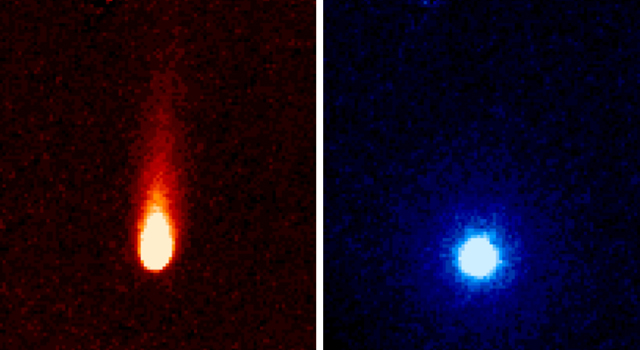
    Spitzer Space Telescope observed Comet ISON for 24 hours period on June 13, 2013. Its processed imagery indicate that carbon dioxide and dust are spewing out of the comet at high rate. At the time, Comet ISON was about 312 million miles (502 million

  • Will Comet ISON slam into Earth?

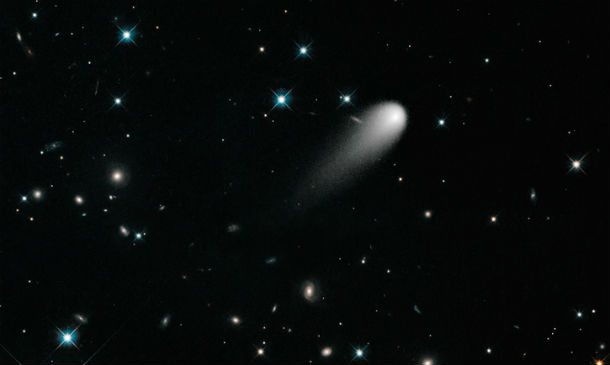
    Fear not! Comet ISON will not slam into Earth. Comet C/2012 S1 (ISON) will make its closest approach to Earth on December 26, 2013 at a safe distance of 63 million km from Earth. Watch the video bellow by VideosFromSpace explaining some comet basics and some

  • Delta Aquarid meteor shower peaks late July 2013

    The Delta Aquarid meteor shower begins annually roughly from July 12 and is active up to August 23. The shower can be seen all over the planet, however it is best observed from the Southern Hemisphere and southern latitudes of the Northern Hemisphere.

    The

  • The 2013 Gamma Delphinid meteor shower overview

    The expected outburst of the elusive Gamma Delphinid meteor shower predicted for June 11, 2013 sadly didn`t occur. This doesn`t mean that there were no meteors, but the meteor rate was lower than normal, as our planet passed through a part of space where the cometary

  • New comet discovered – C/2013 L2 (Catalina)

    New discovery of an apparently asteroidal object with cometary features was announced on June 9, 2013 (CBET 3548). New comet (discovery magnitude ~19.6) was found by R. A. Kowalski on CCD images obtained with the Catalina Sky Survey 0.68-m Schmidt telescope

  • Don't miss the Arietids – daylight meteor shower!

    Thousands of meteors streak across the sky every year in early June. Sun above the horizon makes most of the shower activity invisible at it most intense period. These daylight meteors are called the Arietids. Arietid meteor shower is in fact one of the

  • Expected return of the Gamma Delphinid meteor shower on June 11, 2013

    In early June 2013 we may witness the return of the gamma Delphinids, a rather elusive meteor shower. Three observers from American Meteor Society noticed a short-lived meteor outburst from unknown source on June 11, 1930. Only a few meteors from this shower

  • Approaching Asteroid 1998 QE2 has its own moon

    On May 31, 2013 at 20:59 UTC, the 2.7 km wide Asteroid 1998 QE2 will make its closest approach to Earth at 5.8 million kilometers (3.6 million miles). This will be the closest it gets to Earth for at least the next two