• One dead and child missing as Storm Leonardo floods southern Spain and Portugal

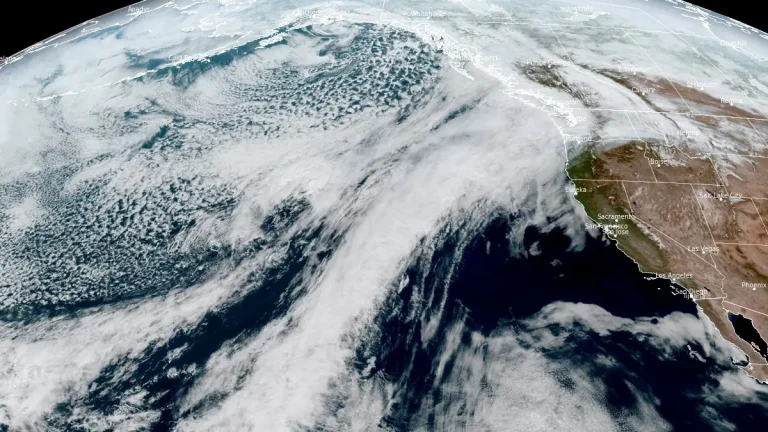
    Flooding caused by Storm Leonardo left one person dead in Portugal and a child missing in southern Spain between Tuesday and early Thursday, February 3–5, 2026, as exceptional rainfall inundated towns across the Iberian Peninsula. Emergency services carried out evacuations and search operations as river levels rose rapidly.

  • Tropical Storm Penha (Basyang) expected to make multiple landfalls over Mindanao and Visayas, Philippines

    Tropical Storm Basyang is forecast to make multiple landfalls across the southern and central Philippines, beginning with Surigao del Sur late February 5 or early February 6, 2026. The system is forecast to cross Mindanao and may pass close to or make landfall over Siquijor and southern Negros Oriental before moving toward Palawan.

  • Impulsive X4.2 solar flare erupts from geoeffective Active Region 4366

    An impulsive X4.2 solar flare erupted from geoeffective Active Region 4366 at 12:13 UTC on February 4, 2026. The flare originated from a magnetically complex beta-gamma-delta region that produced dozens of M- and 5 other X-class flares since February 1. Its location near the central solar disk raises the possibility of Earth-directed coronal mass ejections (CMEs) this week.

  • Major X8.1 solar flare erupts from AR 4366 following explosive growth

    A major X8.1 solar flare erupted from Active Region 4366 at 23:57 UTC on February 1, 2026, following rapid magnetic expansion and intense flaring throughout the day. The region also produced an X1.0 flare at 12:33 UTC on February 1 and an X2.8 event at 00:36 UTC and an X1.6 at 08:14 UTC on February 2, accompanied by more than 20 M-class flares since 02:00 UTC on February 1.

  • Major X1.0 flare erupts from Region 4366, Earth-directed CMEs possible in days ahead

    A major X1.0 solar flare erupted at 12:33 UTC on February 1, 2026, from Active Region 4366, following a sequence of strong M-class flares earlier in the day, including M6.6 and M6.7 flares within two hours. The event started at 11:52 and ended at 12:38 UTC. With the region now rotating toward the center of the solar disk and maintaining a complex beta-gamma-delta magnetic configuration, conditions are favorable for Earth-directed CMEs in the days ahead.

  • NWS increases confidence in heavy snow across the Carolinas and southern Virginia as Arctic air deepens

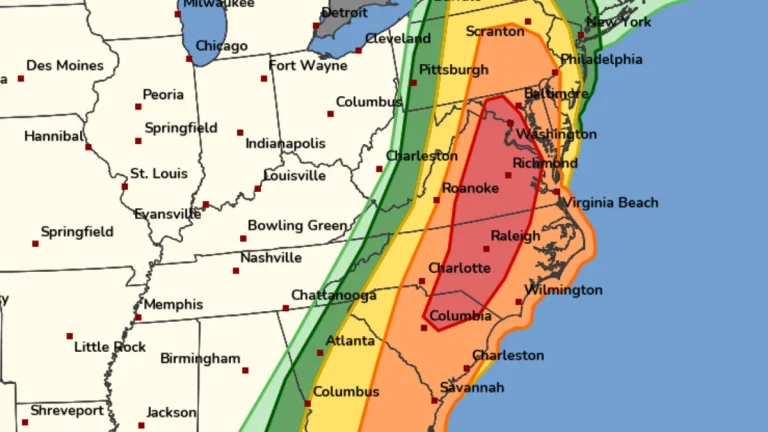
    A surge of Arctic air will spread across the central and eastern United States from Friday, January 30, 2026, bringing the longest duration of cold in several decades to parts of the region. Forecast confidence has increased for a winter storm to develop along the East Coast over the weekend, with the highest likelihood of heavy snowfall across the Carolinas and southern Virginia, and gusty coastal winds extending into the Mid-Atlantic.

  • Significant coastal storm forecast to impact East Coast this weekend

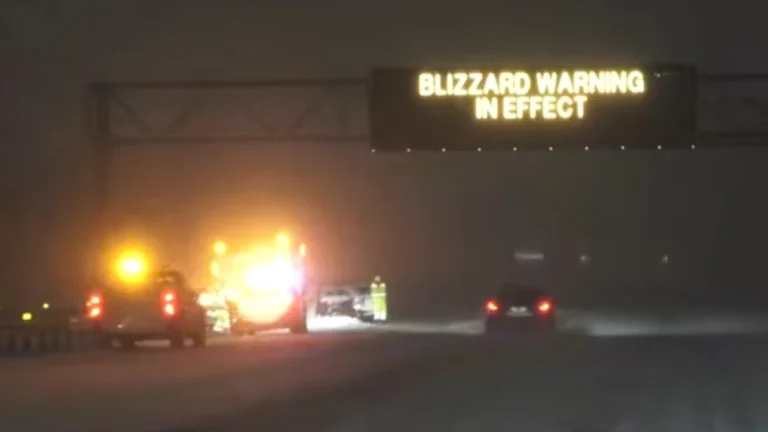
    A powerful coastal storm is forecast to affect parts of the eastern United States over the coming weekend. The system is forecast to develop off the Southeast Coast on Saturday, January 31, 2026, and track northeastward through Sunday, February 1, bringing the potential for heavy snow, gusty winds, and hazardous travel conditions across portions of the Mid-Atlantic and New England.