
Severe flash flooding disrupts Riyadh and eastern Saudi Arabia, prompting widespread school closures
Torrential storms swept across much of Saudi Arabia between April 11 and April 13, 2026, flooding roads, disrupting traffic, and forcing schools and universities to shift to remote learning in multiple regions.

Floods in Riyadh, Saudi Arabia on April 11, 2026. Credit: sz7sz
Torrential storms affected large parts of Saudi Arabia between April 11 and April 13, bringing heavy rain, flash flooding, hail, and strong winds that disrupted transport and forced schools and universities to suspend in-person classes across multiple regions.
Capital Riyadh and Al Ahsa were among the most visibly affected areas, while flood warnings remained active across much of the Kingdom into Tuesday, April 14.
According to the National Center for Meteorology (NCM), Abhia Airport station in the Asir region recorded 65.6 mm (2.58 inches) of rainfall — the highest total for this storm, followed by 42.2 mm (1.66 inches) at King Khalid Reserve in Riyadh. 20.6 mm (0.81 inches) were reported in the Al-Qadisiyah district of Dammam in the Eastern Province, while Al-Darb in Jazan saw 11.2 mm (0.44 inches).
Flooding was reported on major roads and low-lying corridors in Riyadh, where heavy rain caused widespread standing water and traffic disruption. The Saudi Red Crescent Authority said it deployed 143 ambulances and 25 rapid response teams to support flood-related incidents in Riyadh.
Education authorities in several regions suspended classroom teaching and shifted students to the Madrasati remote learning platform as conditions deteriorated.
Closures were confirmed in parts of the Eastern Province, Asir, and Al Baha. Al Baha University, King Khalid University, and King Saud bin Abdulaziz University for Health Sciences also moved to online learning in affected campuses.
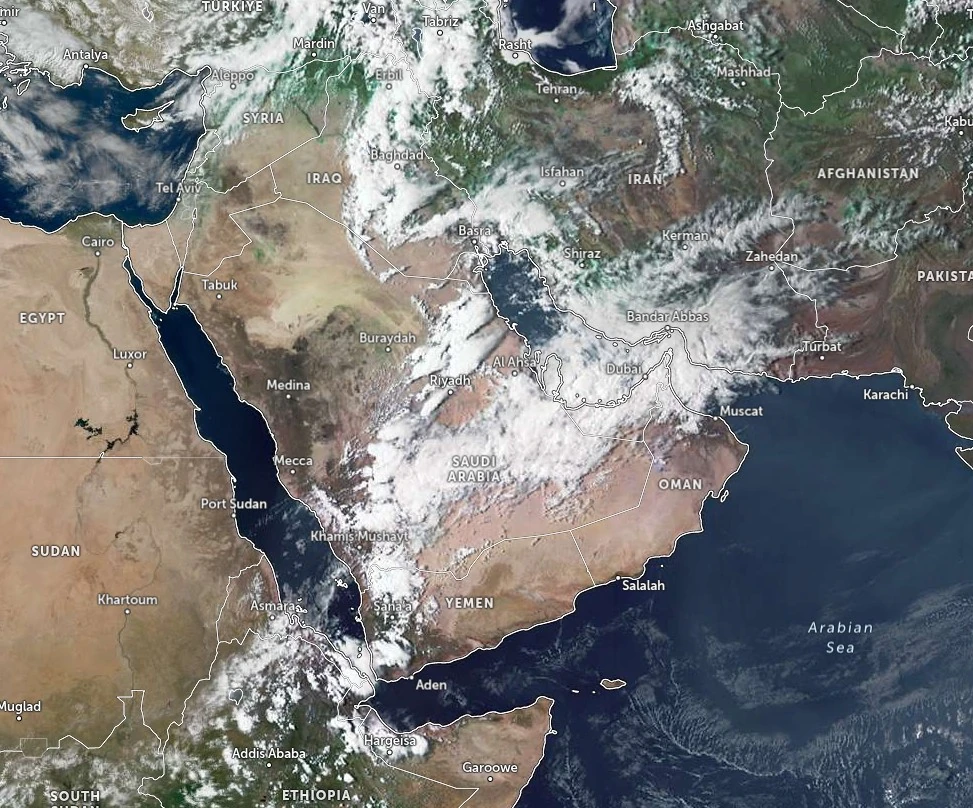
Further unsettled weather remains possible on Tuesday, April 14, with thunderstorms and local flash flooding still possible in parts of the Kingdom.
Flood risk could remain elevated in low-lying areas and active wadi systems even after rainfall eases because runoff can continue after the heaviest rain has ended.
References:
1 Schools shift online across Saudi Arabia due to heavy rainfall – Gulf News – April 12, 2026
2 Asir sees 65.6mm of rain as NCM monitors Kingdom-wide activity – Saudi Gazette – April 12, 2026

I'm a dedicated researcher, journalist, and editor at The Watchers. With over 20 years of experience in the media industry, I specialize in hard science news, focusing on extreme weather, seismic and volcanic activity, space weather, and astronomy, including near-Earth objects and planetary defense strategies. You can reach me at teo /at/ watchers.news.

Commenting rules and guidelines
We value the thoughts and opinions of our readers and welcome healthy discussions on our website. In order to maintain a respectful and positive community, we ask that all commenters follow these rules.