
Major winter storm forecast to impact central and eastern United States this weekend
A major winter storm is forecast to sweep across much of the central and eastern United States between January 23 and 25, 2026, with a mix of snow, sleet, and ice likely from Texas and the Mid-South to the Northeast. Dangerous travel and freezing rain are expected in several regions as the system intensifies through the weekend.
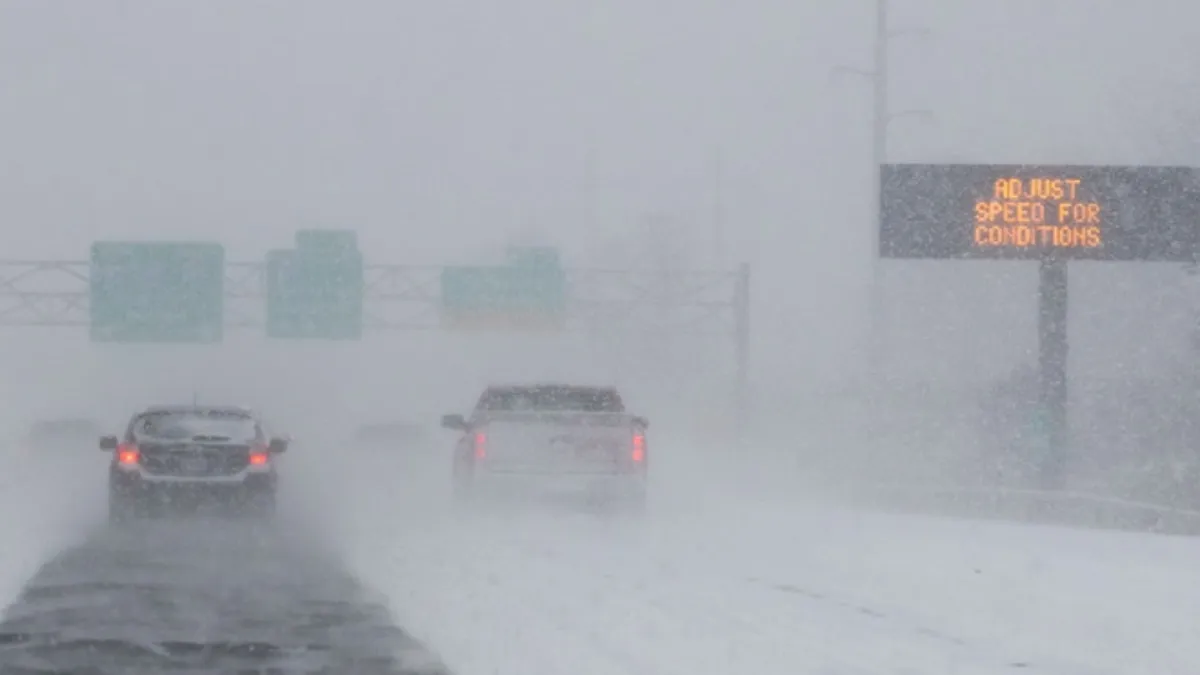
Image credit: NYSDOT
A major winter storm is forecast to develop over the southern and central United States late this week and strengthen as it tracks eastward between January 23 and 25.
A broad low-pressure system will organize over the southern Plains late in the week, drawing Gulf moisture northward into colder continental air.
The system will move northeastward along a frontal boundary toward the Atlantic Coast by January 24, maintaining a wide zone of wintry precipitation. Snow, sleet, and freezing rain are all forecast across the region.
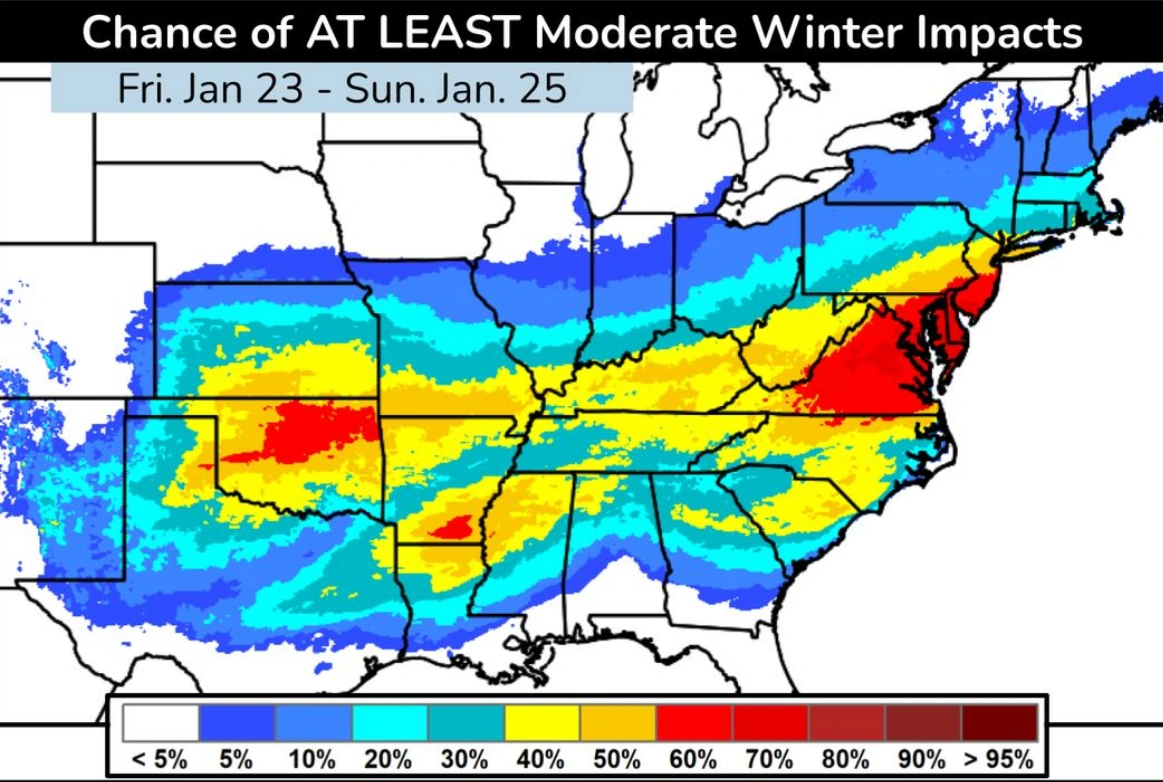
The storm is forecast to bring a combination of heavy snow, sleet, and dangerous ice accumulation to wide areas from the Southern Plains through the Ohio Valley and into the Mid-Atlantic and Northeast, according to the Weather prediction Center (WPC).
Forecast models suggest that cold Arctic air will meet moist subtropical flow from the Gulf of Mexico, producing a corridor of mixed precipitation, including freezing rain and sleet, across parts of Texas, Arkansas, Tennessee, and Kentucky before expanding eastward.
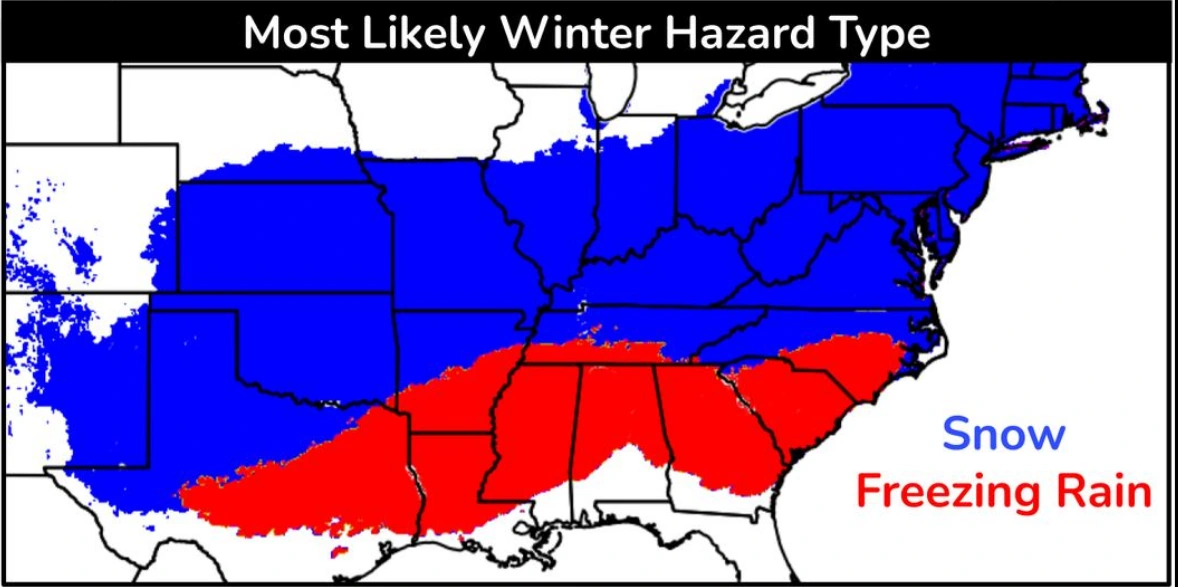
Travel disruptions are to be expected as subfreezing temperatures spread across multiple states. Even light ice coatings could lead to power outages and tree damage, particularly in areas where soils and ground temperatures remain cold following recent Arctic outbreaks.
While forecast confidence for the storm has increased, the exact placement of the heaviest snow and ice remains uncertain and will depend on small shifts in the storm’s track in the coming days.

Rishav Kothari is Editor-in-Chief of The Watchers, where he runs the newsroom and covers earthquakes, volcanoes, severe weather and space weather.
Published in the last 24 hours
- In September 1859, a solar storm lit up the night sky so brightly that gold miners in the Rocky Mountains woke up after midnight and started cooking breakfast, convinced the aurora glowing over their camp was the sunrise Epicenter
- A patch of warm Pacific water that could become the strongest El Niño in more than 70 years sits thousands of miles from any American town, yet it is already the main reason NOAA expects a wetter winter across the South and a milder one across the North
