
Fine ash emissions and increased tremor at Planchón-Peteroa, Chile–Argentina
The Argentine Geological and Mining Service (SEGEMAR) reported increased surface activity at the Planchón-Peteroa volcanic complex starting at 01:00 LT (04:00 UTC) on October 3, 2025, including emissions of fine volcanic ash rising up to 250 m (820 feet) above the crater. The technical alert remains at Yellow, with continued binational monitoring by SEGEMAR and Chile’s National Geology and Mining Service (SERNAGEOMIN).
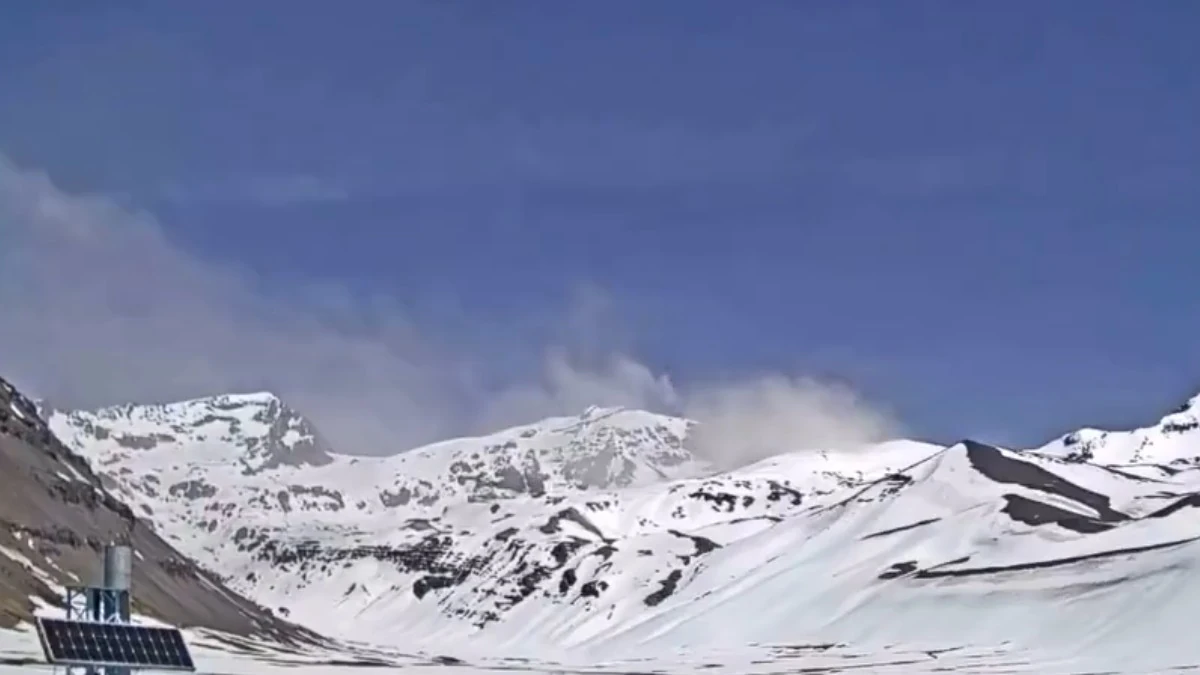
Planchón-Peteroa volcano on October 3, 2025. Credit: SEGEMAR
The Argentine Geological and Mining Service (SEGEMAR), through its Argentine Volcanic Surveillance Observatory (OAVV), reported a notable increase in volcanic activity at the Planchón-Peteroa complex at 01:00 LT (04:00 UTC) on October 3.
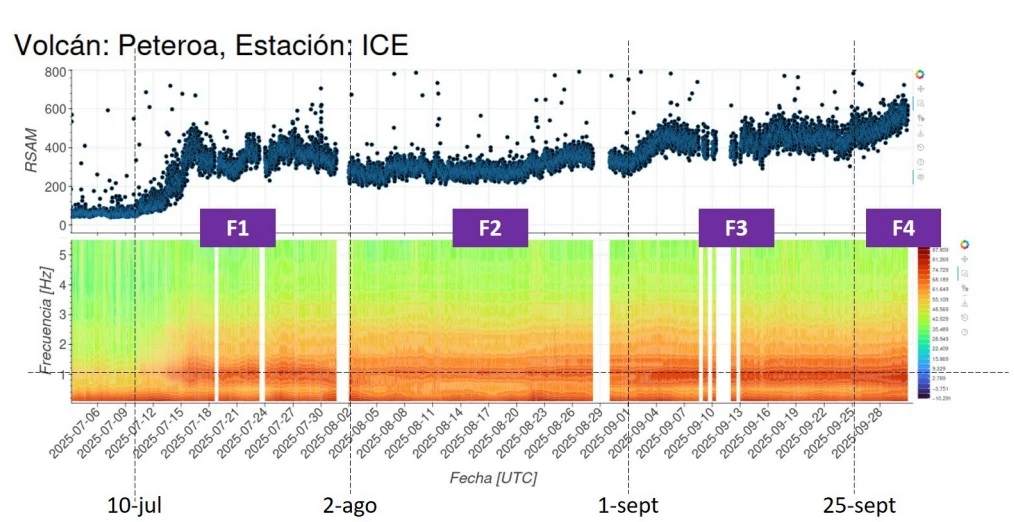
Monitoring stations detected fine ash emissions rising up to 250 m (820 feet) above the crater, dispersing primarily toward the southeast (SE). The agency noted transient increases in seismic tremor amplitude (RSAM) and a decrease in dominant frequency, parameters typically associated with enhanced gas pressure and fluid movement within the conduit system.
According to SEGEMAR, the tremor signal has shown four distinct activity phases since July 2025, reflecting a progressive rise in internal energy and degassing. The number and magnitude of volcano-tectonic (VT) events remain largely stable compared to previous reports.
Between September 21 and October 2, six sulfur dioxide (SO2) degassing events were detected by TROPOMI imagery, with plumes reaching up to 100 km (62 miles) from the crater, mainly toward the south-southeast (SSE). The September 30 emission had an estimated SO2 flux of 530 t/day.
3 Ekim 2025 Şili
— Hermes (@hermesisos) October 4, 2025
Planchón Peteroa Yanardağı pic.twitter.com/c2wfAdDBsY
Optical and thermal imagery from Sentinel-2 and Planet platforms confirmed persistent gas and steam emission from crater 3, along with a reduction in the surface area of the inner crater lake, corroborated during an aerial survey on September 30. The MIROVA system reported a relative decline in thermal anomalies compared to the preceding monitoring period.
SEGEMAR’s assessment attributes the current activity to increased hydrothermal dynamics, driven by gas accumulation and fluid interaction within the upper conduit. The agency cautions that minor explosive events and low ash columns remain possible, though no significant escalation has been observed so far.
The technical alert level remains Yellow, corresponding to a phase of instability and increased surveillance. Continuous binational coordination with Chile’s Observatorio Volcanológico de los Andes del Sur (OVDAS) and SERNAGEOMIN remains active under the 2013–2016 cooperation framework.
The Planchón-Peteroa volcanic complex, straddling the border between Maule Region (Chile) and Mendoza Province (Argentina), reaches approximately 4 100 m (13 450 feet) a.s.l. and last exhibited eruptive activity in 2018–2019 (VEI 2), characterized by phreatic and phreatomagmatic explosions with moderate ash emissions.
References:
1 Reporte Especial de Actividad Volcanica – Planchón-Peteroa – October 3, 2025

I'm a dedicated researcher, journalist, and editor at The Watchers. With over 20 years of experience in the media industry, I specialize in hard science news, focusing on extreme weather, seismic and volcanic activity, space weather, and astronomy, including near-Earth objects and planetary defense strategies. You can reach me at teo /at/ watchers.news.

Commenting rules and guidelines
We value the thoughts and opinions of our readers and welcome healthy discussions on our website. In order to maintain a respectful and positive community, we ask that all commenters follow these rules.