
Fumarole temperatures and gas fluxes rise at Vulcano volcano, Italy
Carbon dioxide fluxes at Vulcano volcano, Aeolian Islands, Italy, sharply increased in August 2025, reaching more than 40 000 g/m²/day on August 18, before stabilizing around 30 000 g/m²/day.

The Vulcano Volcano. Credit: Brisk G
A marked increase of volcanic gas emissions and fumarole temperatures was observed at Vulcano volcano, Aeolian Islands, during August 2025, according to INGV’s Catania and Palermo sections.
Carbon dioxide fluxes from the crater area rose abruptly starting on August 1. Values exceeded 40 000 g/m²/day on August 18 before decreasing slightly to around 30 000 g/m²/day at the end of the month.
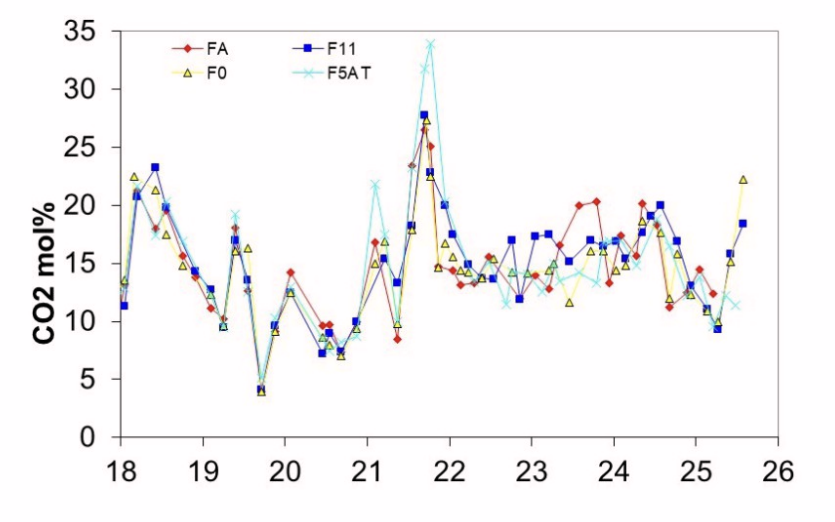
Sulfure dioxide fluxes also rose gradually, reaching medium–high levels compared to the background value of ~22 t/day. Gas samples taken on August 6 showed fumarolic carbox dioxide concentrations of 18–22 mol%, comparable to those measured in summer 2024 (17–20 mol%).
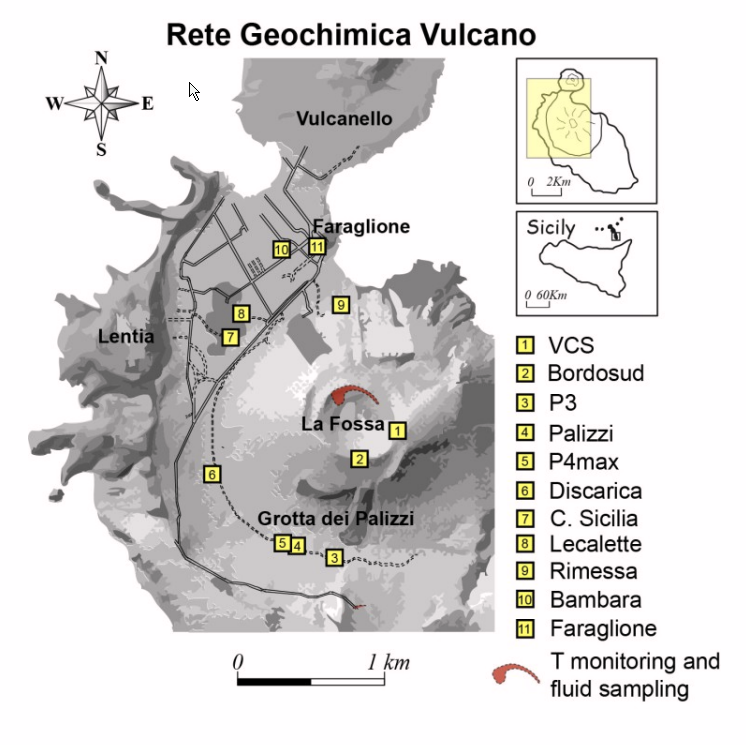
Temperatures of crater rim fumaroles reached 291°C (556°F), with the strongest increase between August 1 and 4 at a rate of about 15°C (27°F) per day. Soil degassing at the base of La Fossa cone and in the Vulcano Porto area also increased toward the end of August, especially at Rimessa and Camping Sicilia monitoring sites.
Thermal aquifers reflected changes in the system. At Camping Sicilia, water temperatures rose by about 2°C (3.6°F) in the second half of August, while the Bambara well recorded a slight rise in water table levels.

Local microseismicity increased significantly in early August, with the highest frequency between August 6 and 8, linked to hydrothermal fluid movements.
Activity decreased in the second half of the month but remained higher than levels recorded before August. Regional tectonic seismicity was low, with only one Ml 1.1 earthquake detected at 09:59 UTC on August 14, about 9 km (5.6 miles) southwest of the island at a depth of 5 km (3.1 miles).
GNSS measurements indicated an areal variation increase of about 5 ppm in the IVCR–IVLT–IVUG triangle. No significant tilt variations were detected at the SLT station. Gravimetric observations did not show relevant medium–long term changes.
INGV concluded that Vulcano remains in quiescence with no eruptive activity. However, hazards persist due to toxic gas accumulation, mainly carbon dioxide and hydrogen sulfide, in fumarolic zones, coastal emission sites, and low-lying or enclosed areas.
References:
1 Vulcano bollettino mensile mese di riferimento agosto 2025 – INGV – September 7, 2025

I am an Assistant Editor and Severe Weather & Science Journalist at The Watchers, specializing in real-time severe weather coverage, geophysical event reporting, and research-driven scientific analysis. You can reach me at rishav(at)watchers(.)news.

Commenting rules and guidelines
We value the thoughts and opinions of our readers and welcome healthy discussions on our website. In order to maintain a respectful and positive community, we ask that all commenters follow these rules.