
Oklahoma wildfires kill 4, injure 142, and destroy hundreds of homes
Severe wildfires fueled by high winds and dry conditions burned across Oklahoma in mid-March 2025, destroying over 400 homes and scorching more than 68 800 ha (170 000 acres) of land. The fires, which began intensifying on March 14, have killed at least four people and injured 142, prompting Governor Kevin Stitt to declare a state of emergency across 12 counties.
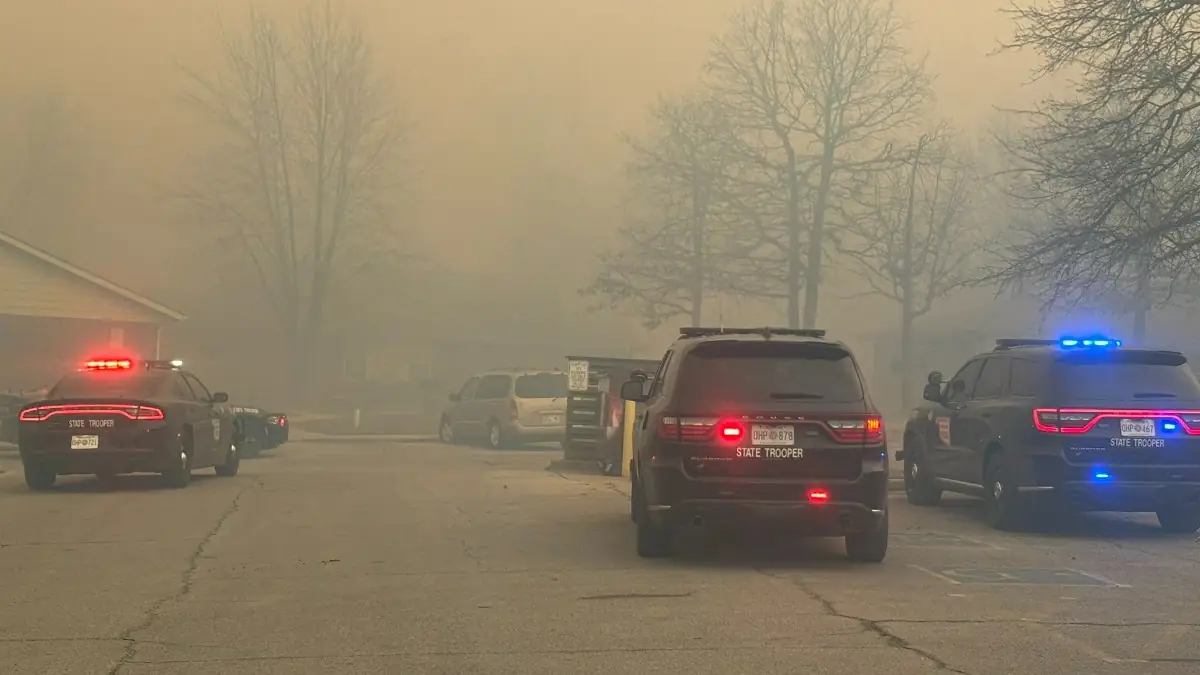
Image credit: OK Highway Patrol/DPS
By March 15, authorities had reported 130 active fires across 44 counties, with communities including Stillwater, Mannford, and Norman among the hardest hit.
The destruction includes at least 300 structures lost, with estimates suggesting that the number of damaged or destroyed homes could exceed 400. Governor Stitt’s own farmhouse near Luther was among the properties consumed by the fires.
The Oklahoma Department of Emergency Management is assessing damages and has urged residents to report losses through damage.ok.gov. The financial impact remains uncertain, but previous wildfires in the region have caused millions of dollars in damage, particularly in agricultural areas reliant on land and livestock.
As of March 17, at least four people have died. The first confirmed fatality occurred in a vehicle accident caused by low visibility from smoke. Additional deaths have been reported in Lincoln, Garfield, Haskell, and Pawnee counties. Authorities continue to investigate the circumstances of each incident.
The Oklahoma State Department of Health reported 112 fire-related injuries by March 15, a number that has since risen to 142. Victims have been treated for burns, smoke inhalation, and other injuries. The American Red Cross and local relief agencies are assisting affected residents with shelters, meals, and medical support.
The wildfires were driven by extreme weather conditions on March 14, when sustained winds of 96–113 km/h (60–70 mph) and gusts up to 134 km/h (83 mph) in Frederick, Oklahoma, spread flames rapidly. Low humidity and dry vegetation created conditions for fast-moving fires, with officials issuing red flag warnings for high fire risk through March 18.
Authorities are investigating multiple potential causes, including downed power lines, ranchers’ controlled burns from previous days, and welding activities by farmers. Governor Stitt has called for a review of wildfire prevention practices, suggesting that controlled burns under power lines—used in other states—could help mitigate future risks.
Governor Stitt declared a state of emergency on March 15 for 12 counties — Cleveland, Creek, Dewey, Grady, Lincoln, Logan, Oklahoma, Pawnee, Payne, Pottawatomie, Roger Mills, and Stephens. The declaration will allow emergency funding and assistance, with FEMA approving 13 Fire Management Assistance Grants (FMAGs) for firefighting efforts.
The State Emergency Operations Center (EOC) remains active, coordinating emergency response while relief organizations, including the American Red Cross, the Salvation Army, and Oklahoma Baptist Disaster Relief, are providing aid.
The Emergency Price Stabilization Act is in effect in affected counties, limiting price increases to 10% to prevent price gouging on essential goods and services. Residents seeking disaster assistance have been advised to call 2-1-1.
March is historically Oklahoma’s peak wildfire season due to high winds and dry vegetation. Between 2000 and 2007, the state averaged 1 458 wildfires per month, with March consistently recording the highest number of incidents.
The 2025 fires are among the most severe in recent history, rivaling past disasters such as the 2024 Smokehouse Creek Fire, which burned over 404 700 hectares (1 million acres) across Oklahoma and Texas.
References:
1 Oklahoma wildfires destroy nearly 300 structures, injure 112 people – The Watchers – March 16, 2025

I'm a dedicated researcher, journalist, and editor at The Watchers. With over 20 years of experience in the media industry, I specialize in hard science news, focusing on extreme weather, seismic and volcanic activity, space weather, and astronomy, including near-Earth objects and planetary defense strategies. You can reach me at teo /at/ watchers.news.

Commenting rules and guidelines
We value the thoughts and opinions of our readers and welcome healthy discussions on our website. In order to maintain a respectful and positive community, we ask that all commenters follow these rules.