
Earthen dams around Svartsengi Power Plant raised to defend against future lava flows, Iceland
A civil defense project to further raise earthen dams around the Svartsengi Power Plant was initiated on December 9, 2024. The effort aims to safeguard the infrastructure against future lava flows.

Image credit: Icelandic Civil Protection
Authorities in Iceland are raising protective earthen dams near the Svartsengi Power Plant to shield it from potential lava flows resulting from future volcanic eruptions. The dams, located northeast and northwest of the facility, are being elevated by 4 to 6 m (13 to 20 feet) — which would bring their final heights to approximately 14 to 27 m (45 to 90 feet), depending on the specific section.
“This is done solely to protect the power plant. After every single event, we need to reassess the situation, and now our most skilled experts have made lava flow models, and all these models indicate that if we have an event comparable to the last one, then the power plant is in danger,” Guðrún Hafsteinsdóttir, Minister of Justice, during a government meeting, focused on the urgency of these measures.
The ongoing project requires approximately 250 000 m3 (8.8 million ft3) of material, at an estimated cost of ISK 1 to 1.25 billion ($9 to 11 million). The expenditure for the barriers, including previous construction efforts, now surpasses ISK ($72 million).
“If we lose the power plant for even a few days, the associated costs will run into billions every day. I assess this as a necessary civil defense response to ensure that both life and business operations can continue normally in Reykjanes,” Minister Hafsteinsdóttir reiterated the necessity of these efforts and explained.
The protective barriers around the Svartsengi Power Plant have undergone several construction phases to safeguard against volcanic activity. Initially, in November 2023, plans were made to construct barriers approximately 6 to 8 m (20 to 26 feet) high.
By July 2024, these barriers were being elevated by an additional 4 to 9.5 m (13 to 31 feet), resulting in total heights ranging from 10 to 21 m (33 to 69 feet).
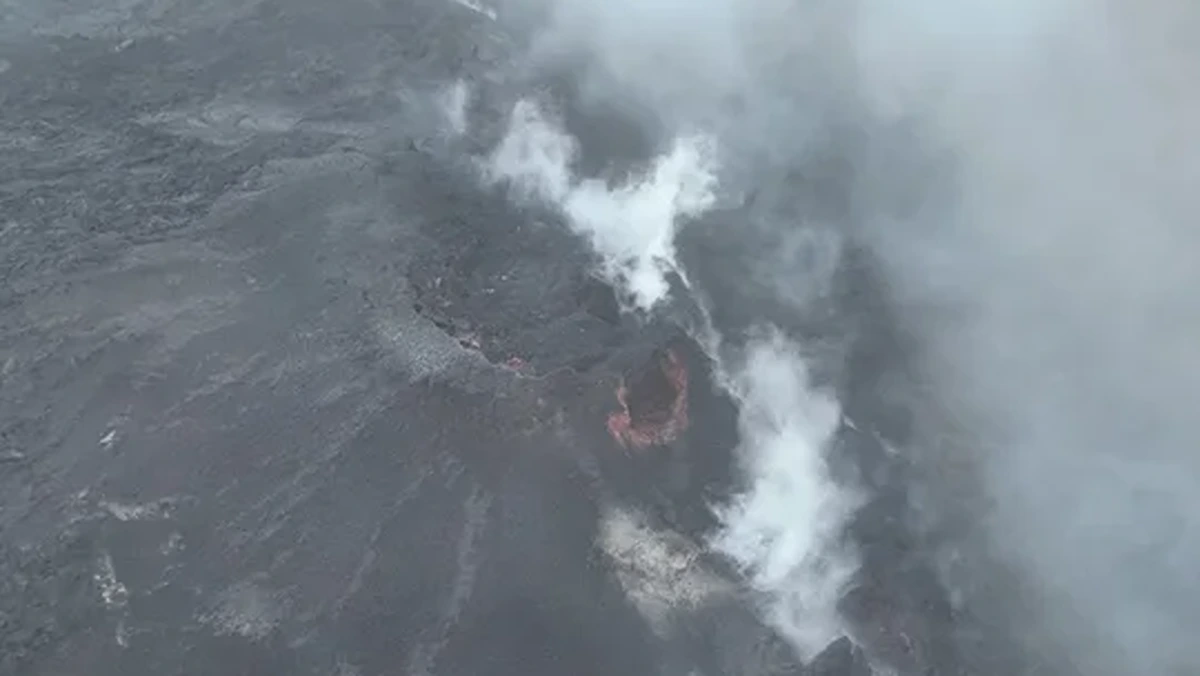
The Icelandic Meteorological Office (IMO) confirmed that the eruption between Stora-Skogfell and Sylingarfell on the Reykjanes Peninsula, which began on November 20, has officially ended.
Drone surveillance on December 9 revealed no visible lava activity with the last recorded glow observed on December 8. The 18-day eruption, the second largest in the Sundhnúk area since December 2023, covered an area of 9.1 km2 (3.5 mi2).
Despite the cessation of volcanic activity, scientists have detected signs of renewed magma accumulation beneath Svartsengi. GPS and satellite data indicate land uplift in the area, with measurements showing an upward shift of approximately 1 cm (0.4 inches) in recent days. The findings align with previous patterns observed between eruptions, suggesting the possibility of future activity.
A revised hazard map issued on December 9 downgraded the threat level in specific zones by reflecting reduced lava flow risks. In Area 3, near the Sundhnúk crater, the hazard level has been reduced from “very high” (purple) to “high” (red). In Area 5, the hazard level has been lowered from “considerable” (orange) to “some” (yellow). Gas pollution remains a concern with forecasts predicting exposure in nearby towns such as Vogar. The map is valid until December 17.

The protective barriers around the Svartsengi Power Plant were initially constructed following a series of eruptions that began in December 2023.
Lava flow models developed by Icelandic volcanologists consistently indicated the facility’s vulnerability to future eruptions of similar magnitude. The ongoing work shows an important step in ensuring the long-term safety of this geothermal power plant, which is vital to the region’s energy supply.
Residents and visitors are advised to monitor gas distribution forecasts available on the IMO’s website. Although the immediate threat has subsided, authorities caution that the resumption of magma accumulation beneath Svartsengi warrants continued vigilance.
References:
1 “Necessary civil defense response” – mbl.is – December 13, 2024
2 Protective Barriers Raised to Shield Svartsengi Power Plant – Iceland Review – December 13, 2024
3 The seventh eruption of the Sundhnúk crater series has ended – IMO – December 9, 2024

Rishika holds a Master’s in International Studies from Stella Maris College, Chennai, India, where she earned a gold medal, and an MCA from the University of Mysore, Karnataka, India. Previously, she served as a Research Assistant at the National Institute of Advanced Studies, Indian Institute of Science, Bengaluru, India. During her tenure, she contributed as a Junior Writer for Europe Monitor on the Global Politics website and as an Assistant Editor for The World This Week. Her work has also been published in The Hindu newspaper, showing her expertise in global affairs. Rishika is also a recipient of the Women Empowerment Award at the district level in Haryana, India, in 2022.

Commenting rules and guidelines
We value the thoughts and opinions of our readers and welcome healthy discussions on our website. In order to maintain a respectful and positive community, we ask that all commenters follow these rules.