
What’s new at Nishinoshima, a rapidly growing volcanic island in Japan

Featured image: Nishinoshima on October 28, 2020. Credit: Japan Coast Guard/3rd Regional Coast Guard Headquarters
Nishinoshima is a volcanic island located in the Ogasawara archipelago, south of Tokyo, Japan that had been expanding since its eruption in 2013. Nishinoshima looks like a small island, but this is actually the summit of a huge seamount that rises more than 3 km (1.8 miles) from the seafloor.
This video, made by the Earthquake Research Institute at the University of Tokyo, talks about the latest findings by volcanologists.
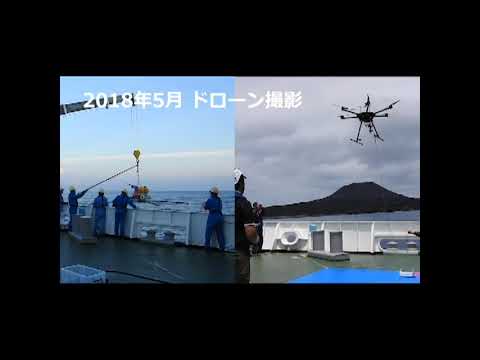
Video courtesy University of Tokyo/Earthquake Research Institute.
The video is participating in the event Science AGORA2020 — November 15 – 22, 2020.
The small island of Nishinoshima was enlarged when several new islands coalesced during an eruption in 1973/74.
Another eruption that began offshore in 2013 completely covered the previously exposed surface and enlarged the island again. Water discoloration has been observed on several occasions since.
The island is the summit of a massive submarine volcano that has prominent satellitic peaks to the S, W, and NE.
A series of powerful eruptions were recorded in July and August 2020.


Nishinoshima on July 11, 2020. Image credit: JMA
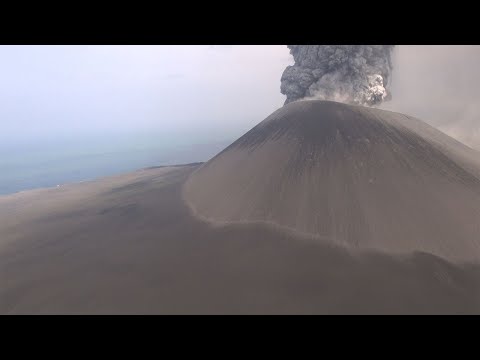

Image credit: NASA/NOAA Aqua/MODIS, Acquired July 31, 2020.


Nishinoshima on June 29. Image credit: JCG
For more information about recent eruptions at Nishinoshima, visit watchers.news/tag/nishinoshima.

Teo Blašković founded The Watchers in 2011 and edited it until 2026, covering seismic and volcanic activity, extreme weather, space weather and near-Earth objects. Articles on this page are his archive.
Published in the last 24 hours
- A meteorite blew a crater beside a village near Lake Titicaca in 2007, and dozens of villagers who went to see it got headaches and nausea, though tests found nothing the rock had added to the water Epicenter
- The people who pay closest attention to the weather are the ones storms have already cost the most, a study of 946 students found, with one damaging storm making little difference to how much attention a student paid, but two or more making a clear one Epicenter
- The sea is falling in Juneau, Alaska, because land freed from melted glaciers is rising about 0.6 inches a year Epicenter
- A dam above Los Angeles collapsed just before midnight on March 12, 1928, and the flood killed more than 400 people, hours after the engineer who built it had spent two hours looking at a new leak and decided there was no danger Epicenter
