
Ice quakes reported from Minnesota and Illinois to Pennsylvania

Image credit: NASA Aqua/MODIS
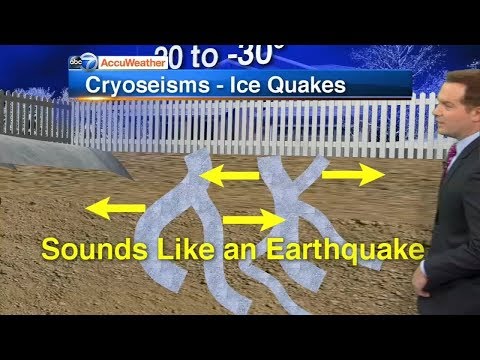
Loud outdoor booms, cracks and bangs are being reported from Minnesota to Illinois and Pennsylvania as ice quakes, also known as frost quakes or technically – cryoseisms, started popping up amid extremely cold temperatures.
"Basically, it’s so cold outside right now that you’ve got some moisture below the surface that’s starting to freeze," said meteorologist Ben Deubelbeiss of the National Weather Service.
"When the water freezes, it starts to expand and it’ll move the soil, subsoil, rocks and everything around it. That’ll create these little miniature quakes. The cracking of any frozen soil underground is what makes that popping sound that people hear," Deubelbeiss said.
Arctic air and gusty winds continue to impact a significant portion of the Upper Midwest into the Northeast, NWS forecasters warned.
Wind chill warnings and advisories are in effect through today. Heavy lake effect snows also continue downwind of the Great Lakes.
Several rounds of heavy lower elevation rains and mountain snows are expected across California through this weekend, with flooding possible near burn scars.

Teo Blašković founded The Watchers in 2011 and edited it until 2026, covering seismic and volcanic activity, extreme weather, space weather and near-Earth objects. Articles on this page are his archive.
Published in the last 24 hours
- How did one flash of lightning, lasting about seven seconds, stretch 829 km across five US states, beat the previous record by 61 km, and only be recognized as the longest ever measured nearly eight years later?
- A meteorite blew a crater beside a village near Lake Titicaca in 2007, and dozens of villagers who went to see it got headaches and nausea, though tests found nothing the rock had added to the water Epicenter
- The people who pay closest attention to the weather are the ones storms have already cost the most, a study of 946 students found, with one damaging storm making little difference to how much attention a student paid, but two or more making a clear one Epicenter
- The sea is falling in Juneau, Alaska, because land freed from melted glaciers is rising about 0.6 inches a year Epicenter
