
Strong M6.4 earthquake, M6.0 hit off the coast of Sumba, Indonesia
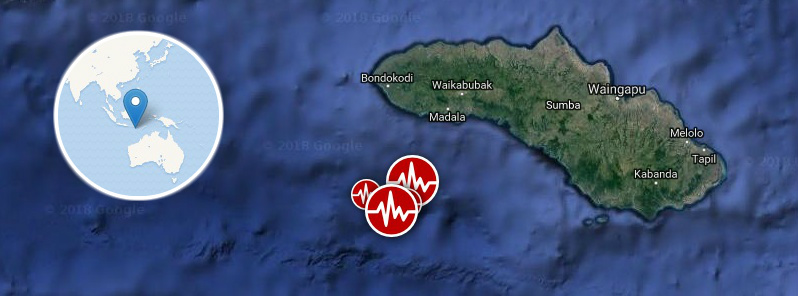
Image credit: Google, TW/SAM
A strong earthquake registered by the USGS as M6.4 hit off the coast of Sumba, Indonesia at 05:10 UTC (13:10 local time) on January 22, 2019. The agency is reporting a depth of 27 km (16.7 miles). The quake was preceded by M6.0 at 23:59 UTC, January 21, M4.9 at 00:08, M4.5 at 00:56 and M4.8 at 01:57 UTC.
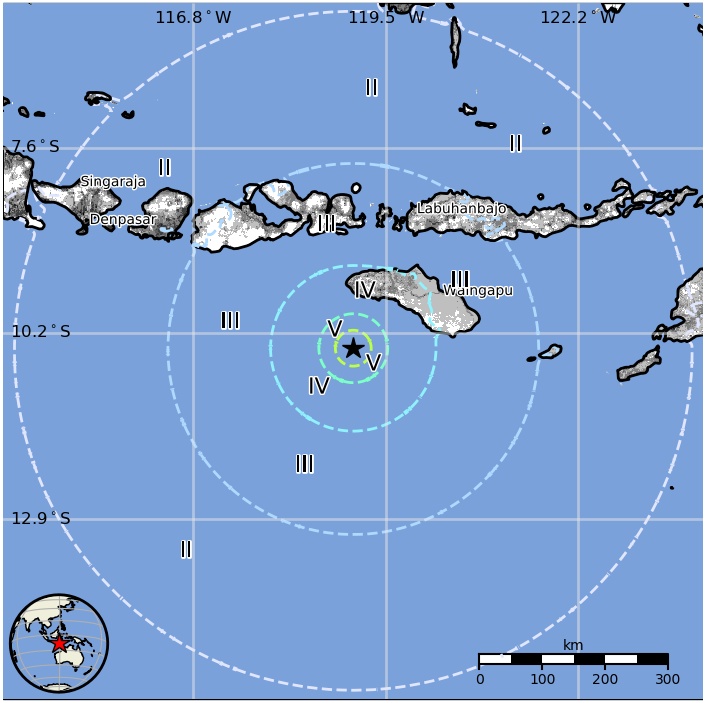
The epicenter was located 65 km (40 miles) SSW of Bogorawatu, 142 km (88 miles) WSW of Waingapu and 209 km (130 miles) SSE of Dompu, Indonesia.
There are about 95 000 people living within 100 km (62 miles).
A tsunami was not generated.
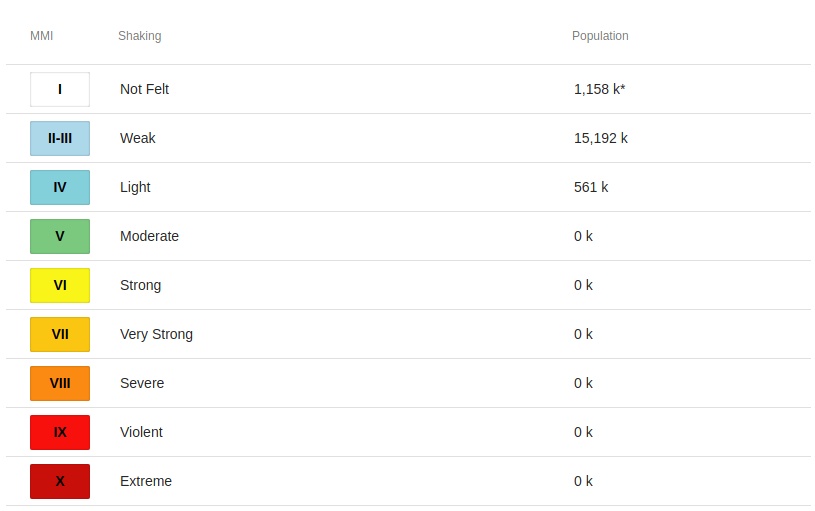
An estimated 561 000 people are estimated to have felt light shaking and 15 192 000 weak.
The USGS issued a green alert for shaking-related fatalities and economic losses. There is a low likelihood of casualties and damage.
Overall, the population in this region resides in structures that are vulnerable to earthquake shaking, though resistant structures exist. The predominant vulnerable building types are unreinforced brick with concrete floor and precast concrete frame with wall construction.
Recent earthquakes in this area have caused secondary hazards such as landslides that might have contributed to losses.
There were no immediate reports of damage.
Estimated population exposure to earthquake shaking
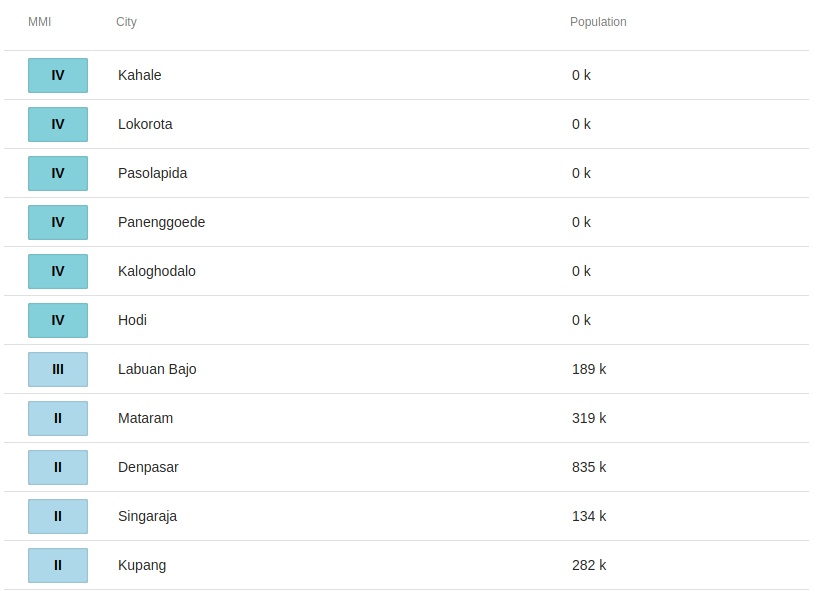
Selected cities exposed

Teo Blašković founded The Watchers in 2011 and edited it until 2026, covering seismic and volcanic activity, extreme weather, space weather and near-Earth objects. Articles on this page are his archive.
Published in the last 24 hours
- Male toads abandoned a pond in Italy five days before a deadly 2009 earthquake, while a scientist was counting them Epicenter
- An asteroid was spotted 19 hours before it exploded over Sudan in 2008, and students picked its pieces off the desert Epicenter
- A wave up to 3 m (10 feet) high rose out of Lake Michigan on a sunny June morning in 1954 and swept fishermen off Chicago’s piers, and when a second came 10 days later, warnings had cleared the shore Epicenter
- Just 12 inches of rushing water can carry away most cars, and more than half of US flood drownings happen to people who drive into flood water Epicenter
