
Weak CME impact sparks some auroras around Arctic circle
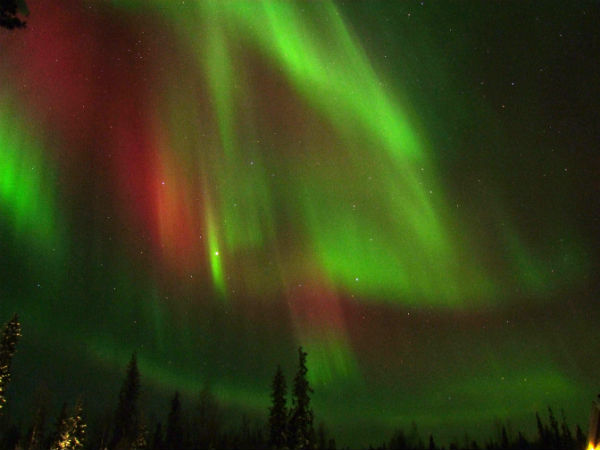
Image credit: Thomas Kast
A CME hit Earth’s magnetic field on Feb. 26th at 21:00 UTC. Brief outburst subsided before it reached geomagnetic storm levels. A geomagnetic sudden impulse was detected by the Boulder station at 21:41 UTC. Maximum levels of planetary Kp index was listed as 4, just below the G1 Minor Geomagnetic Storm threshold.


Although the impact was weak, it did spark some auroras around the Arctic Circle. Auroras were brightest over Scandinavia, Canada and Alaska.

NASA’s Mars rover Curiosity is en route to the Mars onboard the Mars Science Lab spacecraft and according to forecast track by analysts at the Goddard Space Weather Lab this CME is heading straight toward it. This could be great opportunity to measure energetic particles accelerated by the CME’s passage. The CME is also forecasted to impact Mars on February 28th.


Earlier reporting
Nothing on Watchers was published in the last 24 hours. These are older articles.
- On October 22, 2017, a single flash of lightning stretched 515 miles from eastern Texas to near Kansas City, a distance that takes eight hours to drive, and nobody realized how far it had gone until scientists went back through the satellite data years later Epicenter
- CPC posts a slight risk of heavy rain from the Gulf Coast to the Northeast urban corridor November 25-29, and a moderate risk of West Coast wind and Sierra snow on November 25
- Florida's east coast faces a moderate flash flood risk Wednesday through Friday, with 4 to 8 inches of rain forecast and the St. Johns River near Cocoa already in major flood at 17.13 feet
- Cyclone Akvan to make landfall between Nellore and Visakhapatnam around noon on November 20, IMD forecasts 120-130 km/h winds gusting to 145
