• Severe winter storm paralyzes the New York metropolitan area, grounding flights and closing schools

    A major blizzard struck New York on February 22, 2026, prompting a citywide travel ban and declaration of a State of Emergency. Snowfall totals reached 35.6 cm (14.0 inches) on Staten Island and 23.6 cm (9.3 inches) in Central Park. All schools have been closed on February 23, as Mayor Zohran Mamdani declared the first traditional snow day since 2019. No remote instruction will take place, and all after-school activities are cancelled.

  • Blizzard Warnings issued for Delaware, New Jersey, New York and southern Connecticut February 22-23

    Blizzard Warnings were issued February 21, 2026, for parts of Delaware, New Jersey, New York, and southern Connecticut, with heavy snow and wind gusts up to 90 km/h (55 mph) forecast from February 22 through 18:00 EST on February 23. Snow accumulations of 15–50 cm (6–20 inches) are expected, with visibility potentially dropping below 0.4 km (0.25 miles) in blowing snow, producing whiteout conditions and dangerous travel.

  • New York City confirms 18 deaths during prolonged Arctic cold

    Eighteen cold-related deaths were confirmed in New York City as of February 11, 2026, following a prolonged stretch of Arctic air that gripped the city from mid-January through early February. The fatalities occurred during a 9-day period of subfreezing temperatures that ended February 2, with wind chills falling below −25°C (−13°F) on multiple mornings. Most of the victims were found outdoors, according to city officials.

  • Two fatalities reported after intense rainfall in New York City

    A low-pressure system moving through the mid-Atlantic and Northeast United States brought nearly 76 mm (3 inches) of rainfall to the New York region on October 30, 2025, causing flash floods that left two people dead after becoming trapped in flooded basements.

  • Thunderstorms shift east bringing flood risk for New England and New York City area

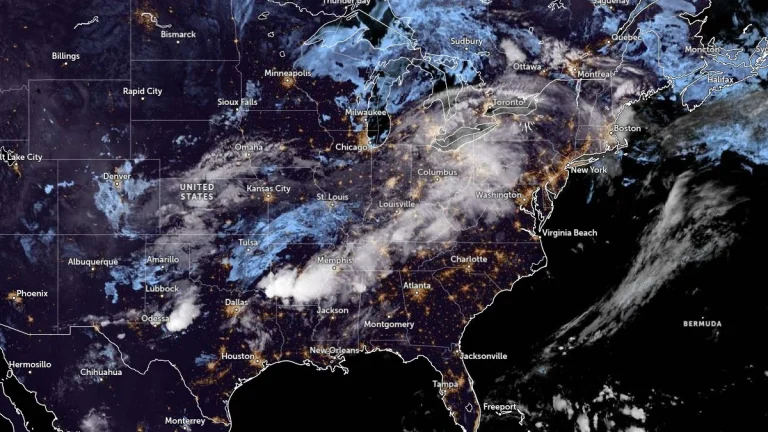
    Widespread thunderstorms are forecast across the United States on Wednesday and Thursday, September 24 and 25, 2025, as a cold front advances eastward. The Weather Prediction Center (WPC) has issued a Slight Risk of Excessive Rainfall for parts of the Ohio and Tennessee Valleys, while isolated flash flooding is possible in southern New England and the New York City metropolitan area as storms reach the Northeast.

  • New York City sees heaviest April snow since 1982

    14 cm (5.5 inches) of snow had accumulated in Central Park, New York by 10:00 EDT on April 2, 2018 (14:00 UTC). It was the most amount of snow in April since 1982, when 24.38 cm (9.6 inches) fell on the 6th of the month. The amount was also 7th most on record in…