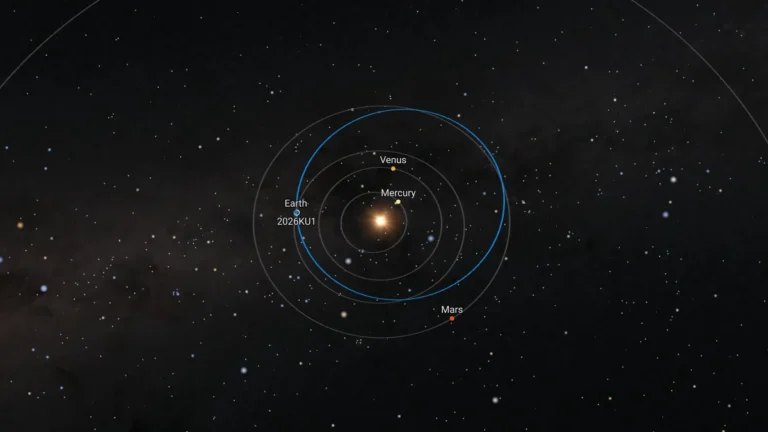
• Asteroid 2026 KU1 flew past Earth at 0.149 lunar distances

    Asteroid 2026 KU1 flew past Earth at a distance of 0.149 lunar distances (about 0.00038 AU / 57 300 km / 35 600 miles) from the center of our planet at 22:11 UTC on May 22, 2026, becoming the 9th closest known asteroid flyby within 1 lunar distance recorded so far this year. Its closest point was about 50 900 km (31 600 miles) above Earth’s surface.
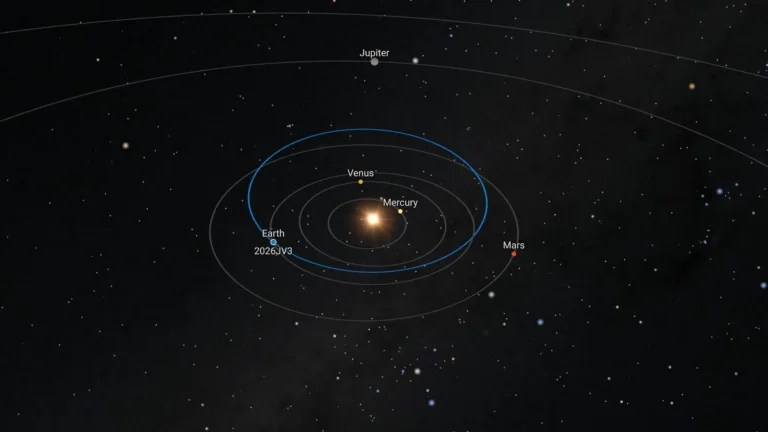
  • Asteroid 2026 JV3 passed Earth at 0.13 lunar distances

    Asteroid 2026 JV3 passed Earth at a distance of 0.130 lunar distances (0.00034 AU / 50 900 km / 31 600 miles) from the center of our planet at 22:59 UTC on May 14, 2026, becoming the 6th closest known asteroid flyby within 1 LD recorded so far this year. Its closest point was about 44 500 km (27 700 miles) above Earth’s surface.
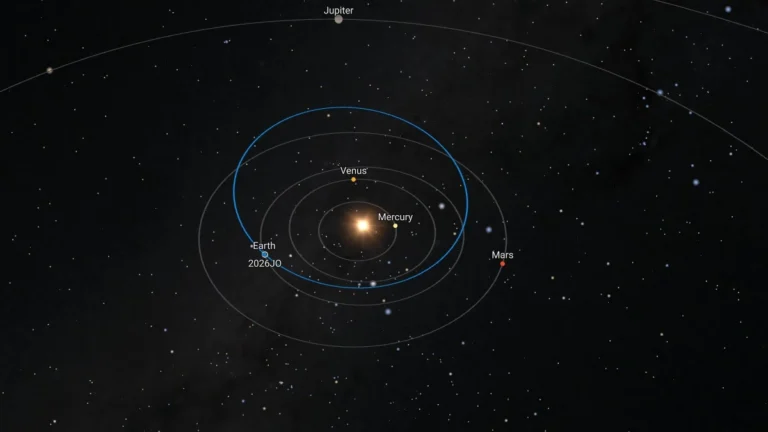
  • Asteroid 2026 JO flew past Earth at 0.3 lunar distances

    Asteroid 2026 JO flew past Earth at a distance of 0.347 LD (0.00089 AU / 133 560 km / 83 000 miles), from the center of our planet at 05:04 UTC on May 9, 2026. At its closest, the object was about 126 970 km (78 900 miles) above Earth’s surface.
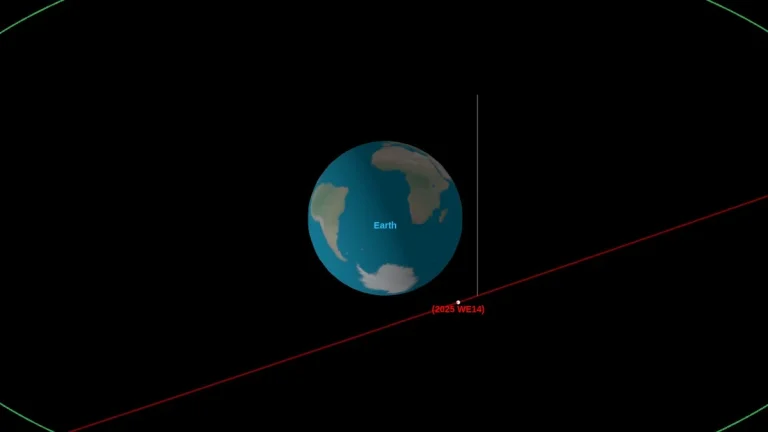
  • Asteroid 2025 WE14 flew past Earth at 0.07 LD

    A newly discovered asteroid designated 2025 WE14 flew past Earth at a distance of 0.073 lunar distances at 18:44 UTC on November 29, 2025. The object was first detected by the Mt. Lemmon Survey on November 30 during a very short one-day observation arc.

  • Asteroid 2025 UC11 flew past Earth at 0.01 LD

    A newly discovered asteroid designated 2025 UC11 flew past Earth at a distance of 0.017 lunar distances (0.00004 AU / 6 599 km / 4 101 miles) at 12:11 UTC on October 30, 2025. The object was first detected seven hours earlier by the JPL SynTrack Robotic Telescope in Auberry, California.

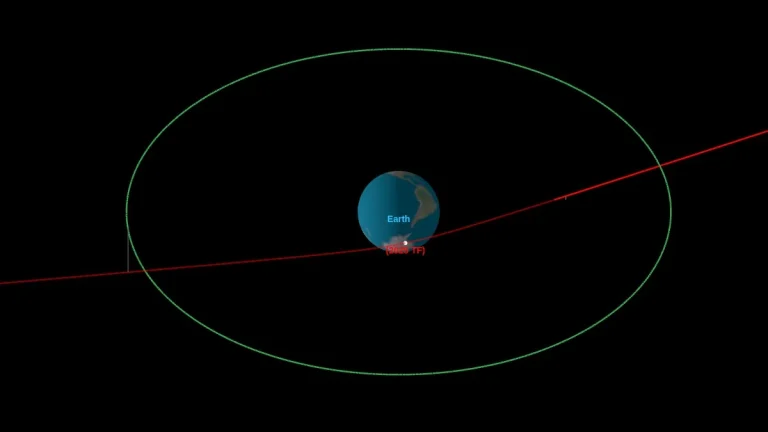
  • Asteroid 2025 TF flew just 420 km (260 miles) above Antarctica, second-closest flyby on record

    A newly-discovered asteroid designated 2025 TF made an extremely close approach to Earth at 00:49 UTC on October 1, 2025, reaching a nominal distance of 0.02 LD (0.00005 AU / 6 790 km / 4 220 miles) from Earth’s center — equivalent to about 419 km (260 miles) above the surface over Antarctica. At this distance, it is now classified as the second-closest asteroid flyby ever recorded.

  • Asteroid 2025 RL2 to pass Earth at 0.5 lunar distances on September 19

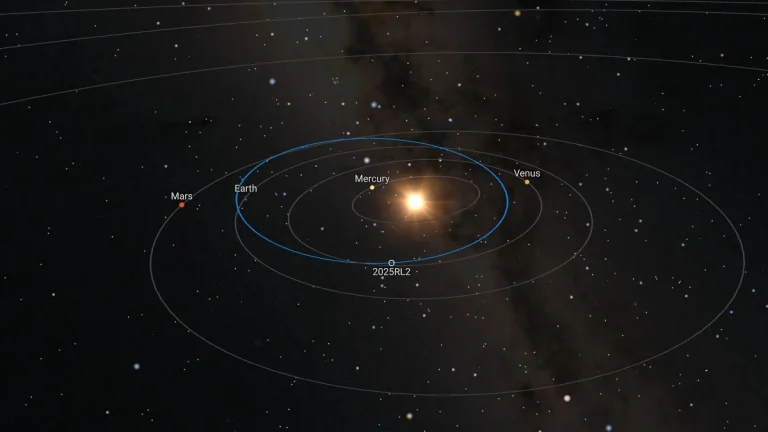
    A newly discovered asteroid designated 2025 RL2 is expected to fly past Earth at a distance of 0.56 lunar distances (0.00145 AU / 216 563 km / 134 566 miles) at around 08:57 UTC on September 19, 2025. The object has an absolute magnitude (H) of 26, with an estimated diameter between 17 and 37 m (56 and 121 feet), comparable in size to the Chelyabinsk meteor.