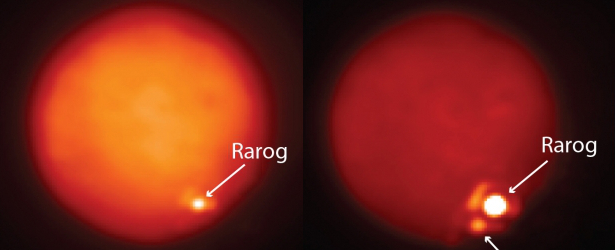
• Observations suggest frequent massive eruptions on Jupiter’s moon Io

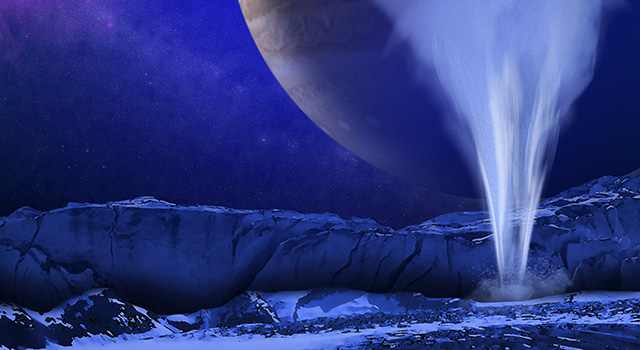
    Observations made using Keck and Gemini observatories, Hawaii, revealed three massive volcanic eruptions on Jupiter's moon Io within a two-week period in August 2013, leading astronomers to speculate that these presumed rare "outbursts" migh
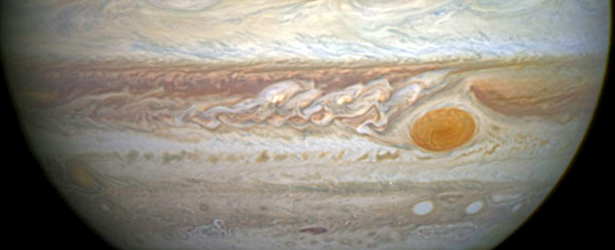
  • Jupiter’s Great Red Spot shrinking at increasing rate

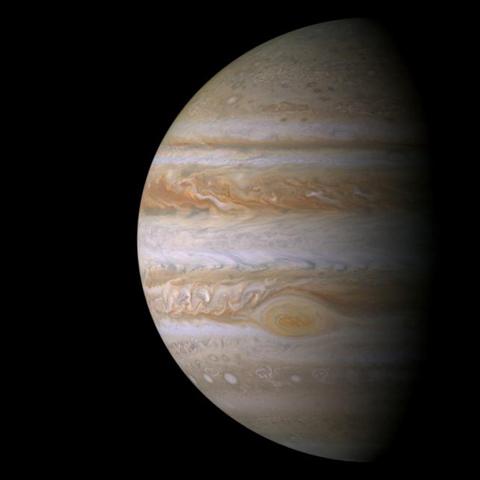
    The shrinkage of Jupiter's Great Red Spot has been known about since the 1930s but latest images by Hubble Space Telescope confirm the increasing shrinkage rate observed by amateur astronomers since 2012. Science has no answer as to why this is happening.H

  • Ganymede may harbor ice and oceans stacked up in several layers

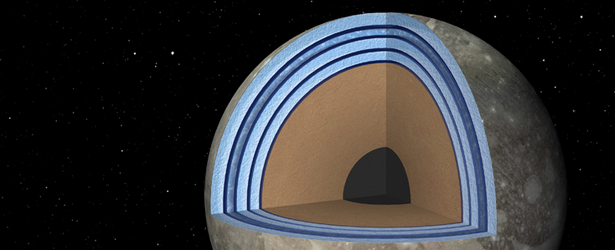
    The largest moon in our solar system, a companion to Jupiter named Ganymede, might have ice and oceans stacked up in several layers like a club sandwich, according to new study led by JPL's Steve Vance that models the moon's makeup.Previously, the moon

  • SOHO observes an amazing solar eclipse of Jupiter on June 19, 2013

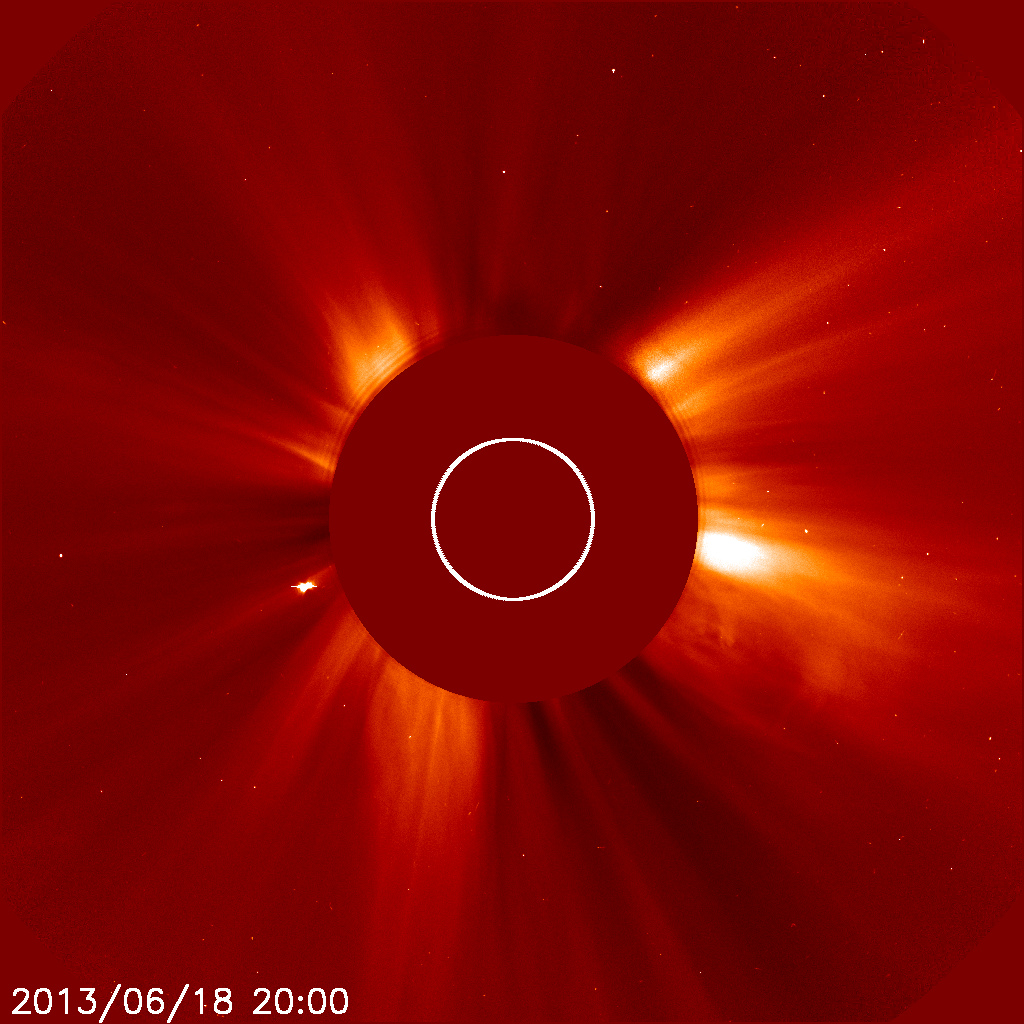
    On June 19, 2013 NASA`s SOHO coronagraphs observed an eclipse of Jupiter by the Sun, as the planet got directly behind the solar disk; being totally obscured. This event is a rare Jupiter solar conjunction, that happens only twice within Jupiter`s 12-year orbit around

  • A rare total eclipse of Jupiter by the Sun on June 19, 2013

    Planet Jupiter began the month of June 2013 being positioned very low in the west sky just after sunset. However soon it will disappear into the solar glare, as Jupiter is approaching the Sun for a solar conjunction on June 19, 2013. At that time Jupiter will

  • Triple conjunction in the sunset sky on May 26, 2013

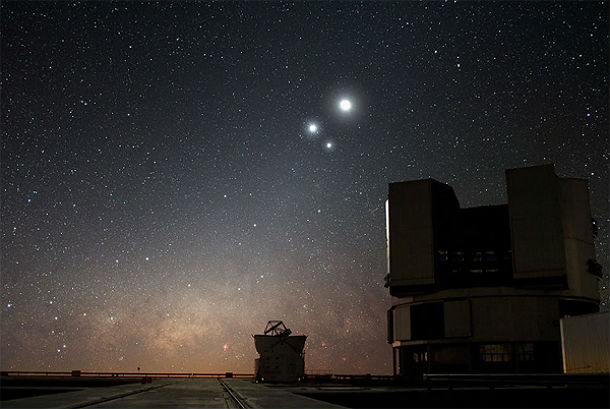
    The three brightest planets in this month's night sky are lining up for a remarkable sunset conjunction at the end of May. 

    On May 26, 2013, in a triple conjunction, Venus, Jupiter and Mercury will form a tight triangle only three degrees

  • May 2013 Skywatching guide

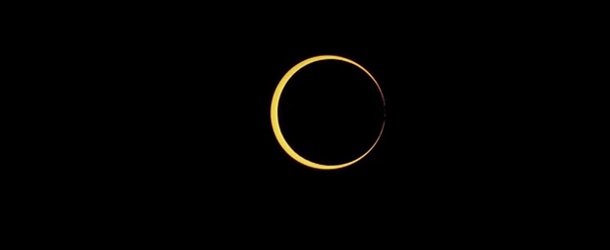
    May 2013 brings few interesting sky events. This years Eta Aquarid meteor shower will peak on May 6 with expected zenith hourly rate of 55 meteors per hour. We are about to experience annular solar eclipse on May 9/10. Annularity will be visible from

  • Water in Jupiter’s atmosphere came from 1994 comet impact

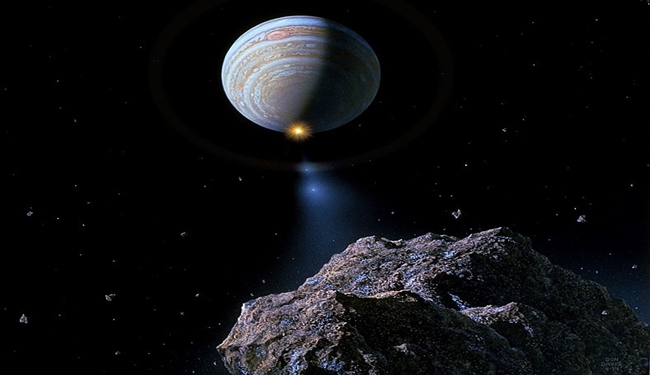
    Observations by ESA's Herschel space observatory have revealed origin of water's mysterious presence in Jupiter's atmosphere. Using sensitive spectral imaging, researchers were able to confirm that water came from historic comet impact in July