• Jupiter at opposition, closest to Earth in 2017

    Planet Jupiter is at opposition on April 7, 2017, meaning that the Sun, Earth and Jupiter will form a straight line. At around the same time that Jupiter passes opposition (21:28 UTC), it also makes its closest approach to the Earth in 2017. By midnight (local…
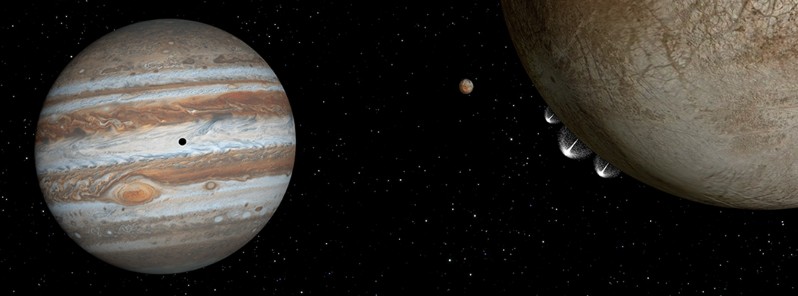
  • High altitude water plumes erupting off the surface of Jupiter’s moon Europa

    Astronomers have again imaged what may be water vapor plumes erupting off the surface of Jupiter's moon Europa, bolstering other observations suggesting the icy moon erupts with high altitude water plumes. The observation increases the possibility that missions…

  • Jupiter’s Great Red Spot heats planet’s upper atmosphere

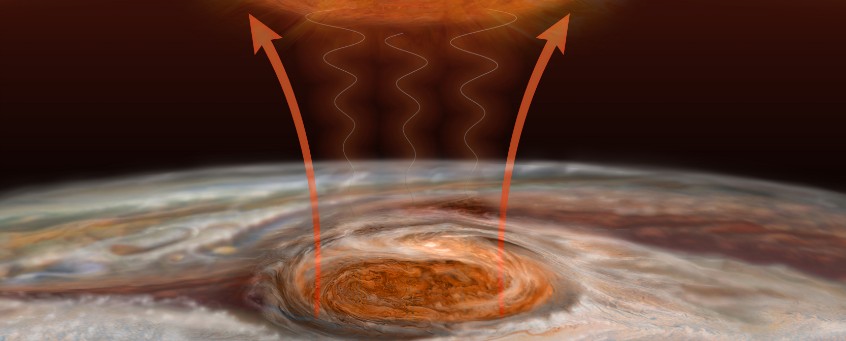
    Researchers from Boston University's (BU) Center for Space Physics report that Jupiter's Great Red Spot may provide the mysterious source of energy required to heat the planet's upper atmosphere to the unusually high values observed. The work, led by Dr…

  • ESA’s JUICE set to explore Jupiter’s mysterious moons

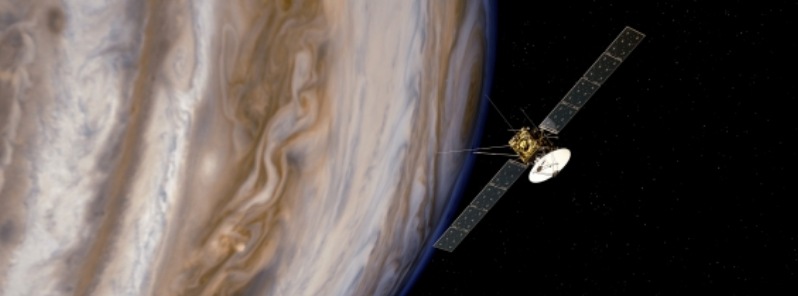
    ​Astronomers have always been fascinated by the gas giant Jupiter. A planet over 1000 times the size of Earth with 63 natural moons, 4 of whom are nearly as big as planets themselves, Jupiter and its moons are considered to be a mini solar system and are popularly…

  • New maps of Jupiter reveal the Great Red Spot continues to shrink

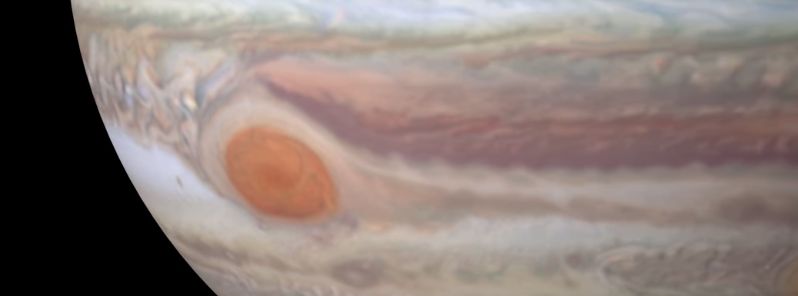
    NASA's scientists have produced new maps of Jupiter from images collected by the Hubble Space Telescope. Newly composed maps are the first in a series of yearly images of the Solar System's outer planets, designed to keep track of how these giant worlds…

  • Auroral substorms on Jupiter are not caused by the solar wind, alone

    A previous Picture of the Day published in late 2012 quoted Jonathan Nichols from the University of Leicester:“The main aurora oval on Jupiter we think should dim when the solar wind blows harder, but what we see is that actually gets brighter, which is totally

  • Scientists identify missing wave near Jupiter’s equator

    In the clouds of Jupiter, scientists have found evidence of a type of atmospheric wave that had long been proposed but had not been identified in images before now.Researchers consider this kind of wave, called a Kelvin wave, a fundamental part of a planetary atmosphere

  • Swarm of scientific microprobes to the clouds of Jupiter in 2030

    A swarm of tiny probes each equipped with a different sensor could be fired into the clouds of Jupiter and grab data as they fall before burning up in the gas giant planet's atmosphere, according to a recently presented concept in International Journal of Space Scie