• Global sea surface temperature sets new record, reaching 21.1°C (70°F) as El Niño strengthens

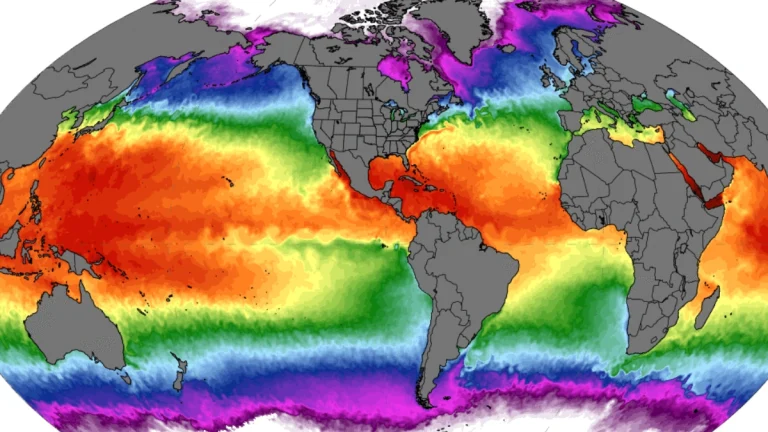
    The daily average sea surface temperature across the extra-polar global ocean, between 60°S and 60°N, reached 21.1°C (70°F) on August 22, 2026, the highest value in the Copernicus Climate Pulse record beginning in 1979. The reading exceeded the previous daily record of 21.09°C (69.96°F), set in March 2024, and came in August, although temperatures across the domain normally reach their annual maximum in March and April.
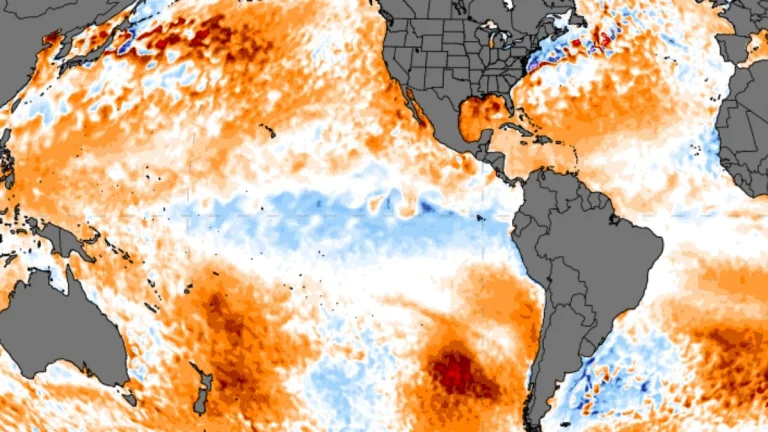
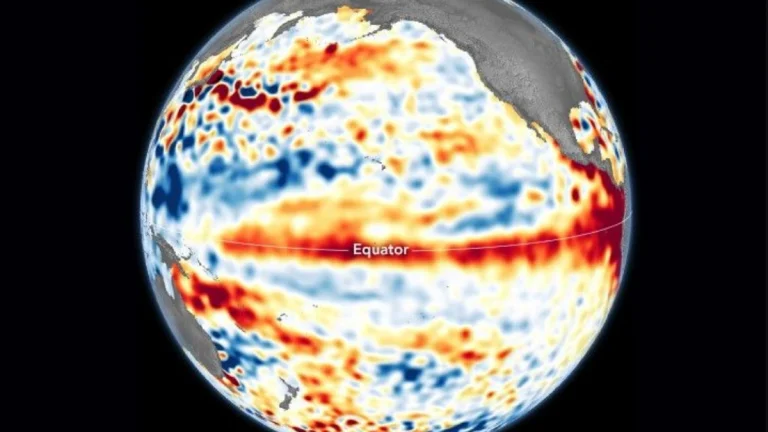
  • La Niña breakdown underway as models point to ENSO-neutral conditions in early 2026

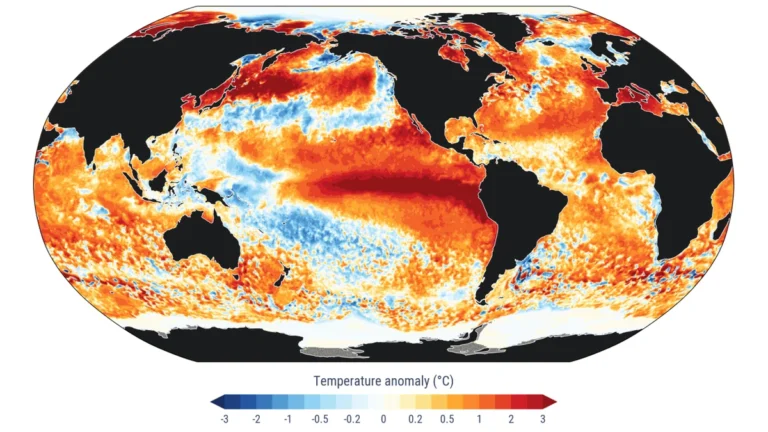
    La Niña conditions in the equatorial Pacific show signs of a transition toward ENSO-neutral conditions, with potential for El Niño development later in 2026. Observations from the National Oceanic and Atmospheric Administration (NOAA) and the European Centre for Medium-Range Weather Forecasts (ECMWF) show subsurface ocean warming and westerly wind anomalies across the central Pacific, indicating the breakdown of the three-year La Niña phase.

  • Weak La Niña to end as ocean warming signals new El Niño phase in 2026

    Forecast models suggest that El Niño conditions are likely to develop during 2026, marking a shift from the ongoing weak La Niña. The transition is expected to influence jet stream patterns and temperature anomalies across the United States, Canada, and Europe, potentially reshaping rainfall distribution and winter storm activity in the Northern Hemisphere.

  • Tropical volcanic eruptions disrupt Indian Ocean climate cycles for up to 8 years

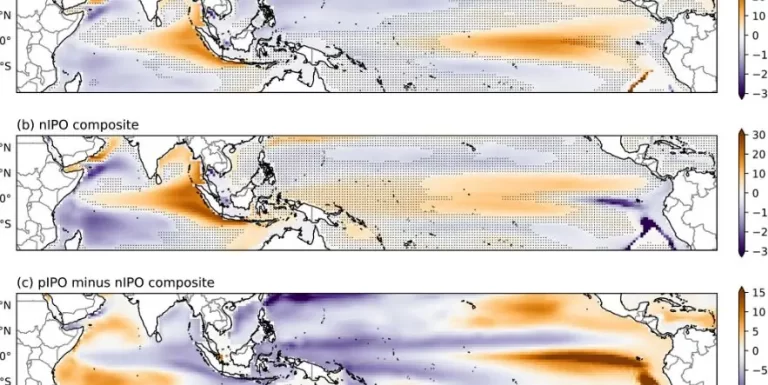
    A recent study published in Geophysical Research Letters has found that volcanic eruptions occurring in tropical regions can disrupt climate cycles in the Indian Ocean for up to 8 years. The research, conducted by scientists from MIT and WHOI, focused on the impact of volcanic eruptions on the Indian Ocean Dipole (IOD) and the El Niño Southern Oscillation (ENSO).

  • La Niña established in the tropical Pacific

    La Niña part of a cycle known as the El Niño-Southern Oscillation (ENSO) has developed in the Pacific Ocean, the Australian Bureau of Meteorology announced on November 23, 2021. Consequently, BOM's ENSO Outlook has been raised to LA NIÑA….

  • WMO’s ENSO Update: Weak La Niña may develop

    A La Niña event may develop in the third quarter of this year, but it is likely to be weak, the World Meteorological Organization (WMO) reported in its ENSO Update published July 28, 2016. The event is not expected to match up to the moderate to strong La…