• Late April visibility window allows blue auroras over Arctic regions

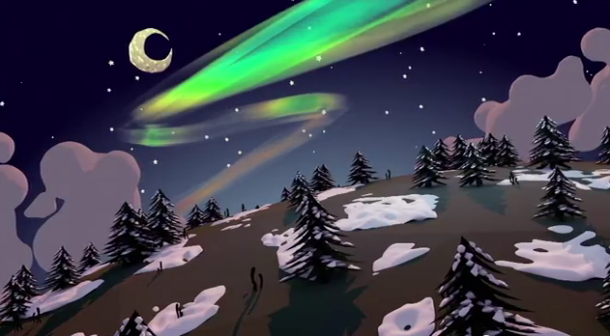
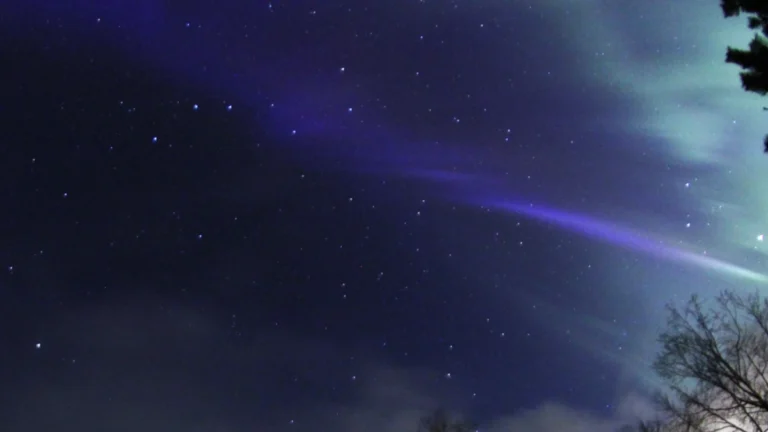
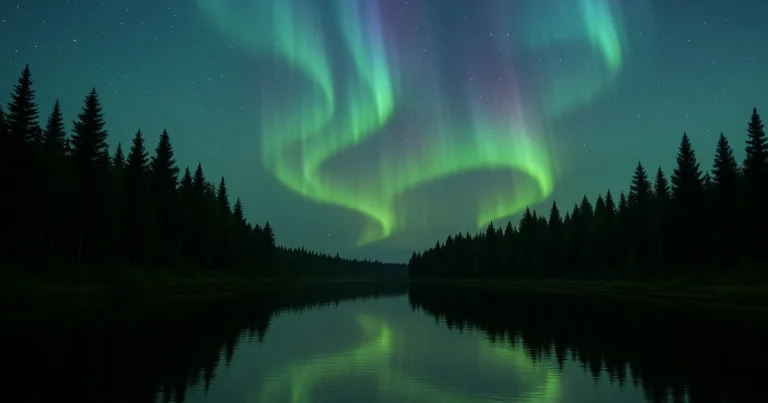
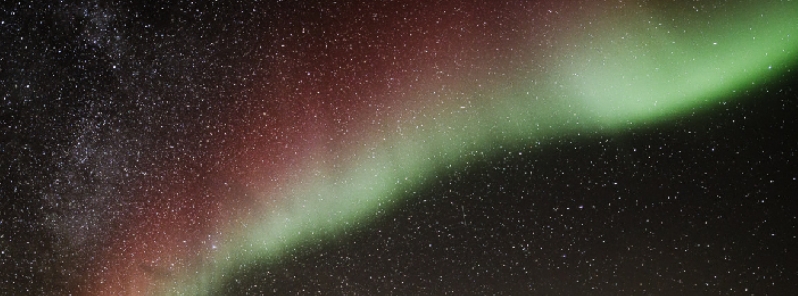
    Blue auroras could be possible over Arctic regions in late April 2026 as seasonal solar geometry allows sunlight to illuminate the upper atmosphere while ground-level skies remain sufficiently dark. The phenomenon is linked to ionized nitrogen emissions that are typically too faint to detect but can be amplified under these conditions.
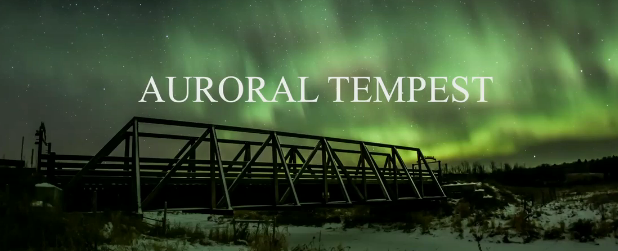
  • Auroral Tempest – Time-lapse video by InFocus Imagery

    This time-lapse was captured on the morning of November 11, 2013. It is suspected that two CMEs (Coronal Mass Ejections) on November 8th and 10th from two separate X-class solar flares combined to form one cloud of plasma. The interaction of this energy with

  • Six years of observing the Earth's magnetosphere

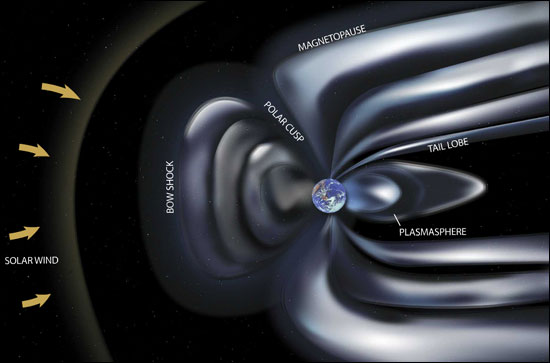
    There is still only a handful of spacecraft to watch for solar and magnetic storms but the number of observatories has been growing over the last six years. Today, these spacecraft have begun to provide the first multipoint measurements to better understand space

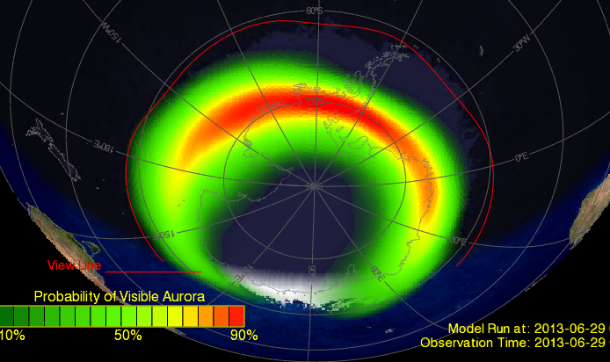
  • Strong G3 geomagnetic storm in progress (June 29, 2013)

    As Earth passes through a new coronal hole high speed stream, backed by unidentified CME shock, a prolonged interval of south-pointing magnetism (southward Bz) is having a strong impact on Earth's geomagnetic field. On June 29, 2013 Planetary K-index