
Subsiding geomagnetic storm sparked bright auroras over northern Europe, Greenland and Iceland

Image credit: Alan C Tough on February 27, 2014 @ Hopeman, Moray, Scotland (Image via SpaceWeather)
Coronal mass Ejection brushed Earth's magnetic field causing G2 (Moderate) Geomagnetic Storming late on February 27, 2014. The event was associated with the R3 (Strong) Solar Flare Radio Blackout event caused by February 25th X4.9 solar flare.
A geomagnetic sudden impulse measuring 22 nT was detected at 16:53 UTC by ground based magnetometers. Geomagnetic storm conditions have since subsided.


Taken by Alan C Tough on February 27, 2014 @ Hopeman, Moray, Scotland (Image via SpaceWeather)
G2 (Moderate) Geomagnetic Storm sparked bright auroras over northern Europe, Greenland and Iceland. High-latitude sky watchers should remain alert for auroras as Earth moves through the wake of the CME. NOAA/SWPC forecasters estimate a 55% chance of resurgent storms on February 28, 2014.
This timelapse shows the aurora display over Swordale, Isle of Lewis, Scotland on February 27, 2014:
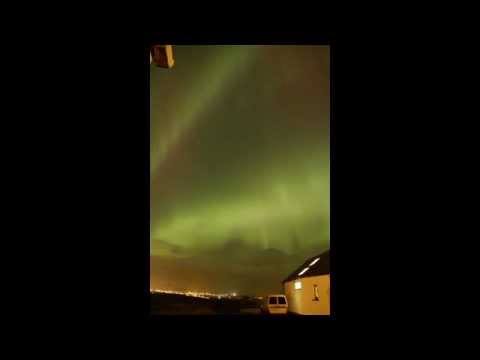
Video courtesy of timelapsedisles
NOAA/SWPC forecasts solar activity is likely to be moderate (R1-R2 Minor-Moderate) during the next three days, with a chance for another X-class flare from Active Region 1990. Sunspot 1990 continues to harbor some magnetic complexity and further eruptions are certainly possible. There is 70 % chance of an M-class solar flare and 30 % of an X-class solar flare in the next 24 hours.

Earlier reporting
Nothing on Watchers was published in the last 24 hours. These are older articles.
- G1 geomagnetic storm watch remains in effect as NOAA forecasts Kp 4.67 late on November 17 and early on November 18
- On October 22, 2017, a single flash of lightning stretched 515 miles from eastern Texas to near Kansas City, a distance that takes eight hours to drive, and nobody realized how far it had gone until scientists went back through the satellite data years later Epicenter
- CPC posts a slight risk of heavy rain from the Gulf Coast to the Northeast urban corridor November 25-29, and a moderate risk of West Coast wind and Sierra snow on November 25
- Florida's east coast faces a moderate flash flood risk Wednesday through Friday, with 4 to 8 inches of rain forecast and the St. Johns River near Cocoa already in major flood at 17.13 feet
