
A rock picked up in Antarctica in 1984 turned out to be from Mars and got a US president talking about alien life, until scientists showed its carbon was made by water and rock, not life
ALH84001, a meteorite collected in Antarctica in 1984 and later identified as Martian, became one of astrobiology’s most famous controversies after a 1996 Science paper argued that several features could be relics of ancient life. Subsequent research weakened that interpretation, and in 2022 scientists reported that organic material in the rock formed abiotically during serpentinization and carbonation—water-rock reactions on early Mars that can generate organic molecules without biology.
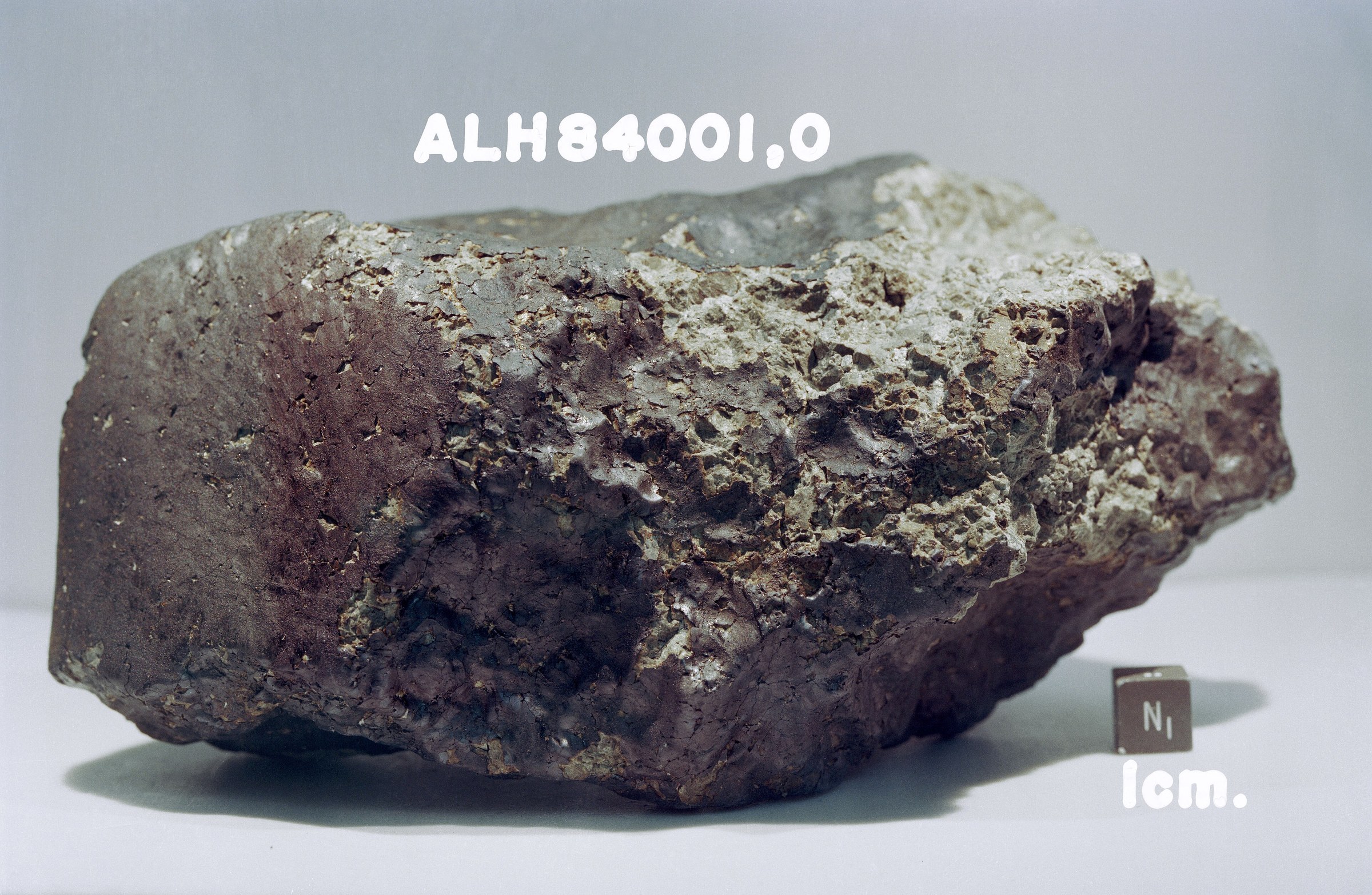
ALH84001. Credit: NASA (public domain), via Wikimedia Commons.
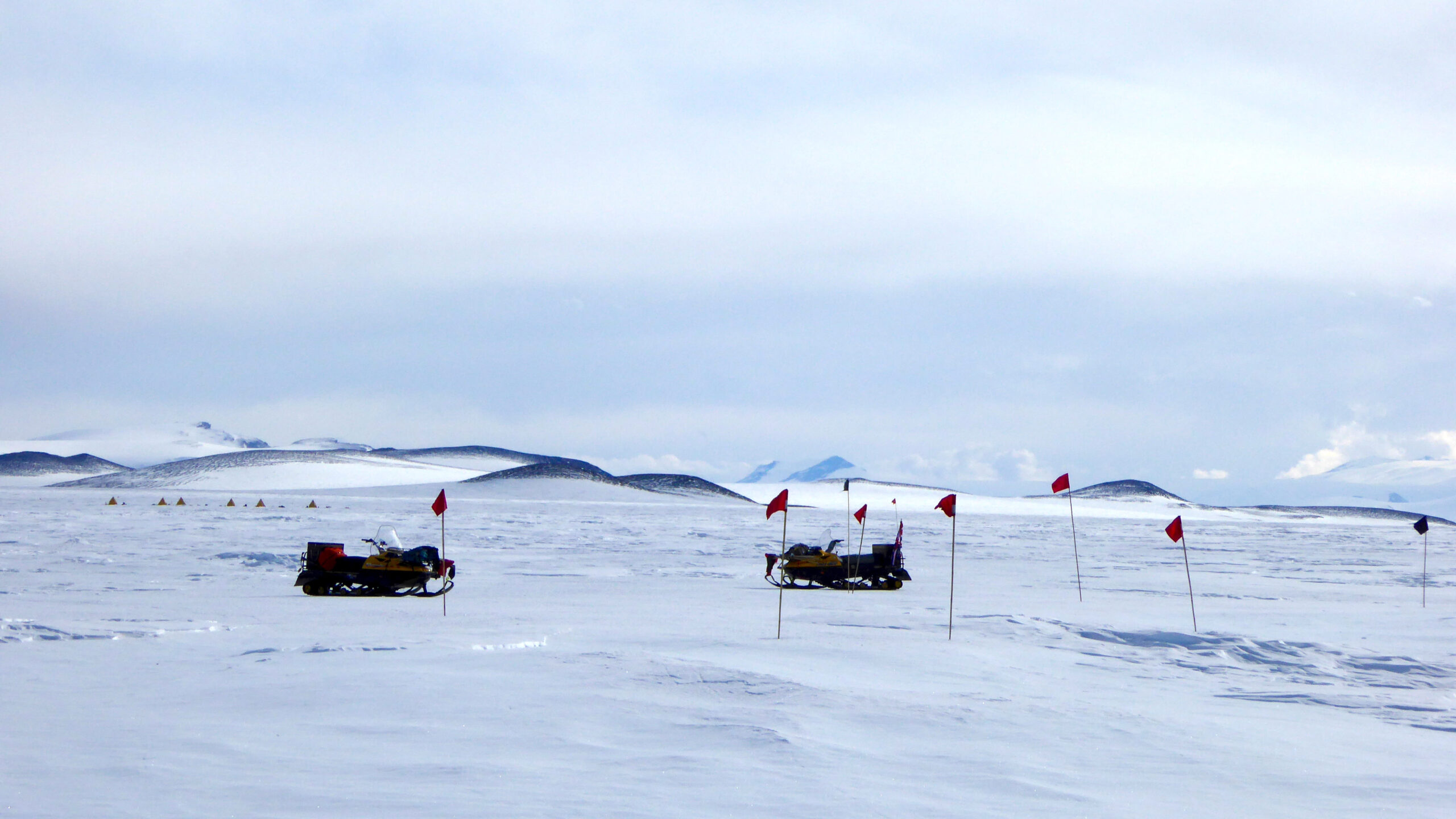
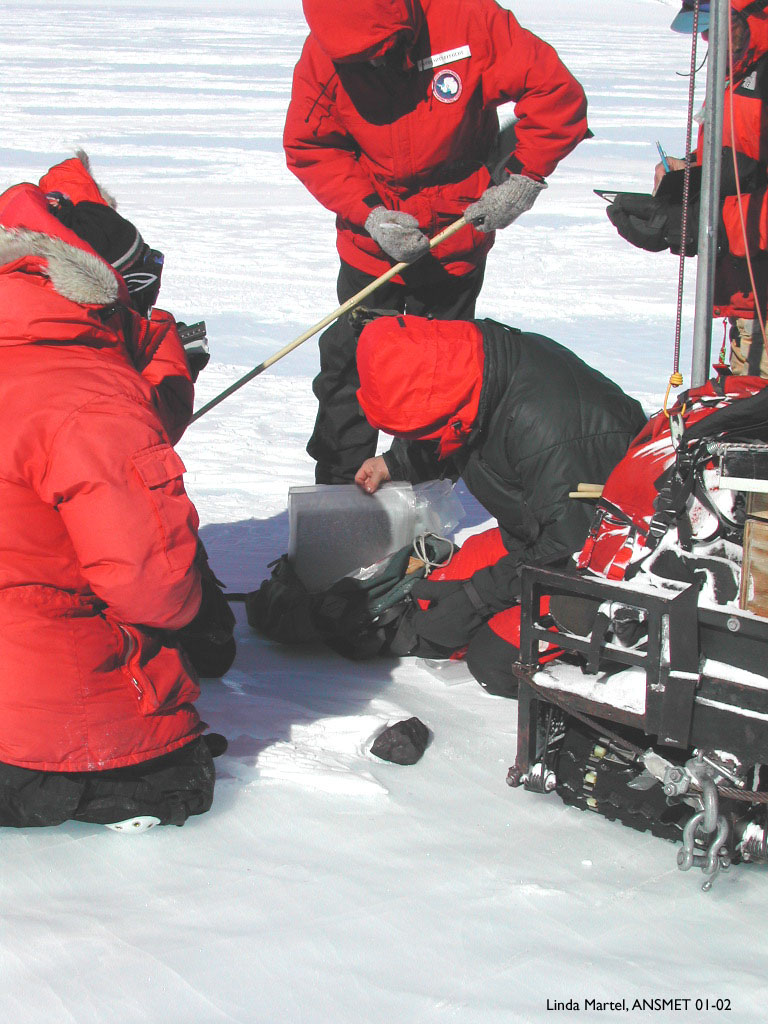
Geologist Roberta Score recovered Allan Hills 84001, or ALH84001, from the Allan Hills region of Antarctica in 1984. The official Meteoritical Bulletin record gives the specimen a mass of 1 931 g (4.26 lb) and dimensions of about 17 × 9.5 × 6.5 cm (6.7 × 3.7 × 2.6 inches).
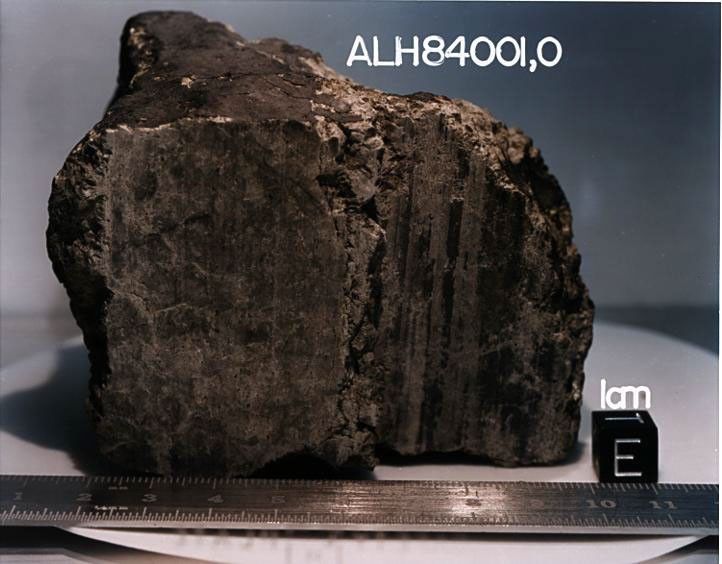
The rock was not recognized as Martian when it entered the Antarctic meteorite collection. Its first published classification was diogenite, a type of achondritic meteorite associated with asteroid material. Mineralogical and isotopic work later showed that its characteristics instead matched the group of meteorites known to come from Mars.
| Year | What changed |
|---|---|
| 1984 | ALH84001 was recovered in Antarctica. |
| 1985 | The specimen was initially classified as a diogenite. |
| 1993–1994 | It was recognized and formally reported as an SNC/Martian orthopyroxenite. |
| 1996 | McKay et al. proposed that several features could record ancient biological activity. |
| 1996 onward | Competing studies tested biological and non-biological explanations for individual features. |
| 2022 | Steele et al. linked organic synthesis in the meteorite to serpentinization and carbonation during ancient Martian water-rock reactions. |
ALH84001 became important because it preserves ancient Martian crust and mineral assemblages altered by fluids billions of years ago. The rock therefore offered researchers a way to study early Martian water, carbon chemistry and possible habitability directly in terrestrial laboratories rather than only through instruments operating on Mars.
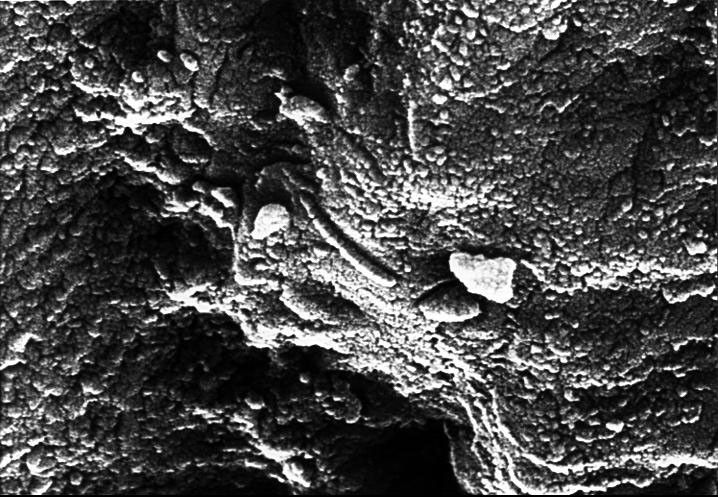
The scientific controversy began in its best-known form in August 1996. David McKay and eight co-authors reported in Science that fresh fracture surfaces of ALH84001 contained polycyclic aromatic hydrocarbons, while carbonate globules in the meteorite contained fine-grained magnetite and iron-sulfide phases. The researchers also examined microscopic structures and textures associated with the carbonates.
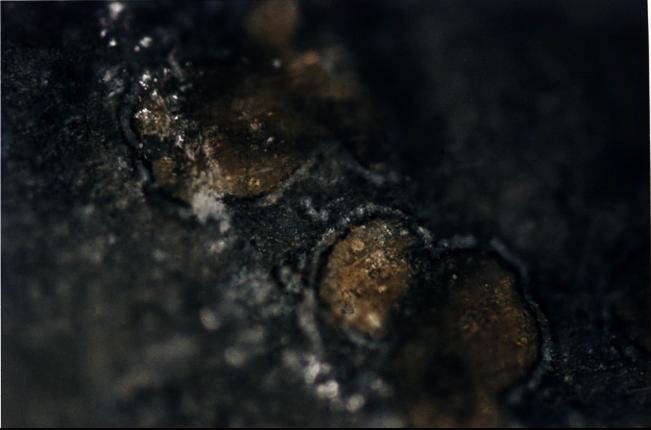
McKay et al. (1996) argued that those observations, considered together, were compatible with relic biological activity on ancient Mars. The paper did not claim that life had been proved. Its authors explicitly discussed inorganic formation as an alternative for at least some of the features and presented the biological interpretation for testing by the wider scientific community.
“It must be confirmed by other scientists.”
President Bill Clinton, August 7, 1996
The finding had reached the White House before the paper appeared in the August 16 issue of Science. Clinton delivered remarks on August 7, describing ALH84001 as speaking to the “possibility of life” and directing that the result undergo further peer review and validation rather than presenting extraterrestrial life as a confirmed discovery.

The biological interpretation was then tested component by component. Researchers asked whether the microscopic structures required organisms to form, whether the organic material originated on Mars or represented contamination acquired on Earth, whether magnetite grains were uniquely biological, and whether carbonates and associated minerals could be generated by inorganic geological processes.
Some counterarguments appeared almost immediately. Work on ALH84001 magnetite identified crystals with morphologies and microstructures consistent with high-temperature inorganic growth, while other researchers continued to argue that subsets of the magnetite population retained characteristics resembling biologically produced magnetite. The debate therefore developed through competing tests of separate observations rather than through a single experiment that overturned the 1996 paper.
Why “organic” does not mean “biological”
Organic compounds are carbon-bearing molecules. Living organisms produce many organic compounds, but non-biological chemistry can produce them as well. On rocky planets, reactions involving water, carbon dioxide, minerals, volcanic systems and impact processes can generate organic material without organisms. Finding an organic molecule is therefore not, by itself, a detection of life.
Evidence for indigenous Martian organic carbon also strengthened independently of the life hypothesis. NASA reported in 2012 that organic carbon compounds in ALH84001 and several other Martian meteorites originated on Mars without requiring biological production. That distinction preserved the chemical importance of the meteorite even as the case for ancient fossils weakened.

Steele et al. (2022) returned to a more specific question: what processes produced organic material associated with altered minerals inside ALH84001? The team examined carbonates and silicates using colocated nanoscale imaging, structural, spectroscopic and isotopic analyses so that mineral phases and carbon-bearing material could be studied in the same microscopic regions.
Keep reading
The researchers found complex refractory organic material associated with mineral assemblages produced by serpentinization and mineral carbonation. Organic molecules occurred together with nanophase magnetite, and the study concluded that both formed in place during water-rock interactions on Mars.
Serpentinization
Water reacts with iron- and magnesium-bearing minerals in igneous rock, changing the rock’s mineral structure and chemistry. The reactions can create chemically reducing conditions and produce hydrogen, opening pathways for abiotic organic synthesis.
Carbonation
Carbon-bearing fluids react with minerals and form carbonate phases. In ALH84001, relationships between carbonates, magnetite and organic material preserve evidence of ancient interactions among rock, water and dissolved carbon dioxide.
Steele and colleagues identified two potentially distinct mechanisms of abiotic organic synthesis operating during the late Noachian period, about 3.9 to 4.1 billion years ago. Their result provided a physical pathway capable of generating organic material in ALH84001 without requiring organisms.
What the 2022 result does—and does not—show
| Supported by the study | Not established by the study |
|---|---|
| Organic material examined in ALH84001 is associated with ancient Martian water-rock reactions. | Mars never hosted life. |
| Serpentinization and carbonation can produce abiotic organic chemistry in the meteorite. | Every feature discussed in 1996 was disproved by the 2022 experiment. |
| The organics and associated nanophase magnetite formed in situ on Mars. | Organic material is evidence of biology. |
| Abiotic chemistry must be considered when evaluating possible Martian biosignatures. | The broader search for ancient Martian life has been resolved. |
The distinction matters because the search for extraterrestrial life depends on separating biological signals from chemistry that geology can reproduce. A molecule, mineral assemblage or microscopic structure becomes a stronger biosignature only after plausible non-biological routes have been tested and constrained.

The same chemistry remains relevant to current Mars exploration. Perseverance has encountered serpentine-bearing material at Jezero Crater, demonstrating that water-rock reactions of the same broad mineralogical class remain an active subject of Martian field geology. That does not connect the rover’s samples directly to ALH84001, but it shows why understanding serpentinization is important when scientists evaluate ancient Martian environments and their potential to preserve organic chemistry.
ALH84001 therefore remains scientifically important even though its most famous biological interpretation was never confirmed. The meteorite records ancient Martian aqueous alteration and demonstrates how geological processes can produce organic chemistry in environments relevant to habitability. Its history also illustrates a central requirement of modern astrobiology: candidate evidence for life has to survive comparison with the full range of non-biological processes capable of producing similar signals.
References:
1 McKay, D. S., Gibson, E. K., Jr., Thomas-Keprta, K. L., Vali, H., Romanek, C. S., Clemett, S. J., Chillier, X. D. F., Maechling, C. R., & Zare, R. N. (1996). Search for past life on Mars: Possible relic biogenic activity in martian meteorite ALH84001. Science, 273(5277), 924–930. DOI: 10.1126/science.273.5277.924
2 Steele, A., Benning, L. G., Wirth, R., Schreiber, A., Araki, T., McCubbin, F. M., Fries, M. D., Nittler, L. R., Wang, J., Hallis, L. J., Conrad, P. G., Conley, C., Vitale, S., O’Brien, A. C., Riggi, V., & Rogers, K. (2022). Organic synthesis associated with serpentinization and carbonation on early Mars. Science, 375(6577), 172–177. DOI: 10.1126/science.abg7905
3 Remarks on the Possible Discovery of Life on Mars and an Exchange With Reporters – Public Papers of the Presidents of the United States – August 7, 1996
4 Allan Hills 84001 – Meteoritical Bulletin Database – accessed November 26, 2026
5 Carbon Compounds from Mars Found Inside Meteorite ALH84001 – NASA – August 8, 1996
6 Martian Meteorite’s Organic Materials Origin Not Biological – Carnegie Science – January 13, 2022

I’m a science journalist and researcher at The Watchers, contributing to the Epicenter edition, where I cover peer-reviewed scientific research and emerging discoveries across Earth and space sciences. With a background in astronomy and a passion for environmental science, I’ve worked in shark and coral conservation in Fiji, conducting reef and shark-behavior research, contributing to mangrove restoration, and earning PADI Open Water and Coral Reef Certifications. I bring a blend of scientific rigor and storytelling to illuminate the discoveries shaping our planet and beyond.
More reporting
- Ancient Martian lavas were more fluid than younger basalts, Perseverance study finds
- BepiColombo's MIXS returns first astronomical X-ray images after eight years in space
- Europa’s vast sodium cloud stays unexpectedly stable across decades
- Thermal study weakens buried-ice explanation for asteroid 1998 KY26’s unusual motion
