
BepiColombo’s MIXS returns first astronomical X-ray images after eight years in space
The Mercury Imaging X-ray Spectrometer (MIXS) aboard the ESA/JAXA BepiColombo mission has returned its first astronomical X-ray images after eight years in space, using the Crab Nebula to test the telescope before science observations begin at Mercury. The University of Leicester-led team collected 39 hours of observations during 55 spacecraft slews on September 11–12, 2026, and measured angular resolution slightly better than the instrument achieved during laboratory calibration in 2015.
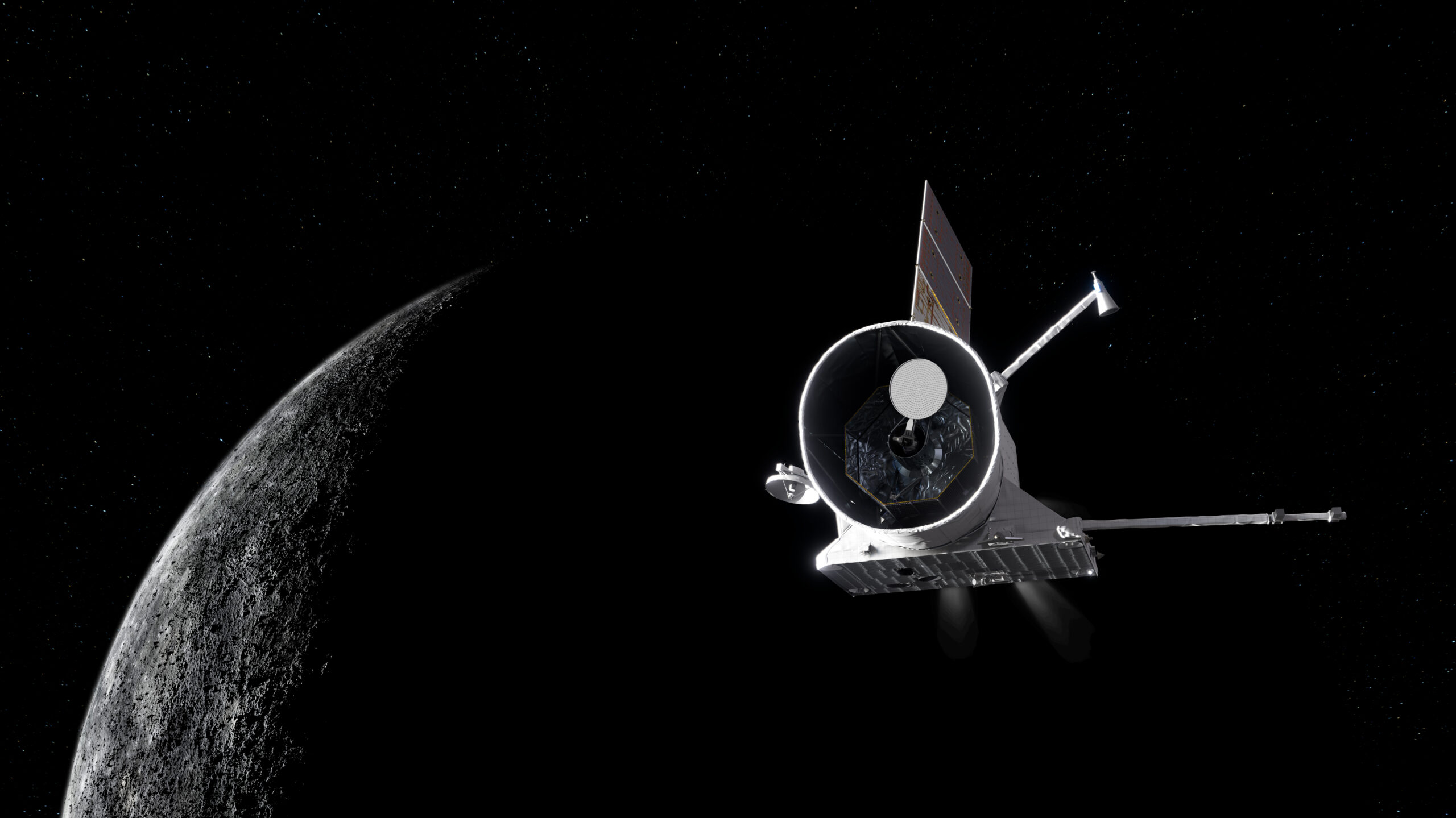
Artist impression of BepiColombo entering orbit around Mercury on November 21, 2026. ESA's Mercury Planetary Orbiter and JAXA's Mio remained joined during the manoeuvre, with Mio protected inside its sunshield. Credit: ESA; acknowledgement: ATG Europe
The result establishes how MIXS performs after its interplanetary cruise rather than revealing new information about Mercury itself. The Crab Nebula provided a bright, well-characterized X-ray source against which scientists could measure the telescope’s imaging response before moving from calibration targets to the planet that the instrument was built to study.
MIXS calibration at a glance
| Instrument | Mercury Imaging X-ray Spectrometer (MIXS) |
| Calibration target | Crab Nebula |
| Target distance | About 6 500 light-years |
| Observation dates | September 11–12, 2026 |
| Observation time | 39 hours |
| Spacecraft slews | 55 |
| Comparison baseline | Laboratory calibration in 2015 |
| Reported result | Angular resolution slightly better than the 2015 laboratory measurement |
| Mercury science phase | Scheduled to begin in April 2027 |
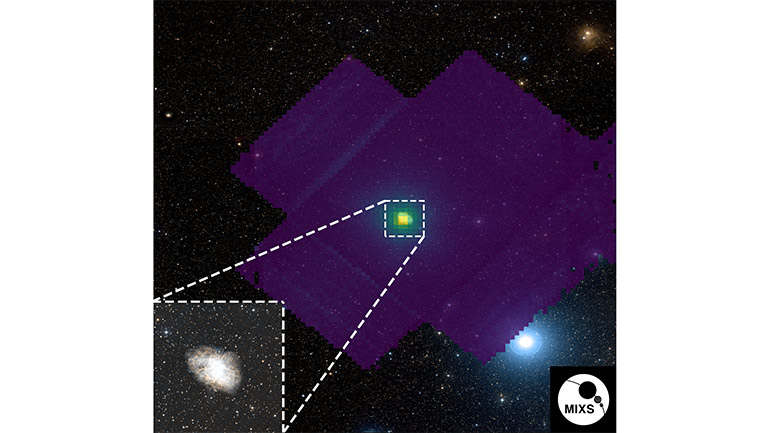
The Crab Nebula lies about 6 500 light-years from Earth and is one of the best-characterized bright X-ray sources in the sky. That makes it useful as a calibration target: scientists already know where its X-ray emission lies on the sky and can examine how the signal appears when recorded by a new instrument.
The main September sequence consisted of 55 spacecraft slews and 39 hours of observations. The team examined how far the Crab Nebula’s image was spread across the MIXS detector to determine the telescope’s angular resolution.
Angular resolution describes how well an imaging system can distinguish nearby features rather than merging them into a single blurred structure. For MIXS, sharper angular resolution will determine how finely the telescope can separate X-ray-emitting regions on Mercury’s surface. Leicester reported that the resolution derived from the in-space calibration was slightly better than when the instrument was measured in the laboratory in 2015, although the release did not provide a numerical value or uncertainty for the comparison.
What the first-light result does — and does not — show
The September observations show that MIXS can form astronomical X-ray images in space and allow its performance to be compared with pre-launch calibration measurements. They are not measurements of Mercury’s surface composition and do not yet represent the mission’s primary planetary science. Those observations are scheduled to begin after commissioning in 2027.
MIXS could make the calibration observations only after BepiColombo’s Mercury Transfer Module (MTM) separated from the science spacecraft on September 3. During most of the cruise, the spacecraft’s stacked configuration obstructed the telescope’s view into open space. Separation removed that obstruction and created a short period in which instruments aboard ESA’s Mercury Planetary Orbiter (MPO) could be exercised before Mercury orbit insertion.
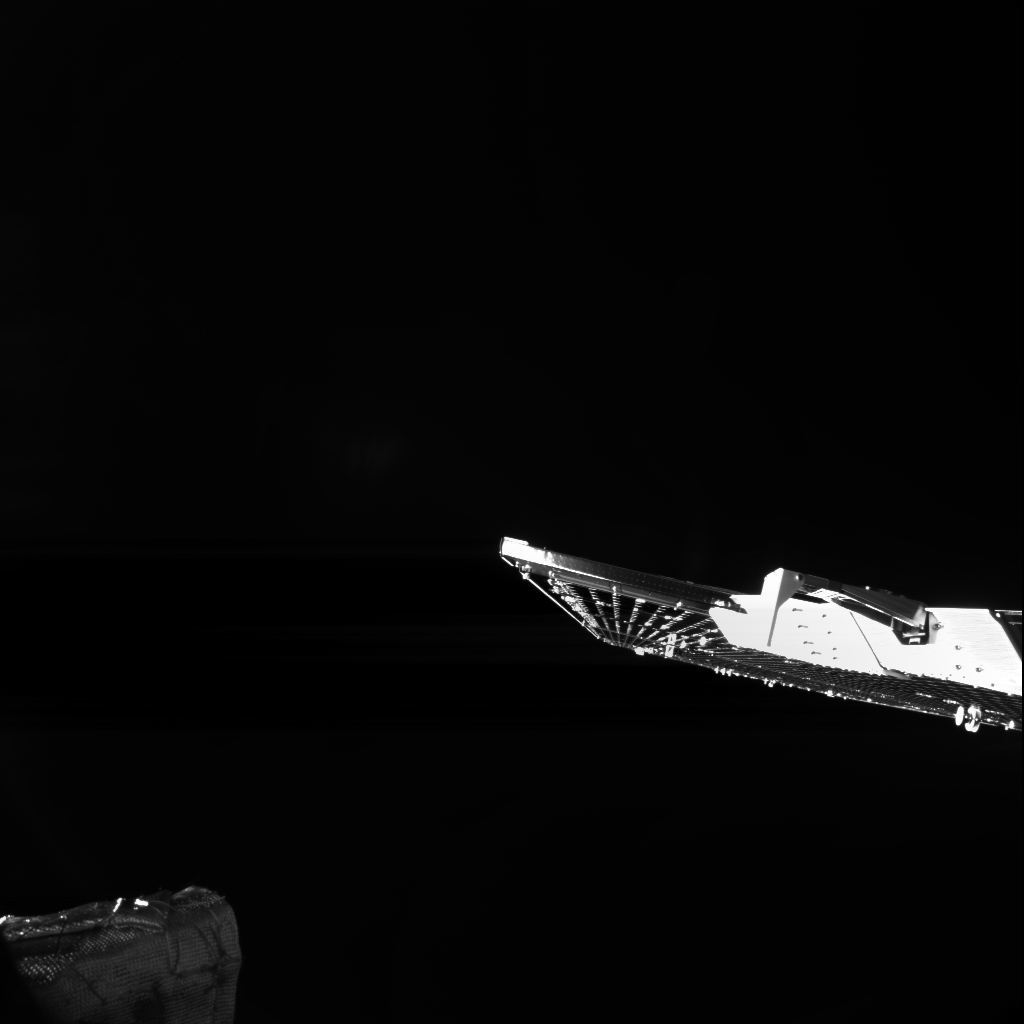
By the time MTM completed its task, BepiColombo had spent almost eight years travelling through the inner Solar System, covering about 9.9 billion km (6.2 billion miles) and completing nine planetary flybys. The transfer module had supplied power and solar-electric propulsion during the long trajectory needed to match Mercury’s orbit closely enough for capture.

The September calibration also served as an instrument health check after the cruise. MIXS Principal Investigator Emma Bunce and the University of Leicester team reported no detector radiation damage after eight years in space. Galactic cosmic rays continue to leave signatures in the detector data, as they did during cruise, but the team says those effects are understood and can be filtered during processing.
The team also identified self-fluorescence when sunlight illuminates the telescope optics. Leicester reports that the effect will not interfere with dayside observations of Mercury’s surface. Other instrumental effects remain under study, and optimization procedures are planned during the Mercury commissioning phase.
How MIXS will read Mercury’s surface
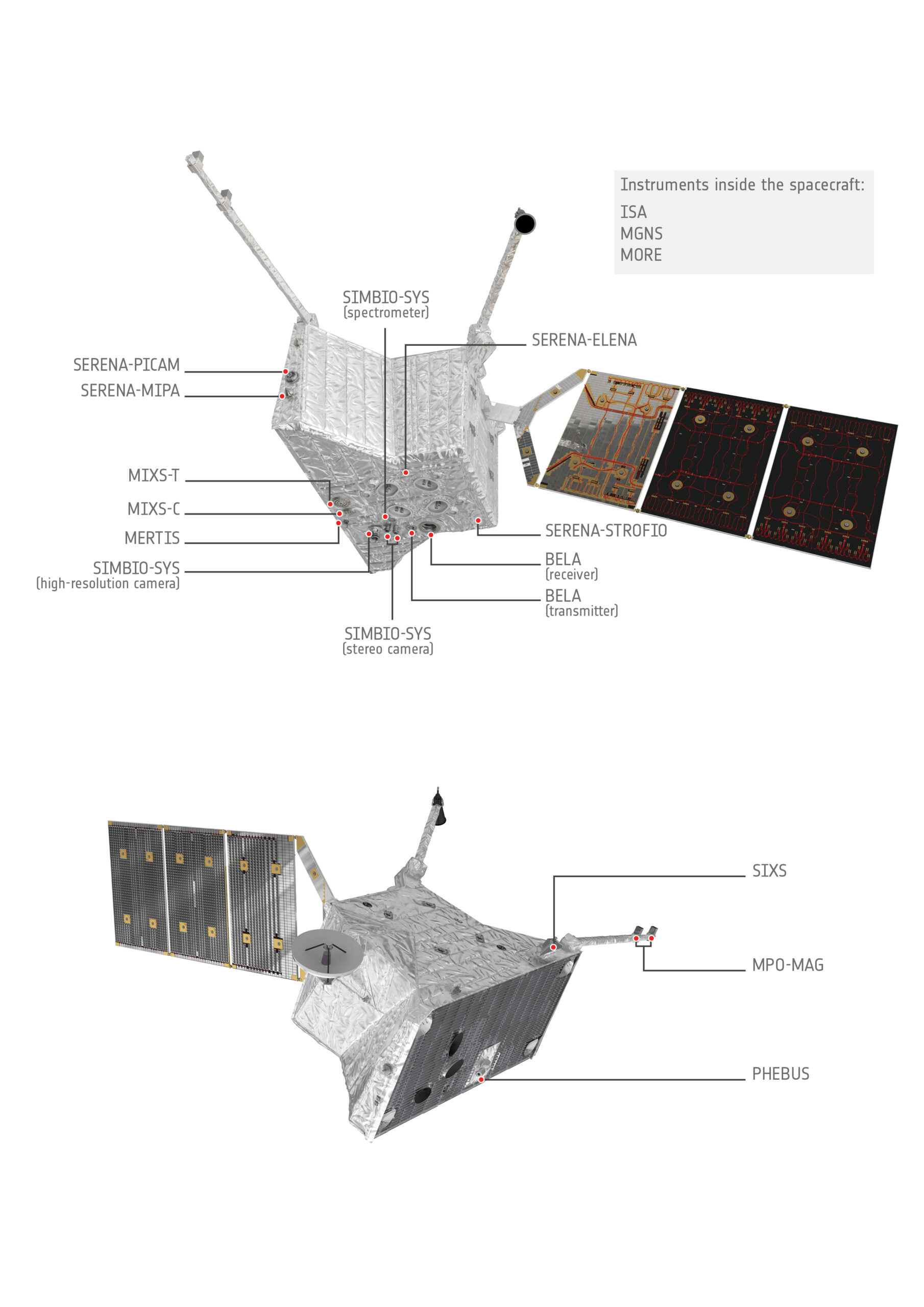
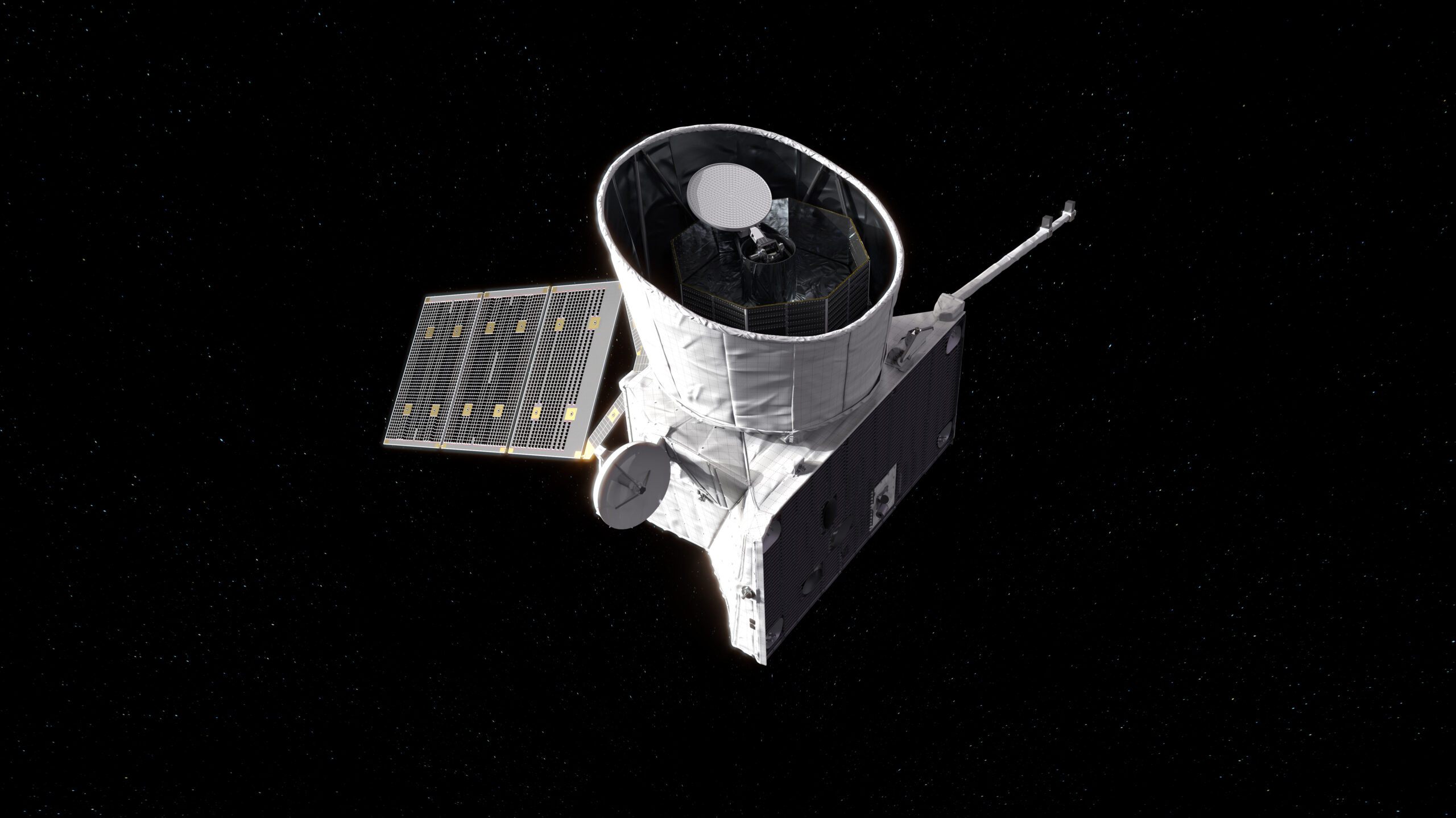
MIXS is mounted on ESA’s Mercury Planetary Orbiter and was developed by a European consortium led by the University of Leicester. Its main scientific task is to investigate the atomic composition of Mercury’s surface through X-ray fluorescence.
Solar X-rays carry enough energy to disturb electrons in atoms at Mercury’s surface. When those atoms return to lower-energy states, they can emit fluorescent X-rays at characteristic energies. Elements therefore leave identifiable signatures in the X-ray spectrum, allowing an orbiting detector to determine which major elements are present without collecting a physical sample.
MIXS works with the Solar Intensity X-ray and particle Spectrometer (SIXS), which measures the solar X-rays and particles reaching Mercury. That simultaneous measurement is important because the strength of the fluorescent signal from the surface depends on the radiation striking it. Scientists need to know how strongly the Sun illuminated the surface before interpreting differences measured by MIXS as differences in composition.
Why two MIXS channels are used
MIXS includes the telescope channel MIXS-T and the collimated channel MIXS-C. The telescope provides imaging capability for more detailed measurements of selected regions, while the broader channel contributes coverage over larger areas. The September Crab Nebula image came from the imaging telescope channel, MIXS-T.
Keep reading
MIXS is also designed to observe X-rays from Mercury’s nightside when charged particles from the planet’s magnetosphere interact with surface material. Measurements from the surface and surrounding particle environment can therefore be studied together to investigate the exchange between Mercury and its magnetosphere.
The University of Leicester describes MIXS as the first imaging X-ray telescope operating on a planetary science mission. The scope of that claim is important: planetary missions have carried X-ray spectrometers before, but Leicester’s statement concerns an imaging X-ray telescope designed for planetary science.
BepiColombo reaches Mercury

The MIXS calibration was completed before BepiColombo entered orbit around Mercury. At 18:24 UTC on November 21, 2026, MPO’s four axial thrusters began firing as the spacecraft passed about 635 km (395 miles) above Mercury’s surface. The burn was expected to last 37 minutes and was intended to convert the spacecraft’s weak gravitational capture into a stable orbit.
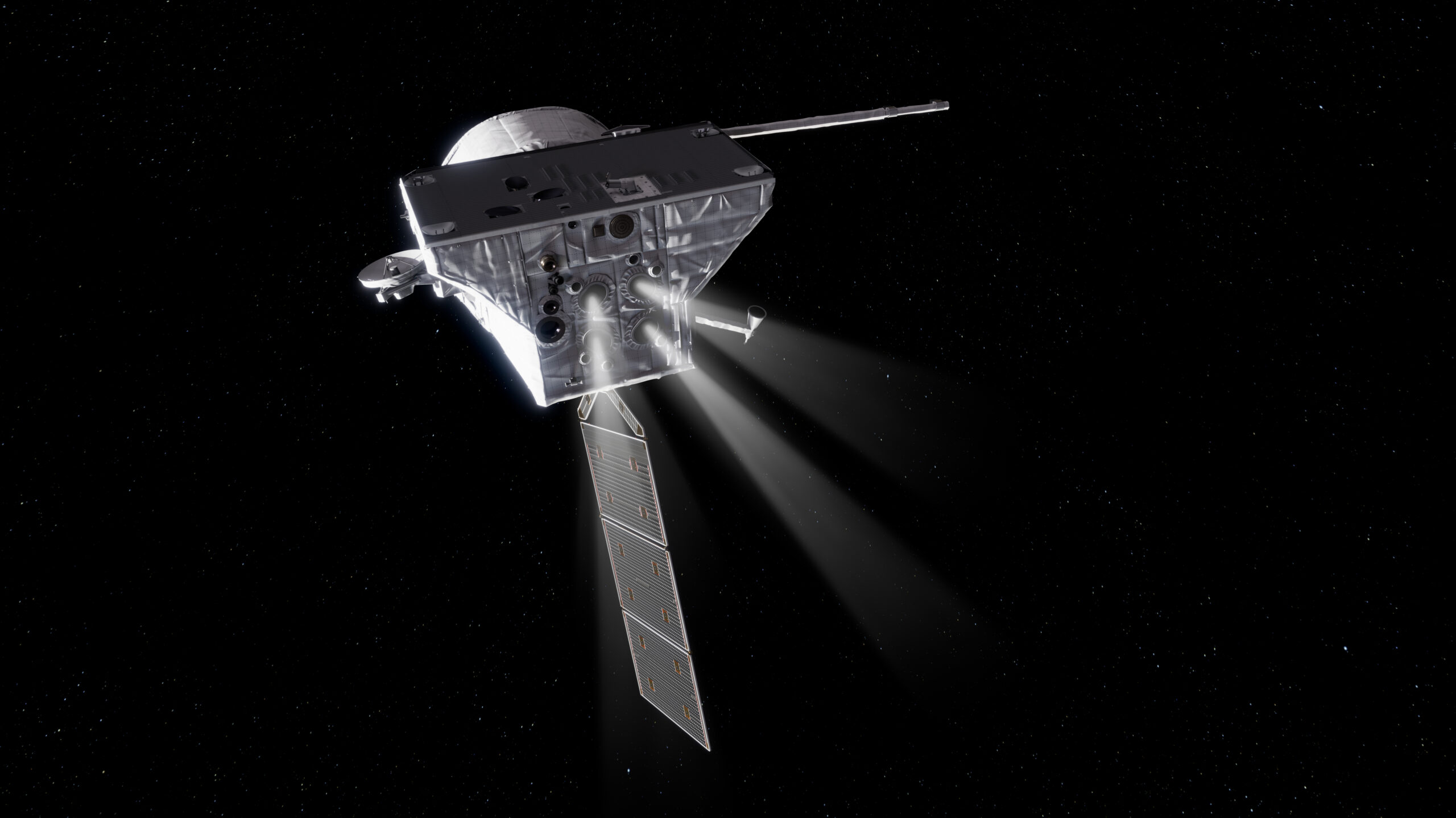
The manoeuvre ended earlier than planned and the spacecraft entered safe mode. ESA’s flight-control team determined that the shortened burn achieved around 77% of the planned velocity change. The agency traced the interruption to a software issue involving attitude guidance and thruster control.
Despite the shortened burn, BepiColombo was captured into a stable orbit around Mercury. ESA reports an orbital period of about 75 hours rather than the originally planned 58 hours. The remaining manoeuvre sequence was adapted to the new trajectory without requiring additional thruster burns beyond those already planned.
Mercury orbit insertion used a weak-stability-capture approach in which the spacecraft arrived at relatively low speed before chemical thruster burns converted temporary gravitational capture into a lasting orbit. ESA reports that the technique had previously been used by spacecraft travelling to Earth’s Moon but not to enter orbit around another planet.
Current mission status: BepiColombo is safe in a stable orbit around Mercury. ESA says the altered trajectory does not prevent separation of the two science orbiters on December 9–10 or MPO reaching its planned science orbit.
What happens next
ESA’s current arrival schedule calls for MPO and Mio to separate on December 9–10, 2026. Further orbital manoeuvres will then move the spacecraft toward their individual science orbits, with the formal science phase scheduled to begin in April 2027.
For MIXS, the transition will move the instrument from known astronomical calibration targets to X-rays generated at Mercury itself. Measurements of the surface will then be interpreted alongside the solar X-ray and particle environment recorded by SIXS and observations from the mission’s other instruments.
The September calibration does not yet establish the composition of any region on Mercury, and the University of Leicester release does not provide a numerical angular-resolution result or uncertainty for the reported improvement over the 2015 laboratory measurement. The first planetary observations will therefore provide the more consequential test of how the instrument’s in-space performance translates into measurements of Mercury’s surface.
References:
1 First X-ray imaging instrument at another planet releases first picture since launch – University of Leicester – November 20, 2026
2 BepiColombo safely in Mercury orbit despite unexpected challenge – European Space Agency – November 23, 2026
3 MPO’s science instruments – European Space Agency – July 5, 2017

I’m a science journalist and researcher at The Watchers, contributing to the Epicenter edition, where I cover peer-reviewed scientific research and emerging discoveries across Earth and space sciences. With a background in astronomy and a passion for environmental science, I’ve worked in shark and coral conservation in Fiji, conducting reef and shark-behavior research, contributing to mangrove restoration, and earning PADI Open Water and Coral Reef Certifications. I bring a blend of scientific rigor and storytelling to illuminate the discoveries shaping our planet and beyond.
More reporting
- Antarctica’s blue ice has yielded more than 45 000 meteorites, but about 5 000 a year are becoming inaccessible
- Chipmaking plasma releases oxygen-related gases from lunar-regolith simulants below 400°C
- KIC 4737720 changes its dominant pulsation as Kepler’s own cycle mimics stellar drift
- Global simulation reveals how successive solar eruptions overtake and magnetically merge
