
Sudden heat shock linked to poorest honey bee survival in laboratory study
Honey bees abruptly shifted from 33°C (91.4°F) to daytime temperatures of 40°C (104°F) recorded the poorest survival among six experimental groups in a two-week laboratory study, while bees exposed continuously to the same daytime heat fared better. The experiment also found that heat altered specific gut bacteria rather than broadly disrupting the microbiome, with nutrition emerging as an important part of the bees’ physiological response.
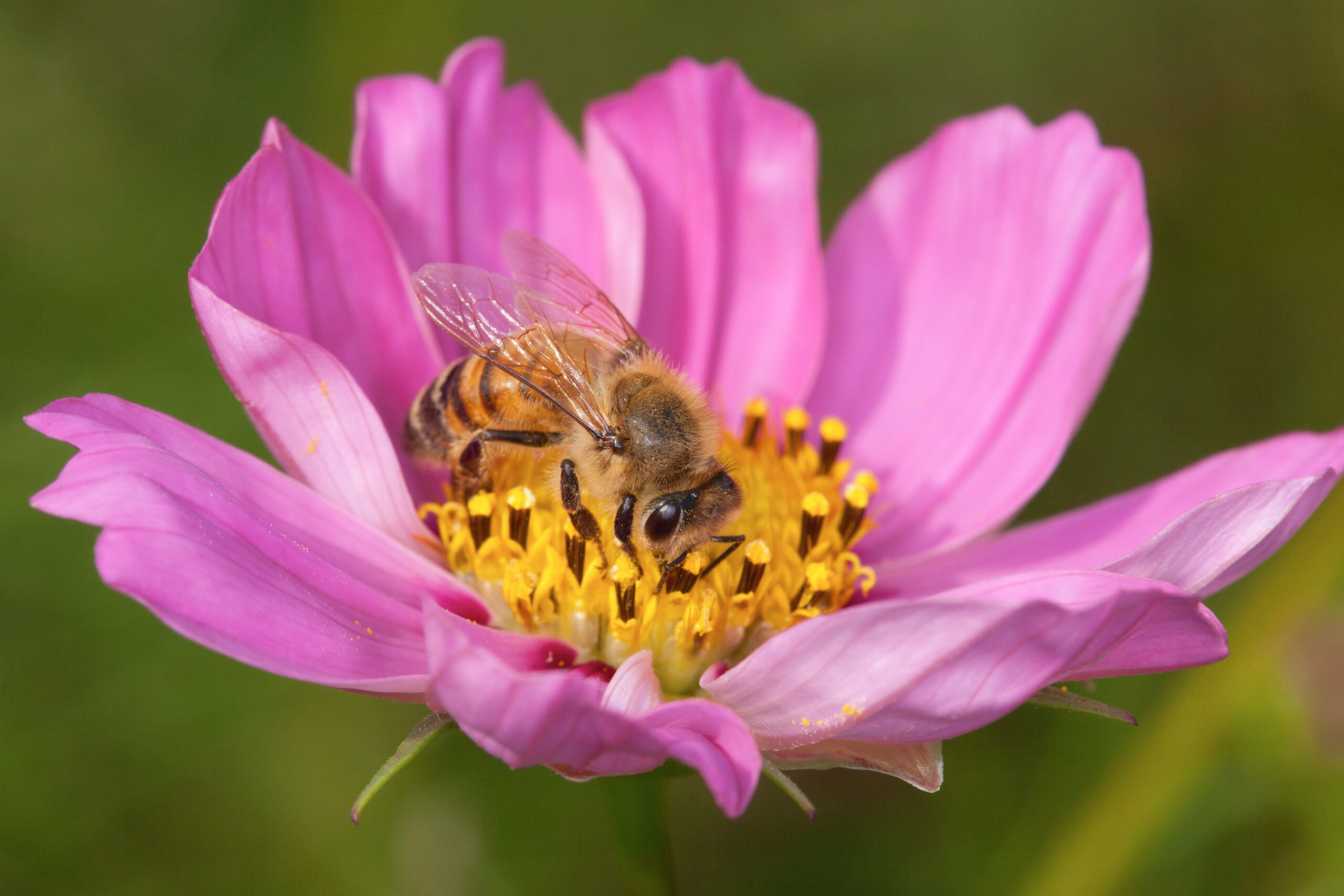
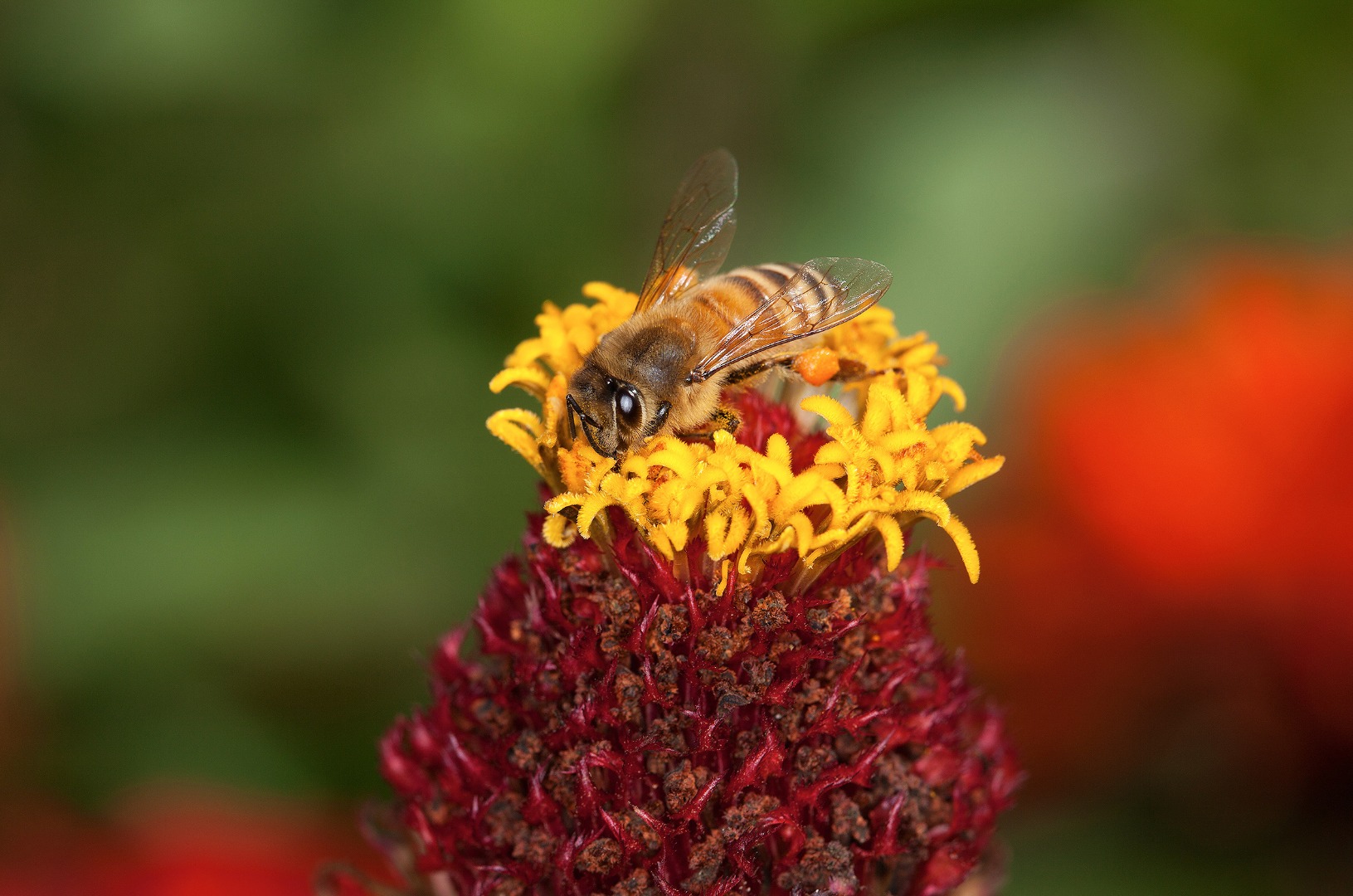
A honey bee feeds on Cosmos bipinnatus at the USDA Agricultural Research Service Bee Research Laboratory pollinator garden in Beltsville, Maryland. Pollen supplies young worker bees with proteins, lipids and micronutrients needed for development and physiological function. Credit: Peggy Greb, USDA/ARS. Public domain.
The contrast matters because most experiments ask what high temperature does to an organism, while this study also tested whether when the heat begins changes the response. Honey bee colonies routinely regulate temperature collectively, but far less is known about how newly emerged workers respond when a high-temperature regime is present from the beginning of adult life compared with an abrupt shift several days later.
The researchers found a strong treatment pattern in survival, selective changes among gut bacterial taxa, and comparatively limited evidence for broad heat-driven changes in the proteome. The results point toward an interaction among thermal history, nutrition and worker physiology, but an important feature of the experimental design prevents the study from proving that temperature history alone caused the observed survival differences.
| Experimental group | Days 1–7 | Days 8–14 | Diet |
|---|---|---|---|
| Control | 33°C (91.4°F) | 33°C (91.4°F) | Pollen or no pollen |
| Chronic heat stress | 40°C (104°F) daytime / 33°C (91.4°F) nighttime | 40°C (104°F) daytime / 33°C (91.4°F) nighttime | Pollen or no pollen |
| Acute heat shock | 33°C (91.4°F) | 40°C (104°F) daytime / 33°C (91.4°F) nighttime | Pollen or no pollen |
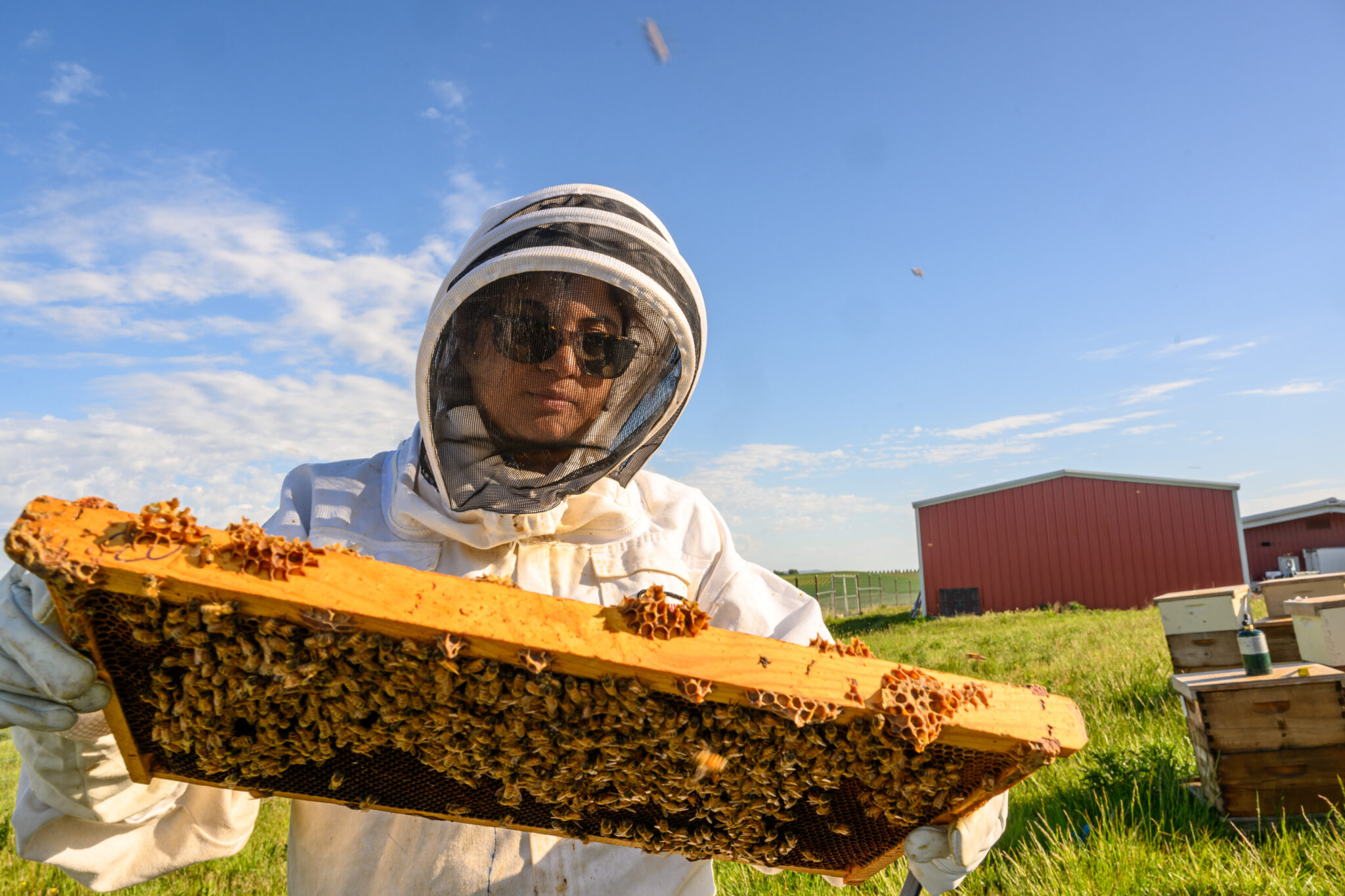
The researchers collected 18 frames of ready-to-emerge capped brood from six honey bee colonies headed by sister queens. After emergence under controlled conditions, 150 newly emerged Apis mellifera workers were randomly placed into each experimental cage.
Each of the three temperature regimes contained three replicate cages receiving multifloral pollen and three replicate cages without pollen. All cages had unrestricted access to water and sugar syrup. The experiment continued for 14 days, encompassing much of the pollen-consuming nurse-age period of young adult workers.
Mortality differed significantly among the six groups. The acute heat-shock groups, with and without pollen, had the highest mortality overall. The control groups followed, while bees kept under chronic heat stress from the beginning of adult life produced the highest survival curves.
The pairwise statistics require a narrower interpretation than the overall ranking. The acute heat-shock group deprived of pollen had significantly greater mortality than both chronic heat-stress groups and than the control group without pollen. The paper does not report that every heat-shock comparison against every other group was independently significant.
| Finding | What the experiment showed | What it does not establish |
|---|---|---|
| Survival | Acute heat-shock groups had the poorest survival overall | That every acute-versus-control comparison was statistically significant |
| Nutrition | Pollen availability was associated with lower mortality under stressed conditions | That pollen alone caused the survival differences |
| Gut microbiome | Specific bacterial taxa changed with treatment | Broad collapse or wholesale restructuring of the microbiome |
| Proteome | Specific proteins differed among treatments | A strong global heat-driven proteomic shift |
| Thermal history | Chronic and abrupt heat treatments produced different survival patterns | That physiological acclimation or hormesis was proven as the cause |
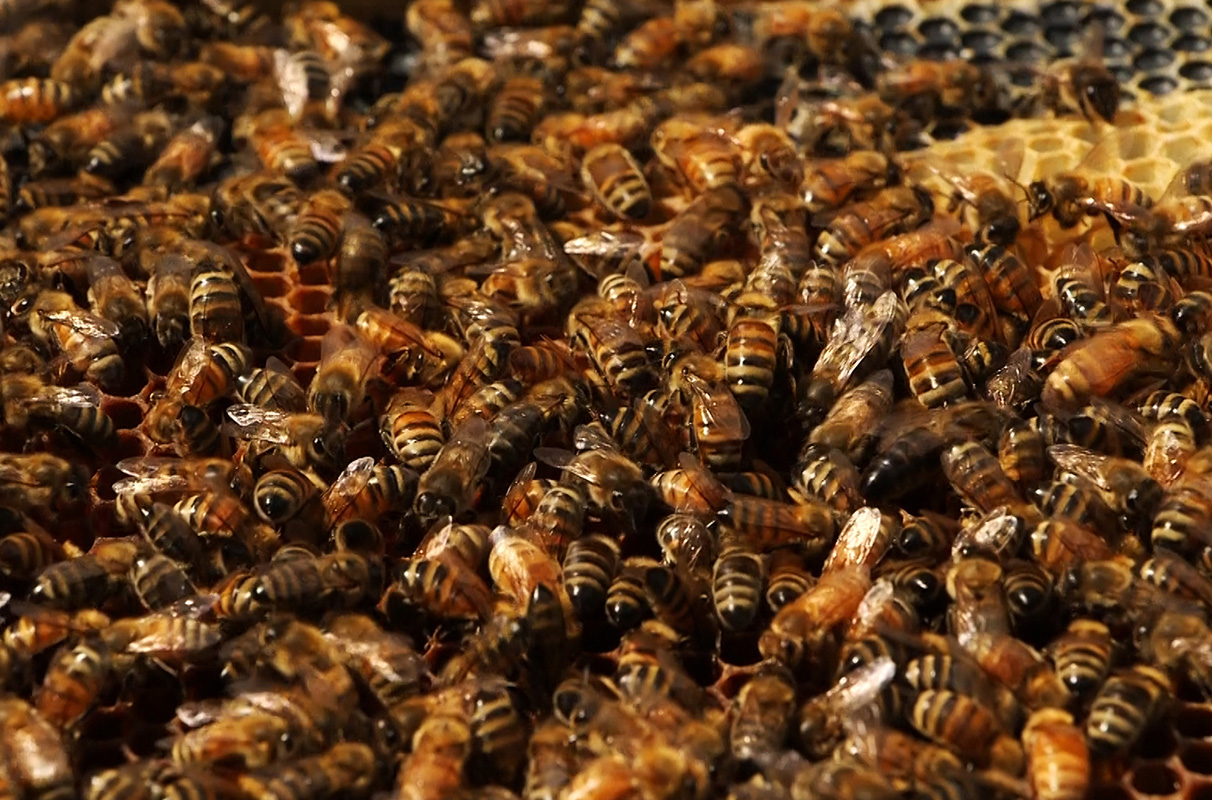
Pollen availability added another dimension to the survival pattern. Bees supplied with pollen showed lower mortality across stressed treatments than corresponding groups without pollen. Pollen is the principal source of protein, amino acids, lipids, sterols and other micronutrients for young worker bees, making nutrition biologically relevant when the animals are simultaneously exposed to environmental stress.
During the first week, chronically heat-stressed bees consumed 45.26 ± 1.47 mg (0.70 ± 0.02 grains) of pollen per bee per cage per week. Control bees consumed 53.63 ± 0.47 mg (0.83 ± 0.01 grains), while bees assigned to the later heat-shock treatment consumed 54.00 ± 1.53 mg (0.83 ± 0.02 grains). At that point, the future heat-shock group was still being held at the control temperature.
During the second week, after the acute group had been shifted to elevated daytime temperature, those bees consumed 18.55 ± 0.65 mg (0.29 ± 0.01 grains) of pollen per bee per cage per week. Control bees consumed 13.65 ± 0.24 mg (0.21 ± 0.004 grains), while chronically heat-stressed bees consumed 15.78 ± 1.14 mg (0.24 ± 0.02 grains).
The authors describe the higher second-week pollen consumption by the heat-shock group as a possible response to the imposed stress. The experiment did not test whether eating more pollen directly repaired heat-related damage, so a compensatory mechanism remains an interpretation rather than a demonstrated causal process.
Sugar syrup consumption did not differ significantly among the experimental groups. Water consumption produced a significant overall temperature effect in the analysis of variance, but subsequent pairwise comparisons did not identify significant differences between individual groups.
The water measurements also carry an experimental qualification. The researchers did not include evaporation controls. Some apparent differences in the amount of water disappearing from cages could therefore have resulted from faster evaporation at higher temperatures rather than differences in how much the bees drank.
Heat changed particular gut bacteria, not the entire microbiome
The gut microbiome produced a more selective response than the survival data. Researchers detected 1 496 unique amplicon sequence variants across the samples. An amplicon sequence variant is a distinct DNA sequence used to distinguish microbial organisms at fine taxonomic resolution.
The dominant bacteria belonged to the familiar core community of adult honey bees, including Snodgrassella alvi, Gilliamella apicola, Lactobacillus species, Bifidobacterium asteroides and Bombella species. These microorganisms participate in processes including carbohydrate breakdown, nutrient metabolism and resistance to colonization by harmful microbes.
Measures of alpha diversity, which describe how many types of bacteria occur within a sample and how evenly they are distributed, did not differ among treatments. Analysis of beta diversity, which compares the composition of entire microbial communities between samples, also found no consistent separation based on heat treatment.
Sampling time produced the strongest significant whole-community effect. In physical terms, the microbial community changed more consistently as the young bees aged from emergence through the two-week experiment than it did according to whether they were in the control, chronic-heat or acute-heat environment.
Differences emerged when the researchers examined individual bacterial taxa rather than the community as a whole. ANCOM-BC2, a statistical method designed to detect changes in microbial abundance while accounting for the compositional nature of microbiome data, identified Bombella intestini as the only significantly differentially abundant taxon under its multiple-testing criteria.
Bombella intestini was significantly less abundant under chronic heat stress than in both control and acute heat-shock groups. A second analytical method, DESeq2, also detected treatment-associated differences involving Lactobacillus apis, Gilliamella apicola and Bifidobacterium asteroides.
The two analyses therefore support a taxon-specific response rather than wholesale microbial disruption. A gut community can remain broadly stable in diversity and overall composition while particular members become more or less abundant, potentially changing individual microbial functions without dismantling the entire ecosystem.
How to read the microbiome result
Community-level result: the experiment did not find a broad loss of bacterial diversity or a clear heat-driven separation of whole microbial communities.
Taxon-level result: individual bacteria changed in abundance. Bombella intestini produced the strongest result under the ANCOM-BC2 analysis, while DESeq2 detected additional taxa.
Interpretation: heat exposure affected particular members of the gut microbiome more clearly than it affected the overall microbial community structure.
The protein response was narrower than expected
The researchers also analyzed the bees’ proteome, the collection of proteins detected in their bodies. They identified 2 008 distinct proteins across the experimental groups, including 425 that were uncharacterized relative to the Apis mellifera proteins represented in the UniProt database.
Forty proteins differed significantly across experimental groups in the multiple-testing analysis. The researchers then focused on 27 proteins associated with nutrition, oxidative stress and heat response to determine which experimental factors were most closely associated with their abundance.
Nutrition dominated many of the protein-level differences on day 7. Several major royal jelly proteins, heat-shock proteins and antioxidant-related proteins were strongly associated with pollen supplementation, while temperature produced significant effects in fewer cases.
Keep reading
By day 14, fewer proteins differed among the experimental groups. Temperature effects remained for some proteins, including vitellogenin and selected stress-response proteins, but the study did not find a strong global proteomic response attributable to heat alone across the measured temperature range.
Sampling interval is important when interpreting that result. Heat-shock proteins can respond within hours after acute thermal exposure. Because the study collected proteomic samples at weekly intervals, an early molecular response could have risen and subsided before the day-7 or day-14 measurements.
The authors therefore identify earlier sampling, including approximately 24 to 48 hours after exposure, as an important target for future experiments. Such sampling could distinguish an absent heat response from a rapid response that was simply missed by the weekly schedule.
Why intact colonies complicate the heat story
Individual workers in laboratory cages do not experience heat in the same way as bees inside a functioning colony. Honey bees are eusocial insects, and an intact colony actively maintains brood temperatures within a narrow range of approximately 33–36°C (91.4–96.8°F).
Workers can fan their wings to move air through the hive, collect and distribute water for evaporative cooling, change their position inside the nest and redistribute labor as conditions change. Thousands of individuals therefore contribute to a thermal environment that a cage containing 150 newly emerged workers cannot reproduce.
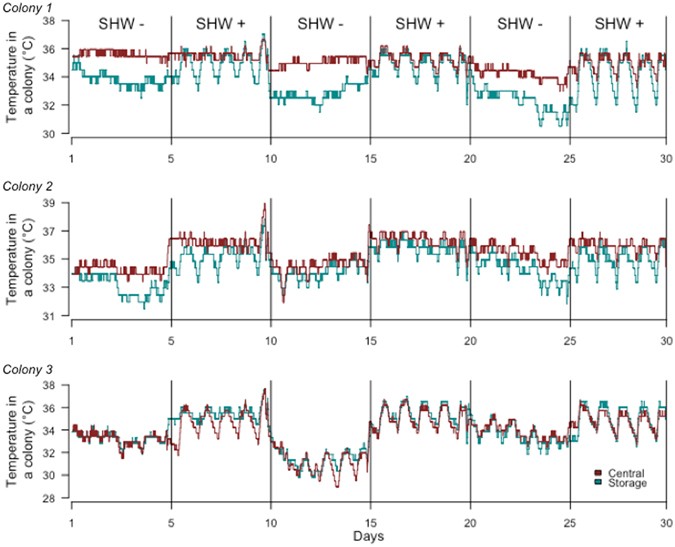
That distinction is visible in a separate colony experiment published in 2017. Researchers exposed colonies to repeated five-day periods in which the surrounding apiary rose from a 23°C (73.4°F) control environment to simulated daytime heat reaching 37°C (98.6°F).
The colonies altered their behavior under the hotter conditions. Overall foraging activity increased, water foraging increased, and brood-associated regions could remain comparatively stable where brood was present near temperature sensors. The earlier study demonstrates how collective behavior can buffer internal conditions even when the surrounding air becomes substantially hotter.
The 2026 results therefore establish responses among age-controlled groups of caged workers under specific laboratory conditions. They do not directly demonstrate how a complete colony would survive a natural heat wave, nor do they establish the response of solitary bee species that lack honey bees’ colony-level thermoregulation.

A possible acclimation effect remains unproven
Priyadarshini Chakrabarti Basu, who designed the research questions, obtained funding and supervised the project, proposed hormesis as one possible explanation for the different survival patterns. Hormesis describes a biological response in which previous exposure, dose or timing of a stressor changes an organism’s later response to that stress.
Under that interpretation, workers that emerged directly into the chronic heat regime had time to adjust physiologically, while bees kept at 33°C (91.4°F) for their first week encountered a sharper biological disturbance when daytime temperatures abruptly rose to 40°C (104°F).
“Animals can rapidly adapt to environmental stress.”
Priyadarshini Chakrabarti Basu, Washington State University
The experiment did not directly identify a physiological pathway demonstrating that hormesis caused the survival pattern. Chronic exposure and acute exposure were associated with different outcomes, while acclimation remains a proposed mechanism requiring independent experimental confirmation.
Critical experimental limitation: one incubator per temperature regime
Each of the three thermal regimes was maintained in a single incubator. The researchers replicated cages inside those environments, but they did not independently replicate the incubators assigned to control, chronic heat stress and acute heat shock.
An incubator-specific characteristic could therefore be confounded with the temperature treatment. Statistically independent replication of cages does not completely remove that environmental-level confounding.
The authors explicitly state that temperature-related findings should be interpreted cautiously and recommend future experiments using independently replicated incubators.
The limitation is central to the causal interpretation of the study. The survival curves show that bees in the three experimental environments behaved differently, but the design cannot separate every temperature effect from every characteristic unique to the individual incubators.
Independent replication of thermal environments would test whether the same ordering reappears when multiple incubators run each temperature regime. Earlier molecular sampling could then establish whether chronic heat exposure produces measurable physiological acclimation before an acute heat response develops.
Moving the work from caged workers into intact colonies would address a second unresolved question: whether social thermoregulation erases, weakens or reshapes the difference between chronic and sudden heat exposure observed in the laboratory.
References:
1 Baugus, L., Walt, H. K., Gautam, A., Yang, L., & Chakrabarti, P. (2026). Effects of heat stress on honey bee physiology and gut microbiome under laboratory conditions. Scientific Reports, 16, 36772. DOI: 10.1038/s41598-026-78330-7
2 Sudden heat spikes harmful to honey bees, WSU study finds – Washington State University – November 18, 2026
3 Bordier, C., Dechatre, H., Suchail, S., Peruzzi, M., Soubeyrand, S., Pioz, M., Pélissier, M., Crauser, D., Le Conte, Y., & Alaux, C. (2017). Colony adaptive response to simulated heat waves and consequences at the individual level in honeybees (Apis mellifera). Scientific Reports, 7, 3760. DOI: 10.1038/s41598-017-03944-x

I’m a science journalist and researcher at The Watchers, contributing to the Epicenter edition, where I cover peer-reviewed scientific research and emerging discoveries across Earth and space sciences. With a background in astronomy and a passion for environmental science, I’ve worked in shark and coral conservation in Fiji, conducting reef and shark-behavior research, contributing to mangrove restoration, and earning PADI Open Water and Coral Reef Certifications. I bring a blend of scientific rigor and storytelling to illuminate the discoveries shaping our planet and beyond.
More reporting
- Hotter summers could deepen aircraft takeoff weight restrictions at Euro-Mediterranean airports
- WMO expands El Niño preparedness as event nears late-2026 peak
- Hundreds of landslides turned Yuzhong’s 2025 flash floods into destructive debris-flow surges
- KIC 4737720 changes its dominant pulsation as Kepler’s own cycle mimics stellar drift
