
KIC 4737720 changes its dominant pulsation as Kepler’s own cycle mimics stellar drift
Astronomers studying the δ Scuti star KIC 4737720 found that its principal pulsation frequencies remained comparatively stable while the relative strength of individual modes changed enough for the dominant oscillation to switch over time. A second pattern looked like real stellar frequency evolution but recurred about every 372 days, almost exactly matching Kepler’s approximately 372.5-day annual roll cycle and pointing instead to an instrumental effect.
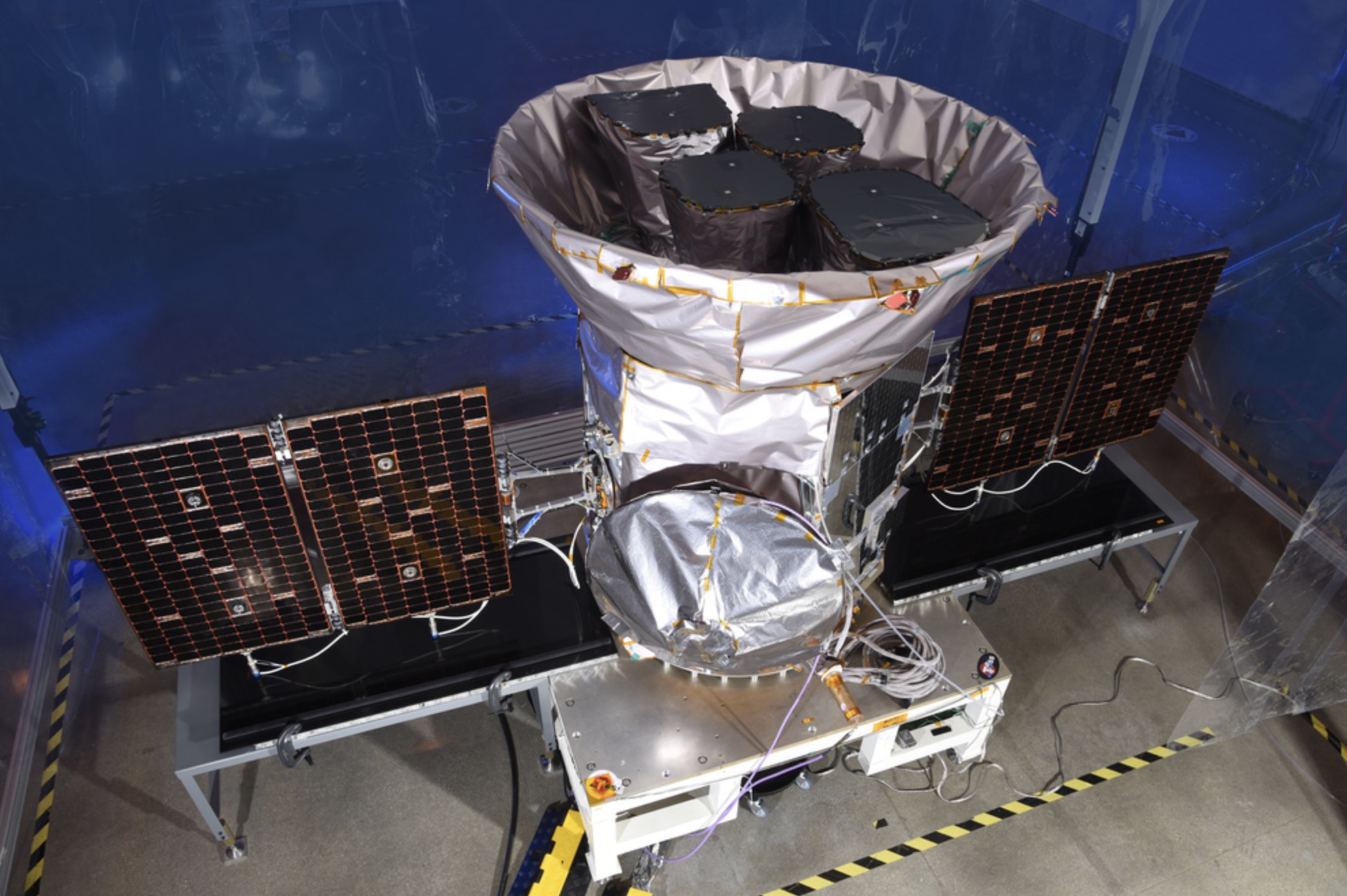
NASA's fully integrated Transiting Exoplanet Survey Satellite (TESS) before launch, showing its four wide-field cameras and deployed solar panels. Credit: Orbital ATK
δ Scuti stars change brightness because waves moving through their interiors make different regions of the star expand and contract. Several pulsation modes can operate at the same time, each producing a characteristic frequency and amplitude in the measured light curve. Tracking those patterns over long intervals allows astronomers to study stellar interiors through asteroseismology, but it also creates a demanding observational problem: a slowly changing signal can belong either to the star or to the telescope watching it.
Yao et al. (2026) examined KIC 4737720 using long-term photometric observations from NASA’s Kepler and Transiting Exoplanet Survey Satellite (TESS) missions. Their analysis separates those two possibilities in the same dataset. The relative amplitudes of the star’s principal pulsation modes genuinely changed, while a second pattern resembling frequency drift repeated on a timescale closely associated with Kepler’s observing cycle.
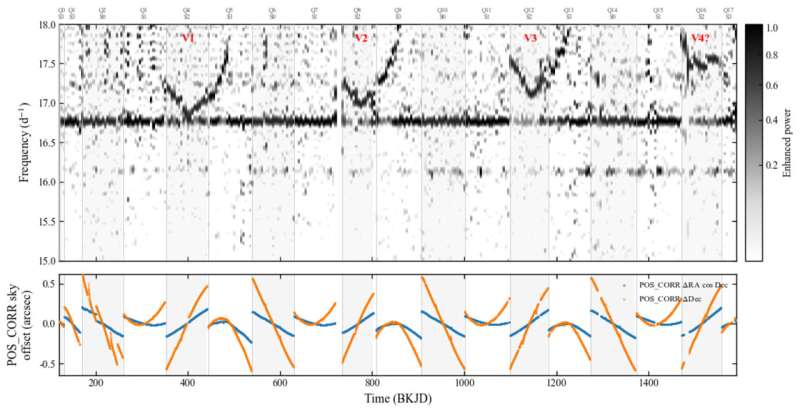
During the Kepler observations, one pulsation component that initially dominated the star’s brightness variations gradually weakened while another became stronger and eventually surpassed it. Later TESS observations showed another change in the dominant component. The principal frequencies themselves remained comparatively stable.
The distinction is physically important. Frequency describes how rapidly a particular oscillation repeats, while amplitude describes how strongly that oscillation appears in the measured brightness signal. KIC 4737720 therefore did not simply move its principal pulsations to entirely different frequencies. Instead, the relative prominence of several existing pulsation components changed with time.
| Observed feature | Evidence | Interpretation |
|---|---|---|
| Changing dominant pulsation mode | Mode amplitudes changed substantially through the Kepler observations and changed again in later TESS data | Intrinsic stellar variability |
| Main pulsation frequencies | Remained comparatively stable | The dominant change occurred mainly in amplitude rather than large frequency migration |
| V-shaped frequency drifts | Recurrence of about 372 days | More likely instrumental than stellar |
| Kepler annual roll | Approximately 372.5 days | Near-match provides the principal evidence for an observing-system origin of the recurring drifts |

δ Scuti stars pulsate on timescales of only a few hours. Sound waves moving through a star combine into different oscillation patterns at its surface, and astronomers detect those patterns through very small variations in brightness. Because the waves interact with the stellar interior before reaching the surface, their frequencies and amplitudes carry information about internal structure.
The method is complicated by rapid stellar rotation. NASA notes that δ Scuti stars can rotate much faster than the Sun, flattening their shapes and mixing together pulsation signatures that would otherwise be easier to interpret. The exact brightness variations detected from Earth or a spacecraft also depend on the orientation of the stellar rotation axis.

The researchers discuss nonlinear interactions between pulsation modes, redistribution of pulsational energy and stellar rotation as possible contributors to the changing amplitudes in KIC 4737720. The study does not establish any one of those mechanisms as the cause, leaving the physical origin of the long-term amplitude modulation unresolved.

A separate part of the KIC 4737720 analysis concerned structures in the Kepler data that looked like genuine changes in frequency. The researchers identified several V-shaped frequency-drift features and compared them with Kepler target-pixel information and pointing-correction records.
The structures recurred on a timescale of about 372 days. Kepler’s annual roll period was approximately 372.5 days, placing the two timescales extremely close together. The researchers therefore consider the V-shaped drifts more likely to result from instrumental effects associated with the telescope’s operation and observing procedure than from a periodic physical change in KIC 4737720.
Why does the 372-day match matter?
An astrophysical signal should be tested against known cycles in the instrument that recorded it. A feature repeating on nearly the same period as a spacecraft orientation or pointing cycle raises the possibility that the detector, pointing geometry or data-correction process produced the apparent variation. The similarity does not prove that every part of the feature is instrumental, but it makes an observing-system explanation more probable than treating the drift automatically as stellar evolution.
The distinction is especially important in long-baseline photometry. Multi-year datasets can expose slow physical changes that shorter observing campaigns cannot detect, but they also allow spacecraft-related cycles to repeat several times and acquire the appearance of persistent astrophysical behavior.
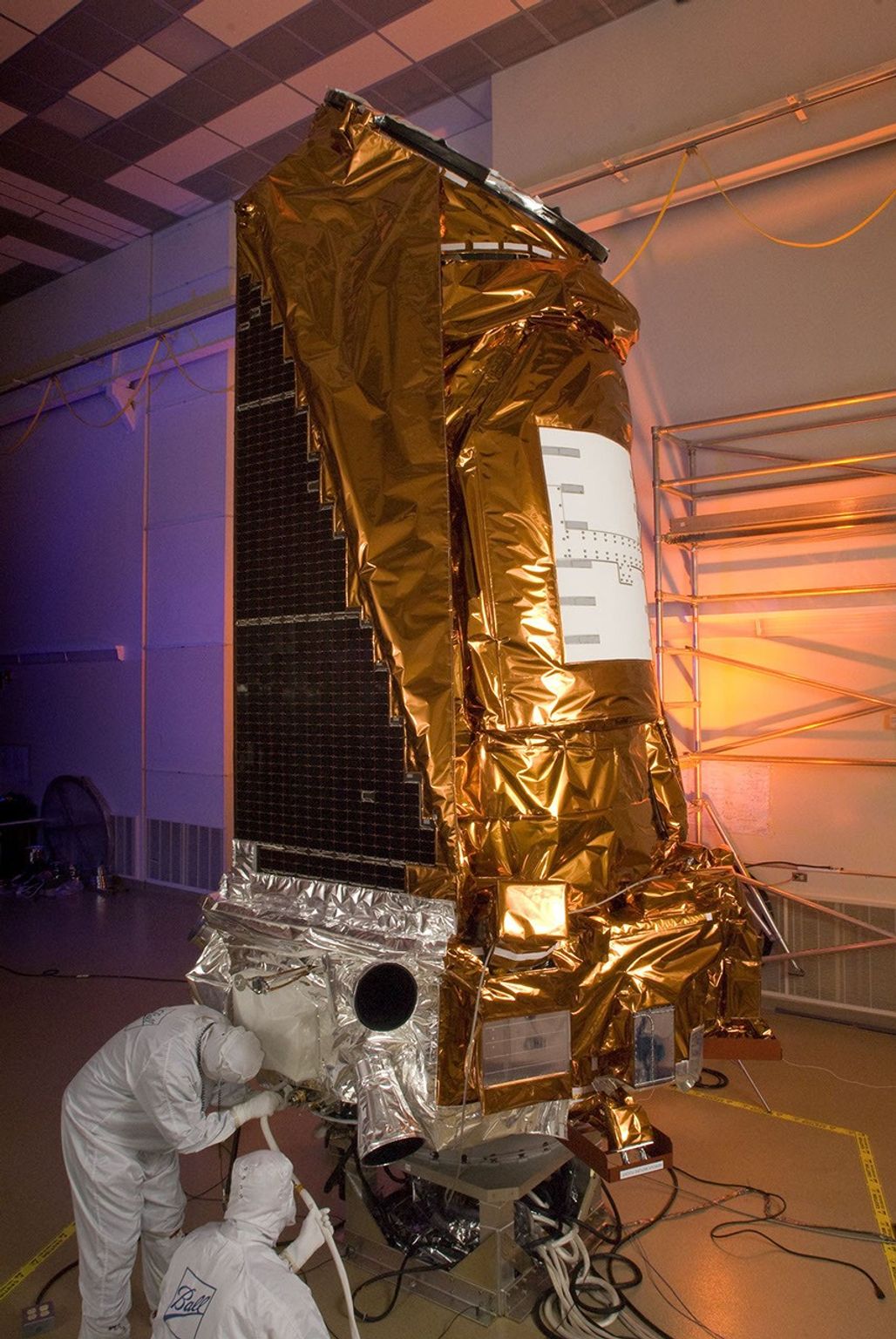
Kepler was designed for exceptionally stable, continuous photometry. Its measurements transformed exoplanet research and also produced long time series for stellar variability studies. That stability makes subtle pulsation changes measurable, while the KIC 4737720 result demonstrates why known spacecraft behavior still has to be examined whenever a periodic pattern appears in the data.
Keep reading

TESS supplied the later observational epoch. That matters because the star could be examined again with a different spacecraft after the original Kepler observations. The dominant pulsation component changed again in the TESS data, extending the evidence that the relative strengths of KIC 4737720’s modes evolve over long intervals.
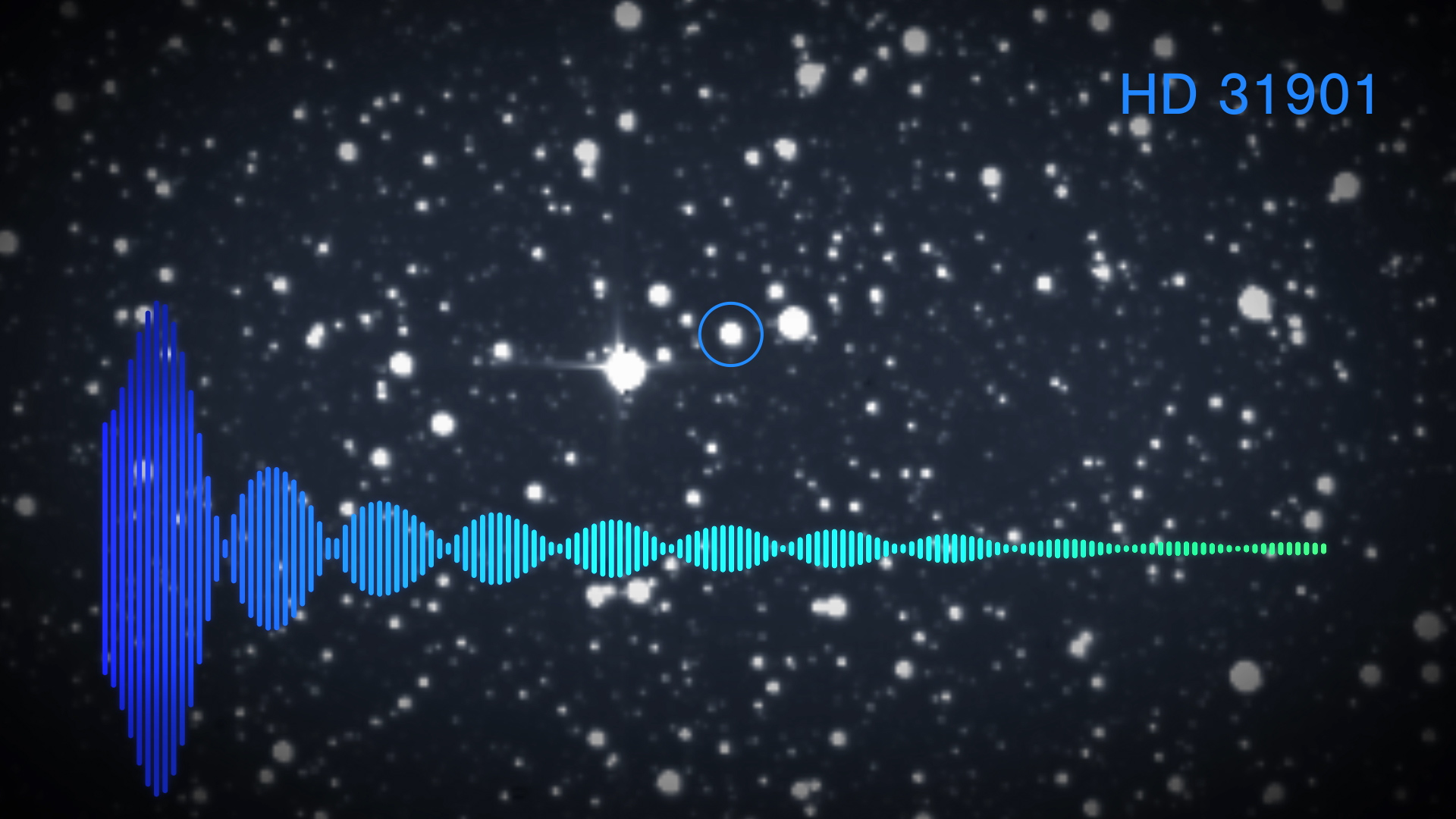

The HD 31901 material provides a useful comparison rather than evidence about KIC 4737720 itself. It demonstrates why astronomers describe δ Scuti stars as multi-mode pulsators: several oscillation patterns can coexist, overlap and change in relative prominence, turning a seemingly simple brightness curve into a record of several physical motions occurring at once.
What the study establishes — and what remains unresolved
| Status | Finding |
|---|---|
| Observed | The amplitudes of the principal pulsation components changed substantially with time. |
| Observed | The dominant pulsation component changed during the Kepler observations and changed again in later TESS observations. |
| Observed | The main pulsation frequencies remained comparatively stable. |
| Observed | V-shaped frequency structures recurred on a timescale of about 372 days. |
| Interpretation | The near-match with Kepler’s approximately 372.5-day annual roll makes an instrumental origin more likely for the recurring V-shaped drifts. |
| Unresolved | The physical mechanism responsible for the genuine long-term amplitude modulation has not been uniquely identified. |
The study therefore produces two results with different evidential status. Changes in pulsation amplitude and mode dominance are measured properties of the star’s light curve. The instrumental explanation for the recurring V-shaped frequency structures is an interpretation supported by their close timing relationship with a known Kepler observing cycle.
The distinction is scientifically useful because asteroseismology depends on treating variations in stellar light as information about the star’s interior. When an observing system can generate a pattern that resembles frequency evolution, instrument behavior becomes part of the astrophysical analysis rather than a separate engineering concern.
The Xinjiang Astronomical Observatory identifies longer time-series photometry, spectroscopic observations and pulsation models that incorporate rapid stellar rotation as possible next steps. Those measurements could test why the amplitudes of the modes change and help determine which part of the observed long-term behavior belongs to stellar physics rather than to the instruments used to measure it.
References:
1 Yao, J., Esamdin, A., Wang, H., Lv, C., Ma, S., Jumahali, A., & Kamili, K. (2026). Study of Special Pulsation Modulation Phenomena: A Case Study of the δ Scuti Star KIC 4737720. The Astrophysical Journal, 1010(2), 188. DOI: 10.3847/1538-4357/aea20a
2 Stars Can Change Their “Rhythm”: Researchers Reveal Complex Pulsation Changes in a δ Scuti Star – Xinjiang Astronomical Observatory, Chinese Academy of Sciences – November 19, 2026
3 Researchers Trace Shifting Pulsation Modes in δ Scuti Star KIC 4737720 – Chinese Academy of Sciences – November 19, 2026

I’m a science journalist and researcher at The Watchers, contributing to the Epicenter edition, where I cover peer-reviewed scientific research and emerging discoveries across Earth and space sciences. With a background in astronomy and a passion for environmental science, I’ve worked in shark and coral conservation in Fiji, conducting reef and shark-behavior research, contributing to mangrove restoration, and earning PADI Open Water and Coral Reef Certifications. I bring a blend of scientific rigor and storytelling to illuminate the discoveries shaping our planet and beyond.
More reporting
- Howard Carter found an iron dagger on Tutankhamun's right thigh in 1925; modern XRF analysis supports a meteoritic origin of the iron
- ALMA reveals a dying star's 6 500-year-old gas shell and emerging hourglass nebula
- Venus’ extreme atmosphere could preserve mineral traces of its wetter past
- Curiosity’s 49th drill hole on Mars targets clues to ancient mineral formation
