
Curiosity’s 49th drill hole on Mars targets clues to ancient mineral formation
NASA’s Curiosity rover has completed its 49th rock-sampling drill hole on Mars at a target containing unusual disc-shaped features that scientists interpret as potential crystal forms. The drilling campaign at Nazca, on the slopes of Mount Sharp, is investigating whether the shapes and mineral composition of the structures preserve evidence of the temperatures, salts and fluids involved in their formation.
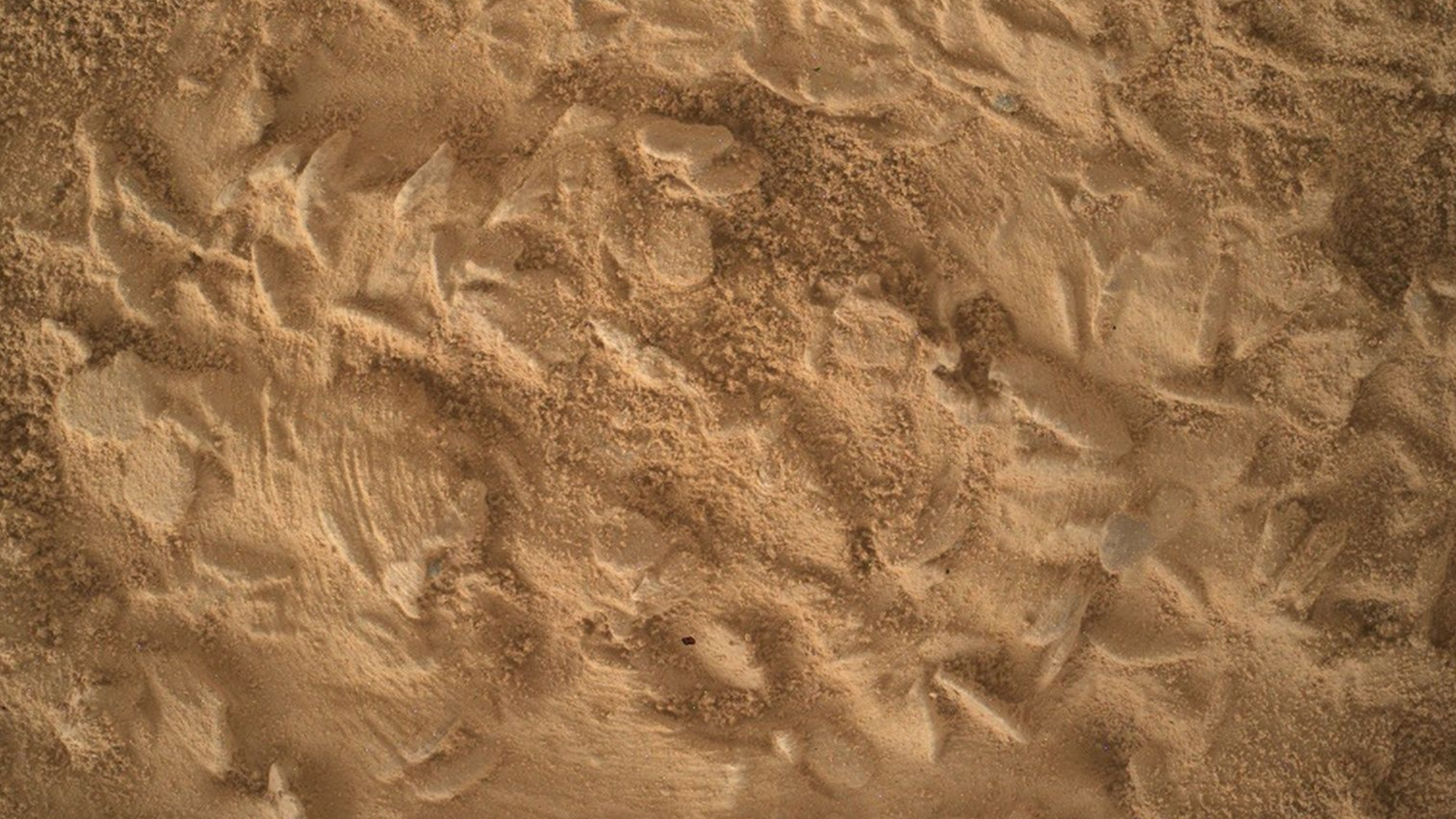
Curiosity’s Mars Hand Lens Imager composed this close-up of the Nazca drill target on October 18, 2026. Disc-shaped potential crystal forms and scratches left by the rover’s dust removal brush are visible. Credit: NASA/JPL-Caltech/MSSS
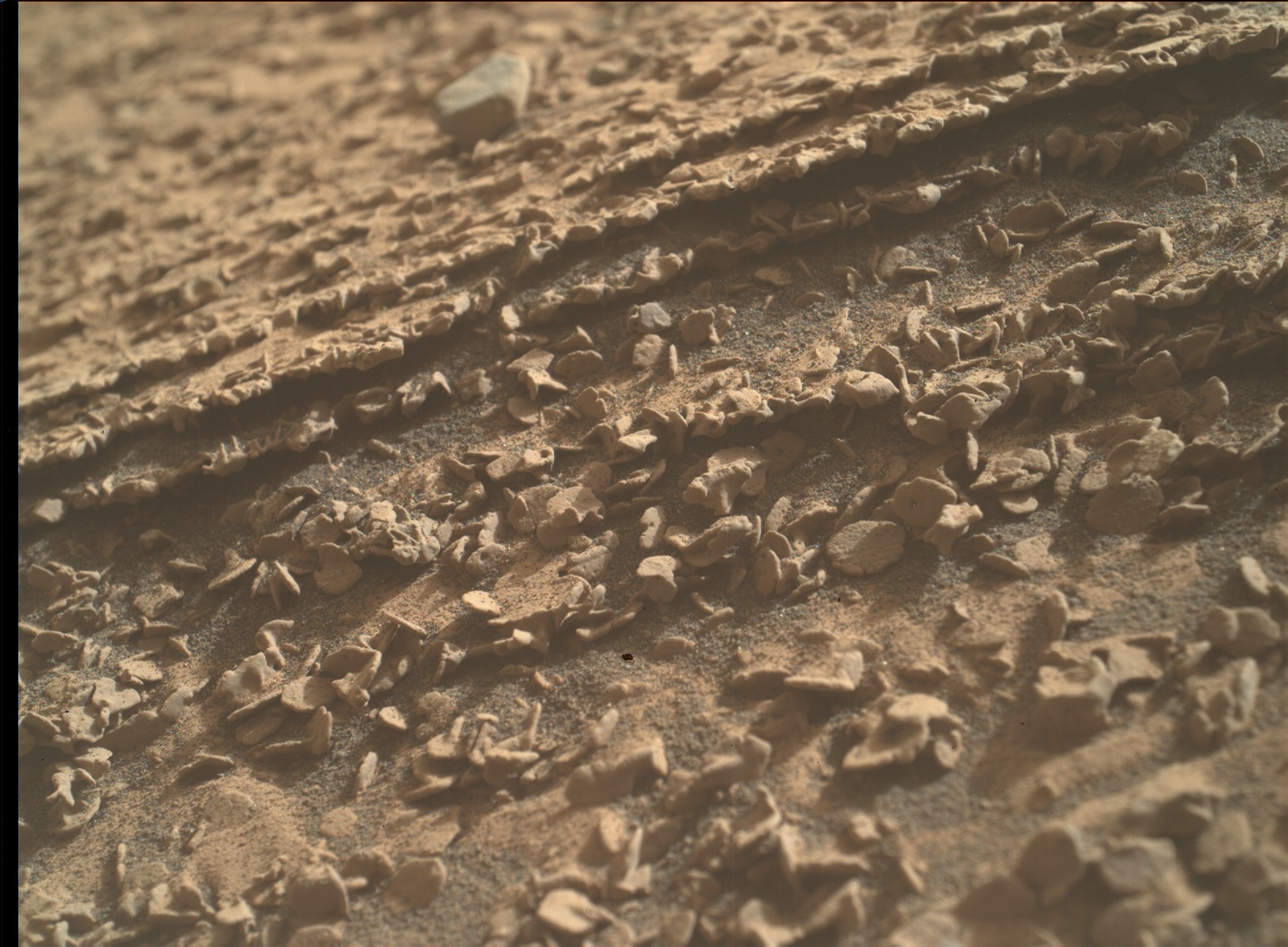
Curiosity returned to an area of Mount Sharp after earlier observations revealed unusual disc- and needle-shaped structures in the Martian bedrock. A rock informally named Chiu Chiu contained abundant examples of the features but was unsuitable for drilling, prompting mission scientists to select a neighboring block they named Nazca.
A close-up composed by Curiosity’s Mars Hand Lens Imager (MAHLI) at 12:19:51 UTC on October 18, 2026, showed numerous flattened structures embedded in the rock. One hypothesis under investigation is that their distinctive geometry originated during mineral crystallization, when atoms arranged themselves into ordered structures that produced characteristic external shapes.
The relatively large sizes of the structures at Nazca and Chiu Chiu offer clues to the physical and chemical conditions present during their development, according to Lucy Lim, a planetary scientist at NASA’s Goddard Space Flight Center. Mission scientists are examining the features for information about the temperature during crystal growth and the availability of salts and fluids at the time.
Identifying the minerals present today does not necessarily reveal the composition of the original crystals. Minerals can undergo replacement while retaining their earlier external geometry, producing structures known as pseudomorphs. A mineral preserved within one of the disc-shaped features can consequently differ in composition and internal structure from the mineral responsible for its original shape.
Before drilling at Nazca, the mission team tested the stability of the rover and the selected rock. The wheels had to be positioned on firm ground before the robotic arm was extended, while a separate preload test assessed the stability of the target and the forces acting on the arm as the drill pressed against the rock.
Curiosity examined Nazca using its Alpha Particle X-ray Spectrometer (APXS), MAHLI and Chemistry and Camera instrument (ChemCam) before collecting the sample. APXS measures the abundance of chemical elements in rocks, MAHLI records their fine-scale physical textures, and ChemCam determines elemental composition by analyzing light emitted from material vaporized by laser pulses.
A completed drill hole was visible in a Mast Camera image acquired at 23:56:20 UTC on October 20, 2026, during Sol 5050, the 5 050th Martian day of Curiosity’s surface mission. NASA confirmed Nazca as the rover’s 49th successful drill hole in a mission-team report published on November 9.
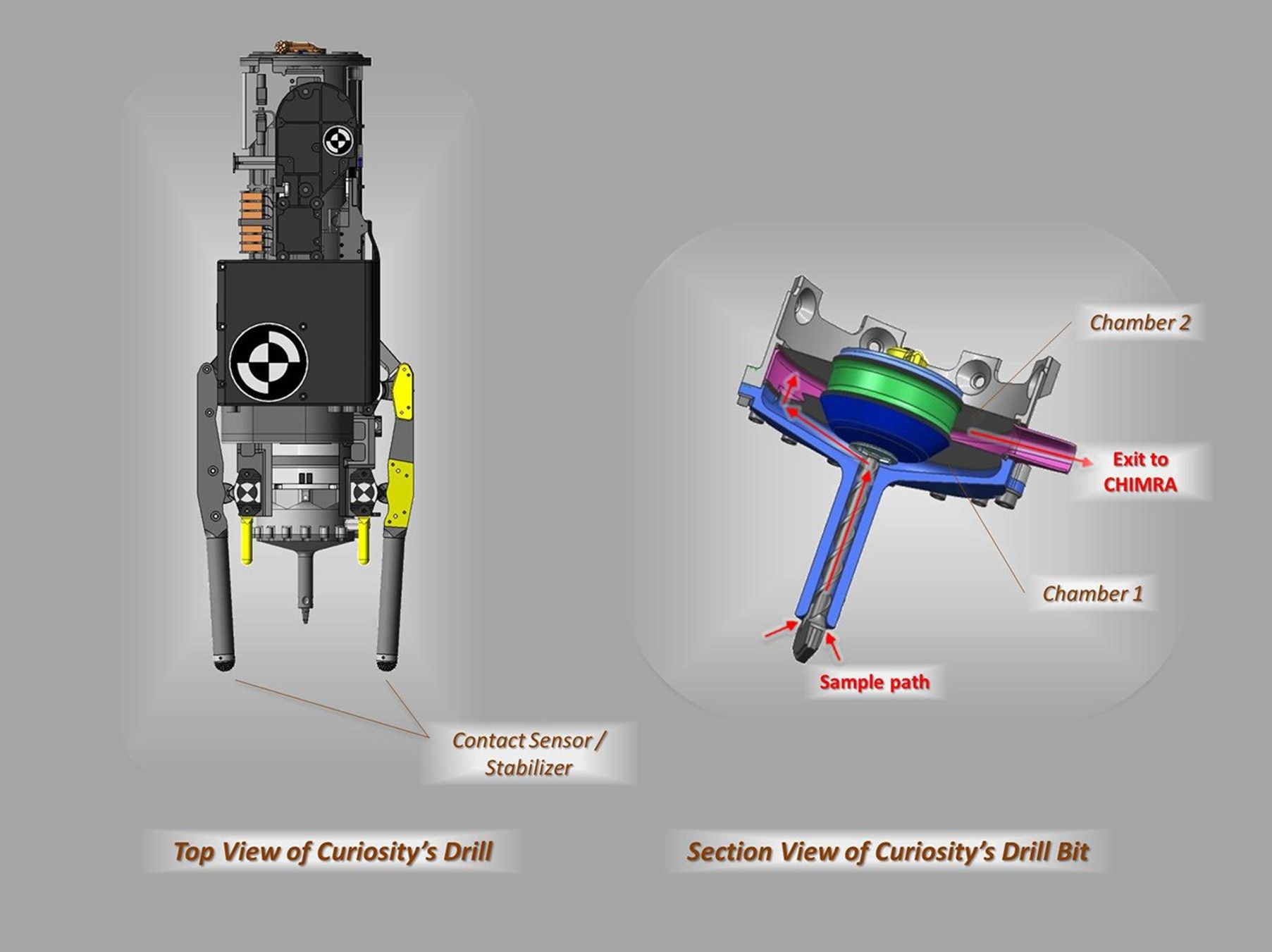
Curiosity collects powdered rock rather than extracting intact cylindrical cores. Material acquired by the drill is transferred to analytical instruments inside the rover, allowing scientists to examine the mineralogical and chemical properties of Martian rocks without returning the samples to Earth.
NASA’s November 9 mission report confirmed that Nazca material had been delivered to the Chemistry and Mineralogy instrument (CheMin). CheMin uses X-ray diffraction to identify crystalline minerals through the characteristic patterns produced when X-rays interact with their internal atomic structures. Those patterns allow scientists to distinguish minerals that can otherwise appear similar in photographs.

Additional portions of the Nazca sample were delivered to the Sample Analysis at Mars (SAM) instrument suite. SAM can investigate volatile substances released from heated powdered samples and examine their chemical composition. CheMin and SAM provide complementary information about the material collected by the drill.
ChemCam also obtained passive spectral measurements and laser-induced breakdown spectroscopy (LIBS) observations of material around the Nazca hole. Measurements were made down the drill-hole wall as well, extending the chemical investigation beyond the original exposed rock surface.
Mission scientists planned a more concentrated laser experiment at a nearby target called Toucan. A conventional ChemCam observation distributes 150 laser shots across five positions, with 30 shots at each position. The Toucan experiment was designed to concentrate all 150 shots on a single location to investigate material beneath the exposed surface.
NASA estimated that the concentrated sequence would penetrate approximately five times deeper than a standard 30-shot observation. Comparing material at different depths was intended to establish whether the outer surface of a feature differs chemically from its interior. Possible explanations for such differences include alteration during formation and subsequent exposure to the modern Martian environment.
The mission team also planned a Quantitative Relief Model observation using five overlapping MAHLI images captured from slightly different viewing positions. Combining such images allows scientists to reconstruct the three-dimensional geometry of rock surfaces, complementing the chemical and mineralogical investigations with detailed measurements of physical form.
Keep reading
NASA reported on November 11 that Curiosity was completing the Nazca drilling campaign while SAM analysis was underway. A subsequent mission update published on November 17 said the rover had spent several weeks drilling and analyzing material from Nazca and Basque Lakes before resuming its ascent of Mount Sharp.
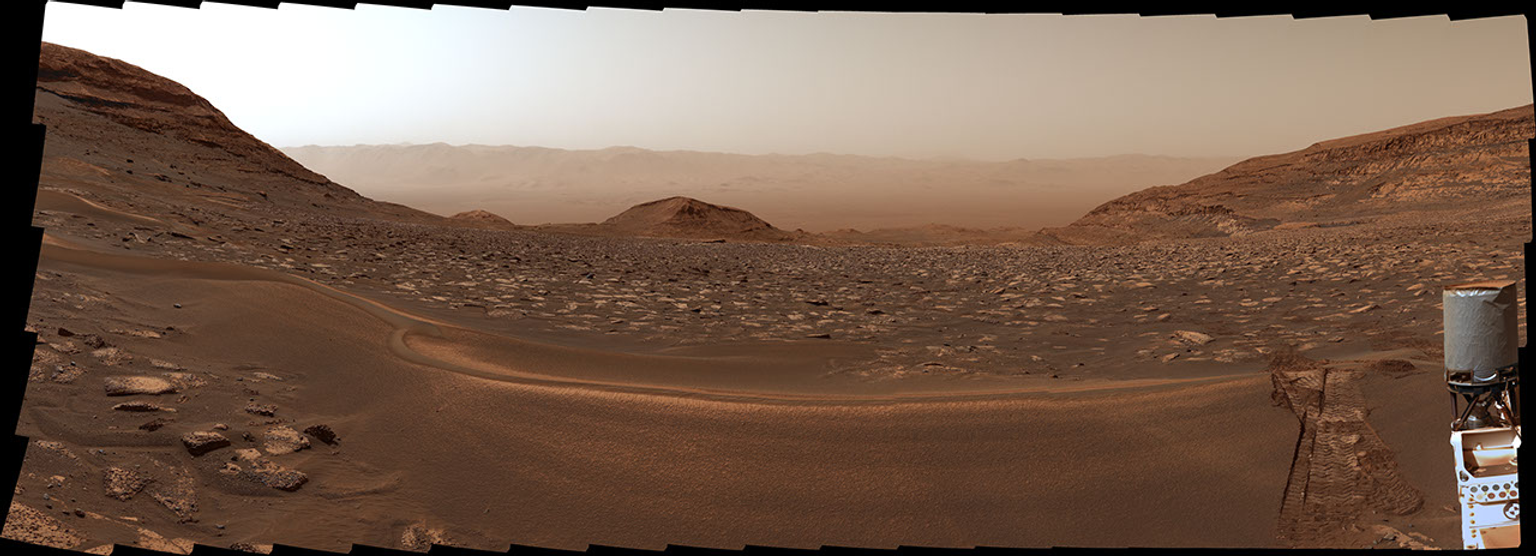
Mount Sharp rises approximately 5 km (3.1 miles) above the surrounding crater floor. Curiosity has been exploring its lower slopes since 2014, examining successive geological units to reconstruct changes in the environments that formed the rocks and the processes that subsequently altered them.

NASA published an image article on November 20 featuring a November 16 collage of the 49 drill holes accumulated during Curiosity’s mission. Each circular opening represents a sampled rock, and the individual photographs were acquired by MAHLI, mounted on the same robotic arm that carries the drill.
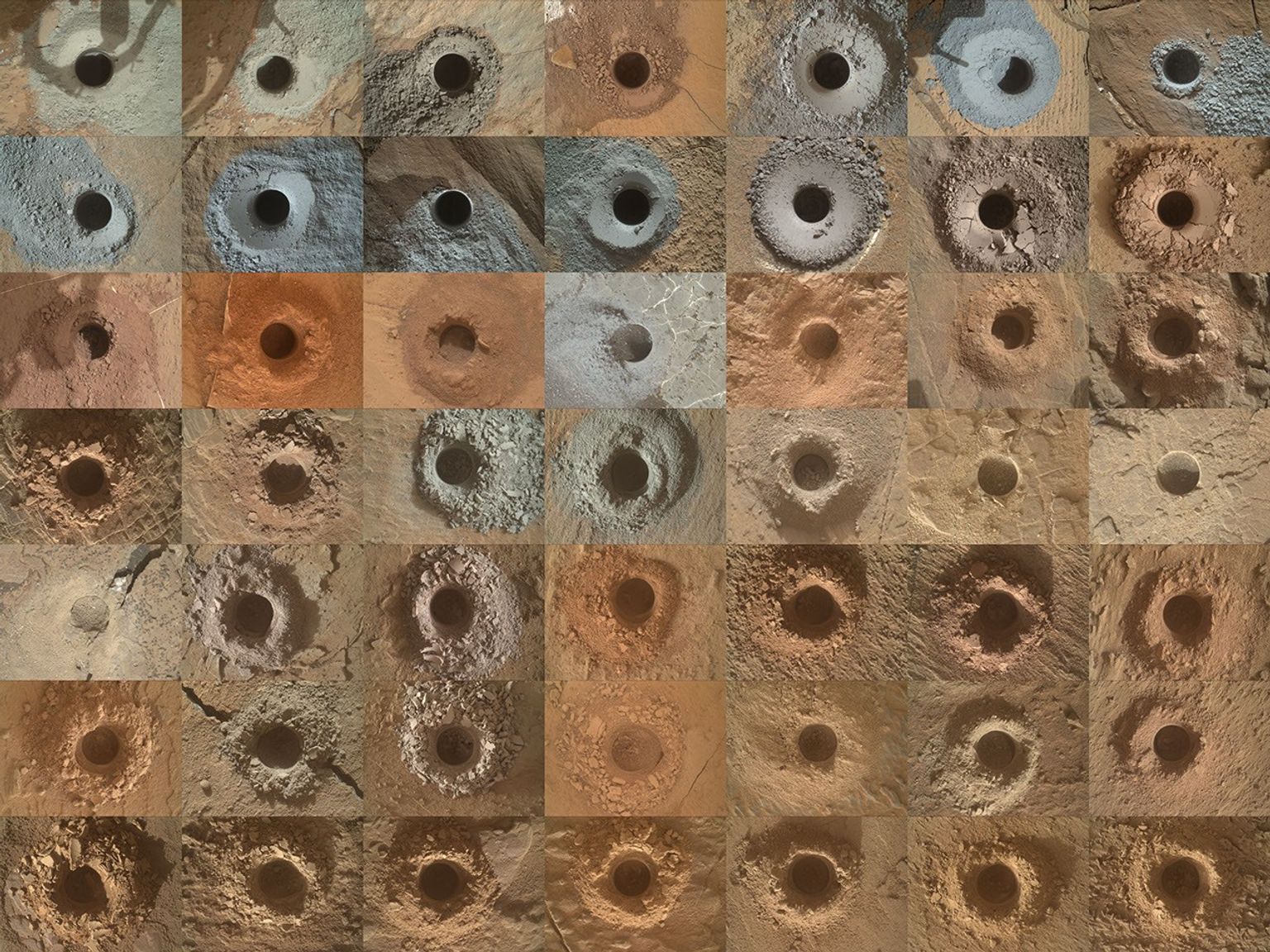
Each hole in the collage measures 16 mm (0.63 inches) in diameter. The surrounding drill cuttings vary considerably in color, reflecting the diversity of materials encountered by the rover. The collage documents the cumulative sampling history of the mission rather than 49 samples collected during a single campaign.
Curiosity performed its first rock-sampling drill operation at a target named John Klein on February 8, 2013. That hole measured 16 mm (0.63 inches) in diameter and reached a depth of 64 mm (2.5 inches). A shallower test hole nearby reached 20 mm (0.8 inches). Both remain part of the engineering and scientific history behind the rover’s subsequent sampling campaigns.
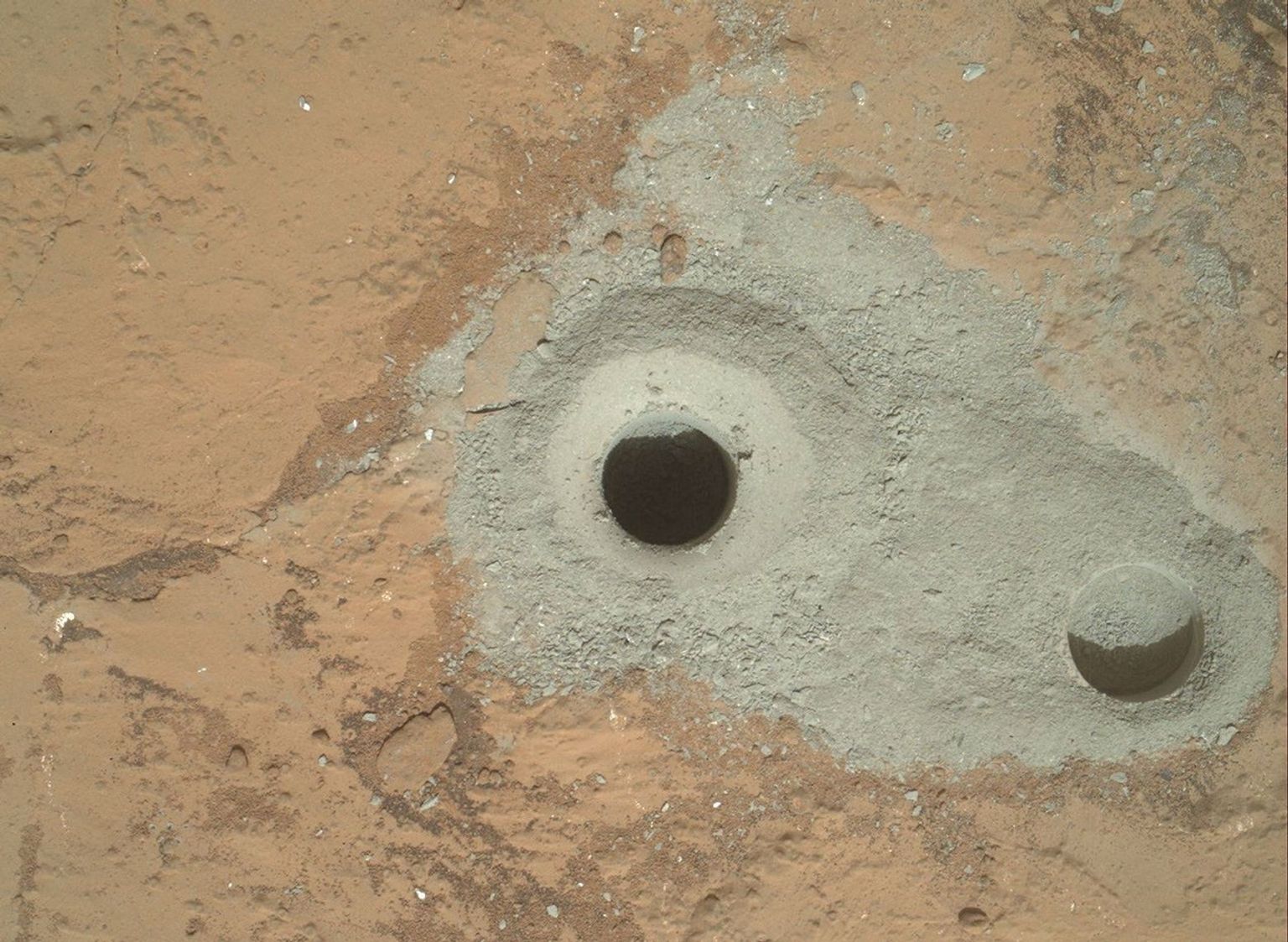
More than 13 years separate the John Klein and Nazca campaigns. Although the sampling procedure has evolved during that time, identifying the minerals and chemical compounds within Martian rocks remains a fundamental part of Curiosity’s investigation into whether ancient environments on Mars were capable of supporting microbial life.
The public mission reports describe the acquisition and analysis of the Nazca samples but do not establish the mineralogical identity of the original disc-shaped structures. Determining whether they retain their original mineral composition or preserve only the geometry of earlier crystals remains important to reconstructing the geological processes that produced them.
Explore Curiosity’s traverse through Gale Crater, examine its scientific instruments in three dimensions, or operate a virtual reconstruction of the rover using NASA’s interactive mission resources.
References:
1 Curiosity Blog, Sols 5043-5049: Preparing to Drill at ‘Nazca’ – NASA Science – October 28, 2026
2 Curiosity Blog, Sols 5050-5055: It’s Nazca, Our 49th Drill Hole – NASA Science – November 9, 2026
3 A Collage Showing 49 Drill Holes Made by NASA’s Curiosity Mars Rover – NASA Science – November 16, 2026

I’m a science journalist and researcher at The Watchers, contributing to the Epicenter edition, where I cover peer-reviewed scientific research and emerging discoveries across Earth and space sciences. With a background in astronomy and a passion for environmental science, I’ve worked in shark and coral conservation in Fiji, conducting reef and shark-behavior research, contributing to mangrove restoration, and earning PADI Open Water and Coral Reef Certifications. I bring a blend of scientific rigor and storytelling to illuminate the discoveries shaping our planet and beyond.
More reporting
- A fireball exploded over Murchison in Victoria on September 28, 1969, scattering meteorite fragments across about 35 km2, and 40 silicon carbide grains extracted from the meteorite include some older than 5.5 billion years, the Field Museum says
- Asteroid orientation can alter stand-off X-ray deflection by up to fivefold
- An 11-year snow experiment reveals how desert biocrusts respond to changing winters
- Vesuvius, the volcano that buried Pompeii, wrecked dozens of American bombers parked at its foot when it last erupted in 1944
