
An 11-year snow experiment reveals how desert biocrusts respond to changing winters
A long-term field experiment has found that changing winter snow cover affects desert biological soil crusts differently depending on their composition and the duration of exposure. Researchers comparing one, eight and 11 years of snow manipulation found contrasting short-term responses in cyanobacterial and lichen crusts, while differences in soil functioning diminished in the longer-duration treatments.
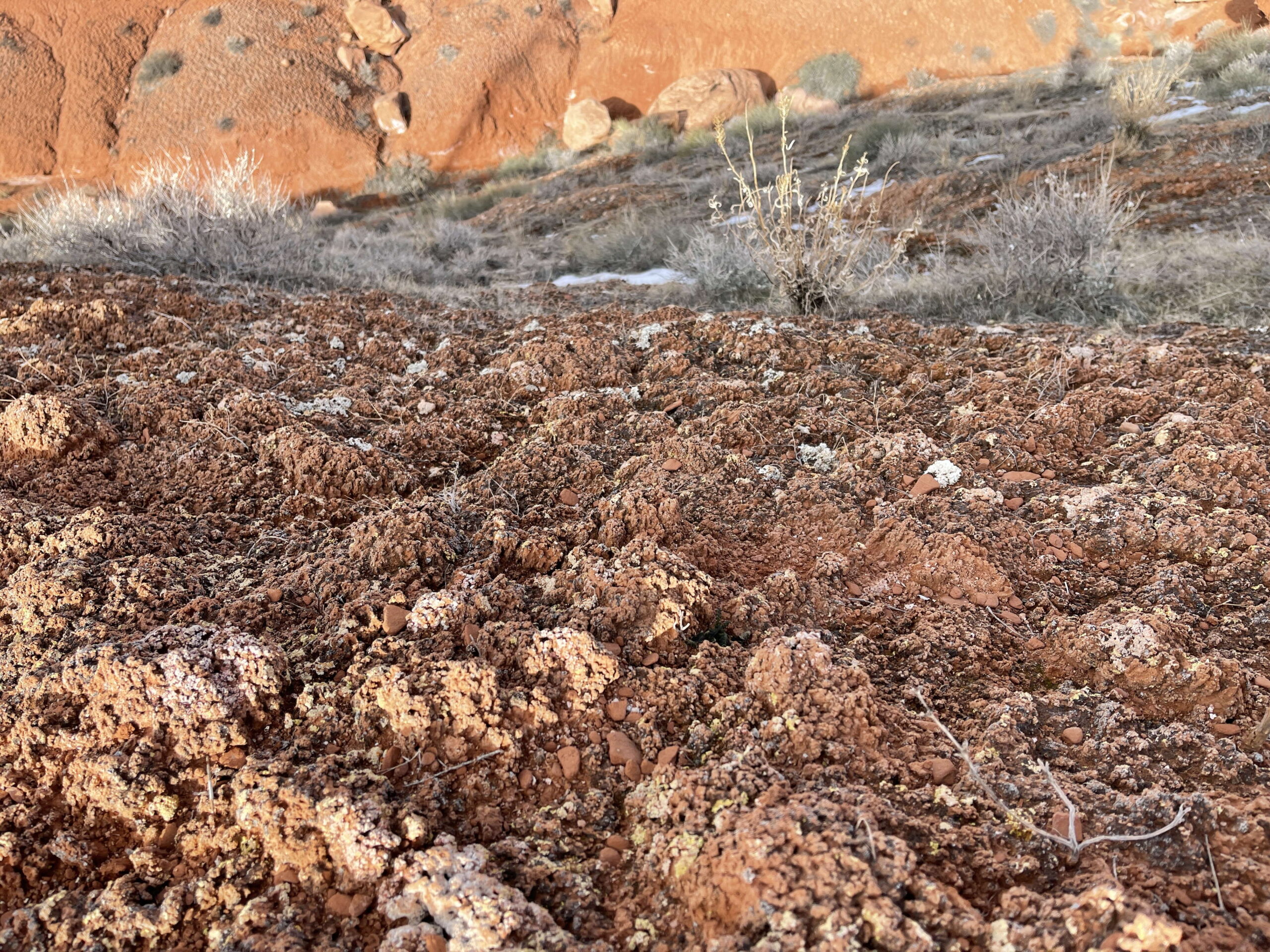
Biological soil crusts at the USGS Canyonlands Research Station near Moab, Utah, United States. The irregular surface features of these crusts developed through winter freeze-thaw cycles. Credit: Lance Brady, USGS National Uncrewed Systems Office
Winter snow provides a seasonal water supply to desert ecosystems, including the living communities that occupy the uppermost layers of the soil. Known as biological soil crusts, or biocrusts, these communities contain organisms such as cyanobacteria, lichens, mosses and fungi that contribute to soil stability, water retention and nutrient cycling.
Although the importance of water to biocrust activity is well established, less is known about how these communities respond when seasonal snow conditions remain altered for years. Zhang et al. (2026) examined that question through a field experiment in a temperate desert, comparing the responses of cyanobacterial and lichen crusts across three treatment durations extending up to 11 years. The research was published in Global Change Biology on November 6, 2026.
The researchers established plots with snow removal, undisturbed natural snow and approximately double the natural snow treatment. Additional snow for the double-snow plots was obtained from the removal plots, while the undisturbed plots provided the baseline against which the experimental responses were evaluated.
The experiment assessed soil multifunctionality (SMF), which describes the capacity of soil to perform several ecological functions simultaneously. Rather than evaluating soil fertility or carbon cycling separately, the researchers examined a combined measure of functions alongside individual indicators related to photosynthetic biomass, carbon sequestration, fertility, microbial habitat and decomposition.
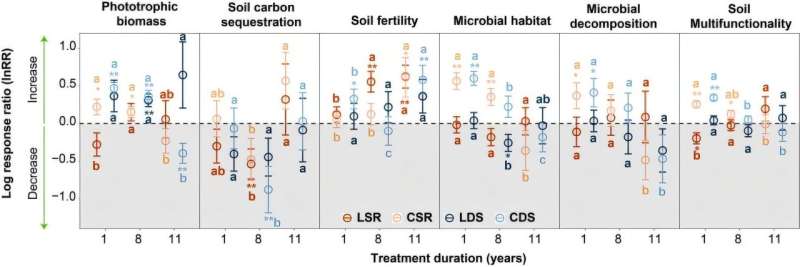
The one-year treatments produced contrasting results. Soil multifunctionality increased significantly in cyanobacterial crusts under short-term snow manipulation, whereas lichen crusts experienced a significant decline under snow removal. A corresponding significant decline was not reported for the short-term double-snow treatment in lichen crusts.
The differences between manipulated plots and those receiving natural snow were smaller in both biocrust types at the eight- and 11-year treatment durations. The comparison establishes that the magnitude of the measured response differed with treatment duration, rather than remaining equivalent to the initial short-term response.
Cyanobacteria are photosynthetic microorganisms capable of binding loose soil particles through the production of sticky extracellular substances. During periods when water is available, their biological activity contributes to the development of a more cohesive soil surface. Lichens represent a different biological organization, formed through associations between fungi and photosynthetic partners such as algae or cyanobacteria.
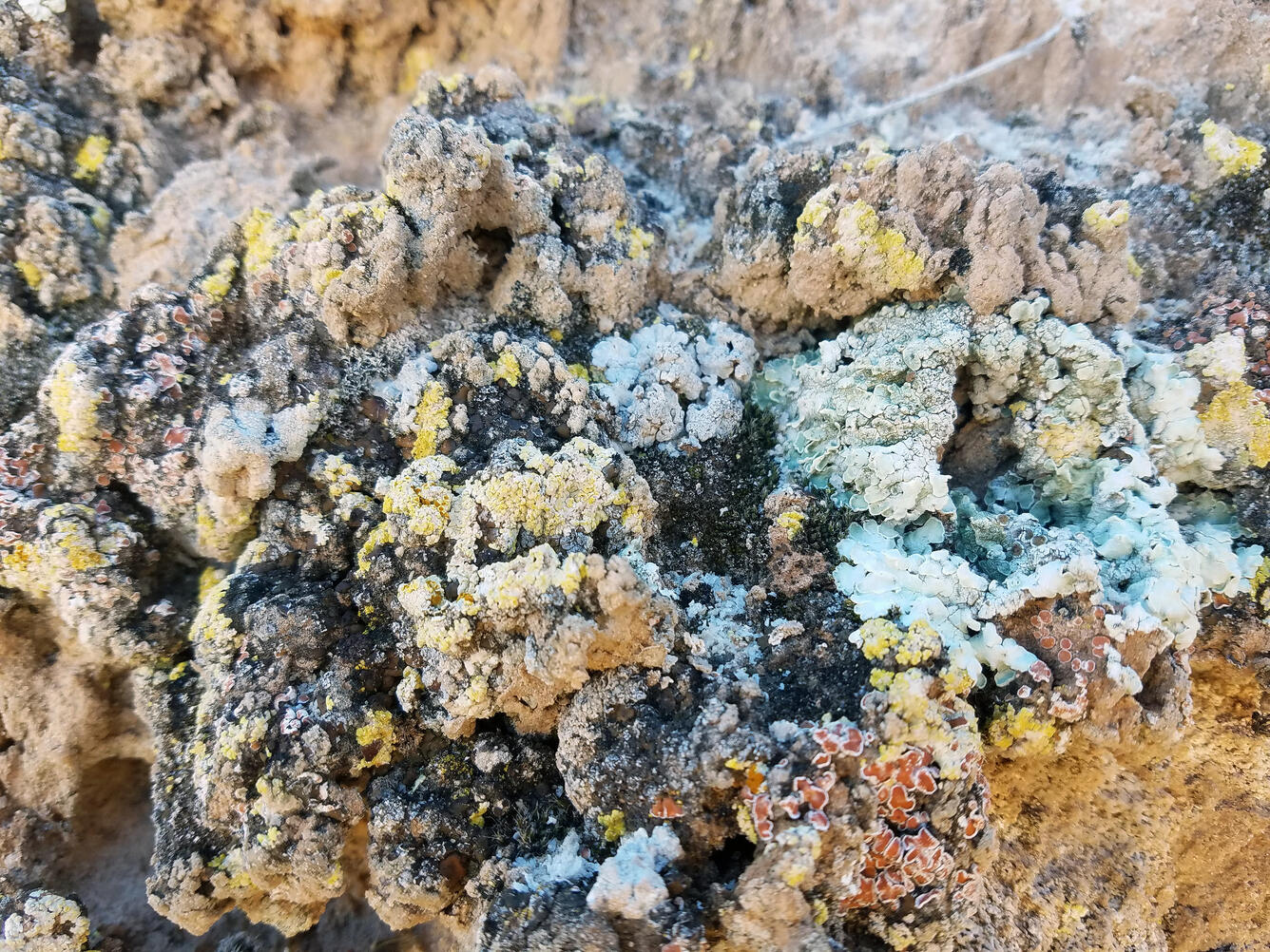
Microbial diversity responses differed between the two experimental crust types. The principal diversity increases in lichen crusts involved bacteria and the microbial community as a whole, while the significant diversity responses in cyanobacterial crusts were concentrated among fungi.
To examine the functional characteristics of those communities, the researchers classified microbial traits using a framework based on three life-history strategies: resource acquisition (A), stress tolerance (S) and high yield (Y). Resource acquisition describes traits associated with obtaining resources from the surrounding environment, stress tolerance concerns persistence under unfavorable conditions, and high yield relates to the efficient conversion of available resources into biomass.
The classifications were based on functional annotations from the Kyoto Encyclopedia of Genes and Genomes (KEGG), a database used to associate genes with biological functions and metabolic pathways. Such annotations help characterize the functional potential of microbial communities, although the presence of genes associated with a pathway does not establish how actively that pathway operates under field conditions.
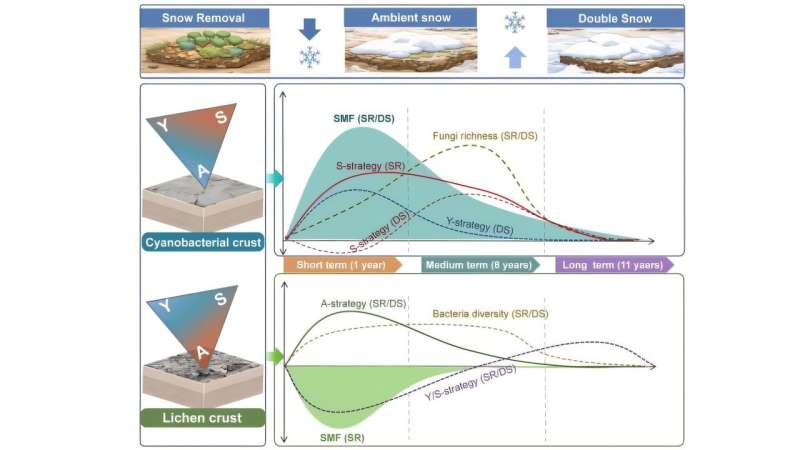
In cyanobacterial crusts, stress-tolerance traits were negatively associated with soil multifunctionality, while metabolic pathways related to the high-yield strategy showed positive associations. In lichen crusts, resource-acquisition traits were positively associated with soil multifunctionality, whereas stress-tolerance traits were negatively associated with it.
Researchers investigated these relationships using random forest analysis, which helps identify variables associated with variation in a measured outcome, and structural equation modeling, a statistical approach used to evaluate proposed relationships among multiple variables. The analyses connected differences in microbial traits and soil physicochemical properties with the contrasting soil-function responses observed in the two crust types.
The statistical relationships do not establish that individual microbial strategies directly caused the changes in soil multifunctionality. They identify potential biological pathways through which altered environmental conditions and microbial community characteristics interact.
Keep reading
- Vesuvius, the volcano that buried Pompeii, wrecked dozens of American bombers parked at its foot when it last erupted in 1944
- The small Utah town of Milford has been rocked by more than 200 earthquakes in two weeks, the largest magnitude 3.1; seismologists now tie the swarm to geothermal work at the Utah FORGE field lab.

The supplementary material accompanying the study includes analyses of soil water content, pH and electrical conductivity, together with comparisons of microbial richness, diversity and community composition. Soil electrical conductivity reflects the capacity of soil to conduct an electrical current and is influenced by factors including dissolved salts and moisture conditions.
The researchers also evaluated soil multifunctionality using four averaging approaches and examined microbial diversity in relation to the number of soil functions exceeding different performance thresholds. Such comparisons help assess whether relationships between microbial communities and soil functions depend on the way multifunctionality is calculated.
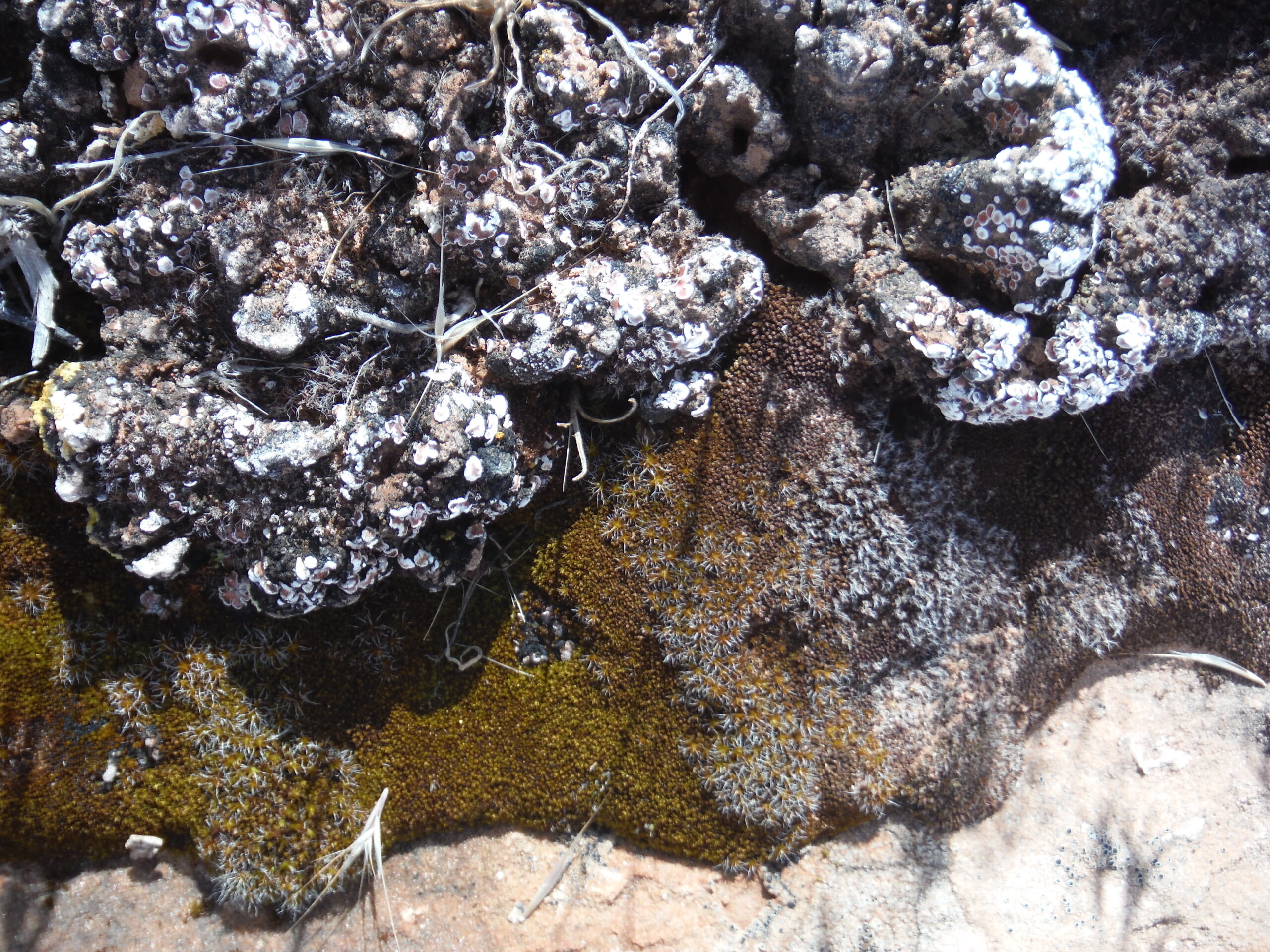
The ecological importance of biocrusts extends beyond the organisms themselves. By binding mineral particles together, these communities help limit the removal of loose soil by wind and water. They also participate in carbon and nutrient cycling, making changes in their composition and biological activity relevant to the functioning of dryland ecosystems.
The broader significance of the snow experiment lies in the difficulty of extrapolating short-term environmental responses across longer periods. An increase or decrease in a combined soil-function index after one year does not establish that the same difference will persist over the following decade. The results also do not support a universal conclusion that either increasing or decreasing snow improves desert soil functioning.


The authors report depositing their soil physicochemical and multifunctionality data in the Science Data Bank repository. Raw metagenomic sequencing data were also deposited in the Genome Sequence Archive of China’s National Genomics Data Center under accession number CRA049037. Metagenomic sequencing examines genetic material recovered from environmental samples, allowing researchers to investigate microbial communities and their potential biological functions.
Whether the smaller differences in the longer-duration plots represent physiological adjustment, changes in community composition or other processes remains unresolved. The Xinjiang Institute of Ecology and Geography of the Chinese Academy of Sciences said the research team plans to continue long-term field monitoring and conduct experiments designed to validate microbial functions. Those investigations will help determine how microbial traits contribute to the persistence of desert soil functions under sustained changes in winter snow cover.
References:
1 Zhang, Q., Han, Z., Yin, B., Zhang, S., Lu, Y., Zang, Y., Zhou, X., Li, T., Salem, H., & Zhang, Y. (2026). Microbial life-history strategies shape biocrusts soil multifunctionality responses to multi-year snow-cover change. Global Change Biology, 32(11), e71194. DOI: 10.1111/gcb.71194
2 Study Reveals How Desert Biocrusts Respond to Changing Snow Cover – Chinese Academy of Sciences – November 18, 2026
3 Biological Soil Crust (“Biocrust”) Science – U.S. Geological Survey – January 20, 2026

I’m a science journalist and researcher at The Watchers, contributing to the Epicenter edition, where I cover peer-reviewed scientific research and emerging discoveries across Earth and space sciences. With a background in astronomy and a passion for environmental science, I’ve worked in shark and coral conservation in Fiji, conducting reef and shark-behavior research, contributing to mangrove restoration, and earning PADI Open Water and Coral Reef Certifications. I bring a blend of scientific rigor and storytelling to illuminate the discoveries shaping our planet and beyond.
More reporting
- Niagara Falls shrank to a trickle for more than a day in March 1848 when ice jammed the river, and people walked the dry riverbed picking up weapons from the War of 1812
- Tornadoes killed 42 people in one Florida night during the record El Niño winter of 1997–98, most of them asleep in mobile homes
- A fire tornado with winds over 143 mph spun into Redding, California, in 2018 and killed a fire inspector in its path
- Rain fell on the very top of Greenland's ice sheet, more than 2 miles up, for the first time on record in August 2021
