
A fireball exploded over Murchison in Victoria on September 28, 1969, scattering meteorite fragments across about 35 km2, and 40 silicon carbide grains extracted from the meteorite include some older than 5.5 billion years, the Field Museum says
Researchers who dated 40 presolar silicon carbide grains from the Murchison meteorite found that some survived in interstellar space for more than 1 billion years before the Solar System formed. The microscopic grains preserve material produced around stars that predated the Sun, giving scientists physical samples with measurable histories from a period that astronomical observations cannot date grain by grain.
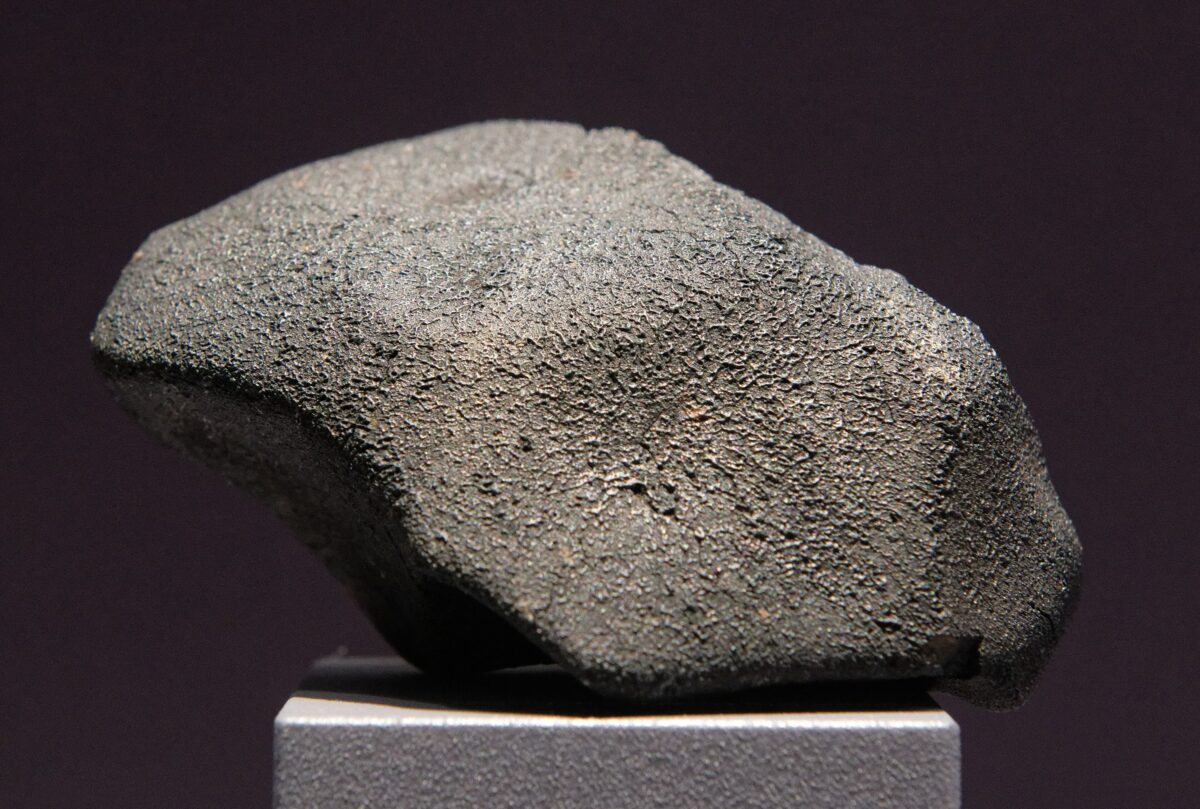
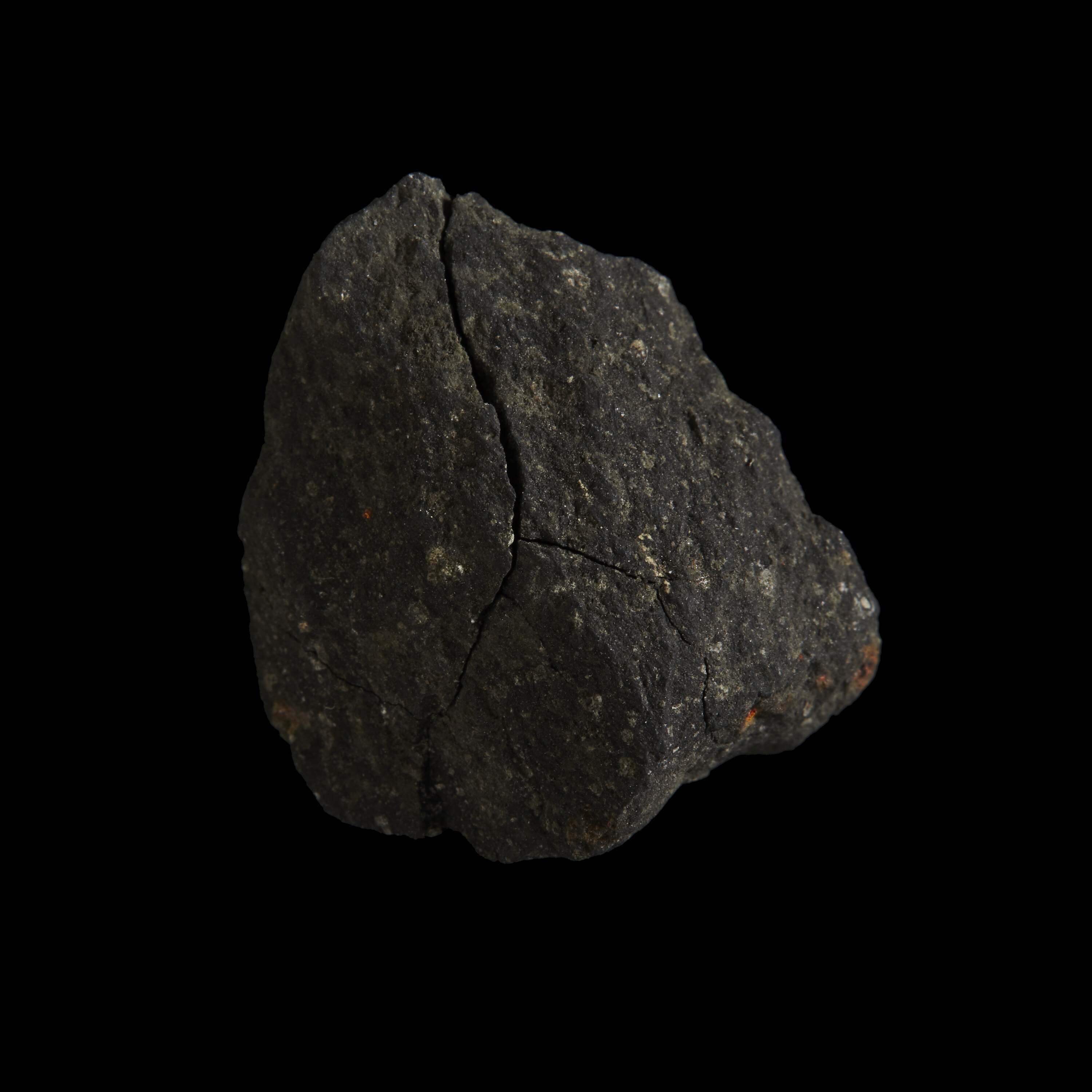
Murchison meteorite MNHN Minéralogie. Credit: Marie-Lan Taÿ Pamart (CC BY 4.0), via Wikimedia Commons.
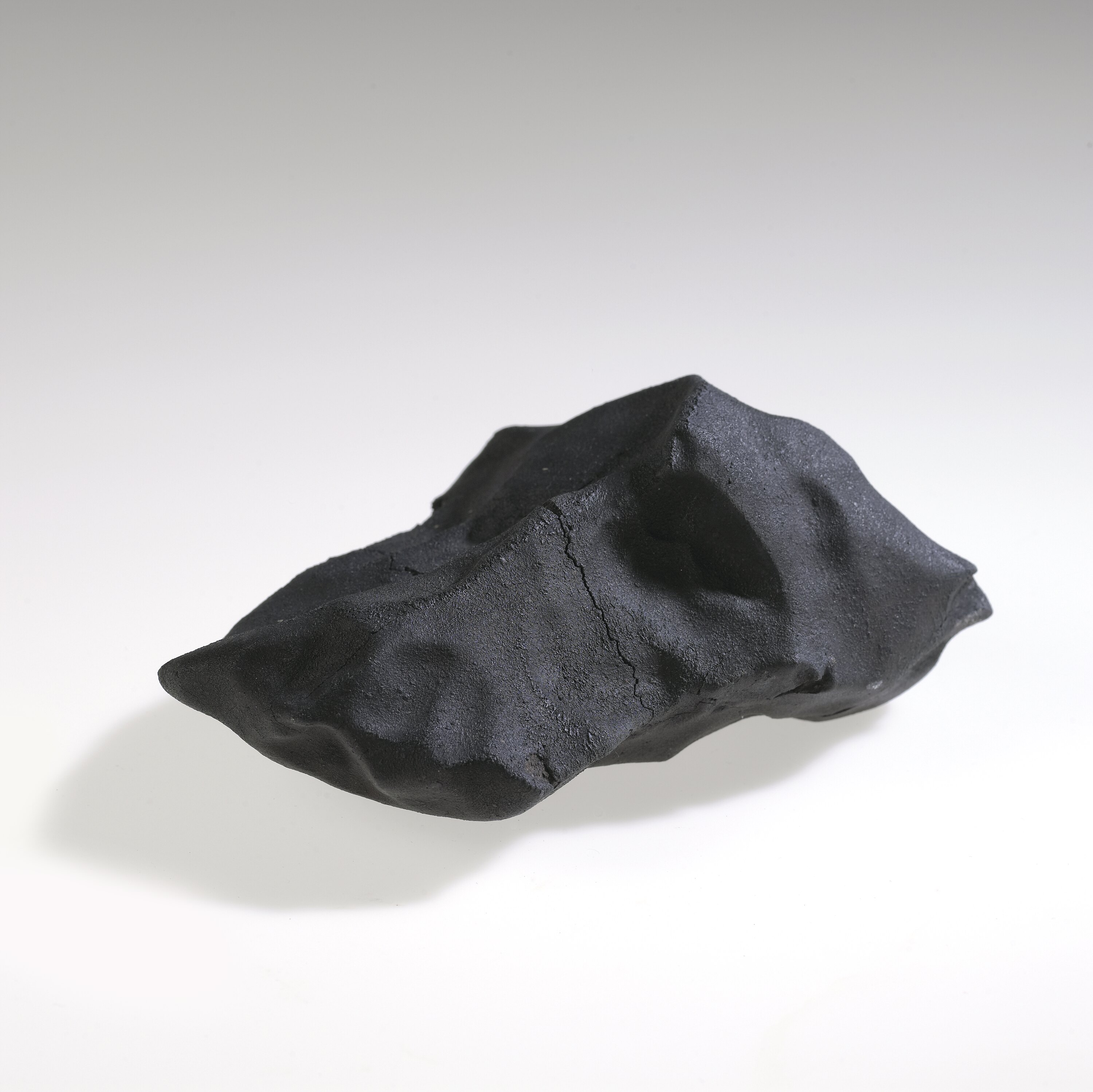
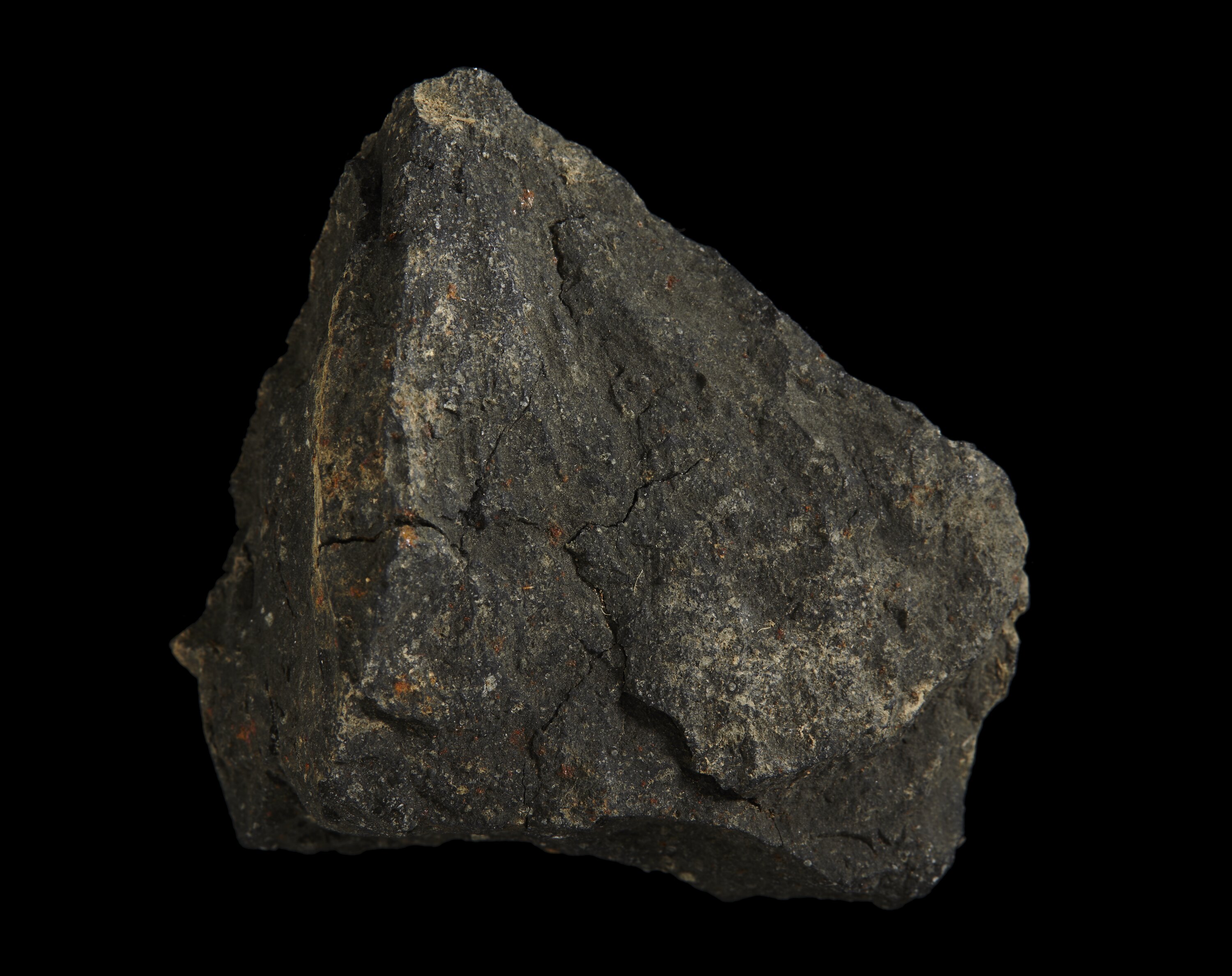
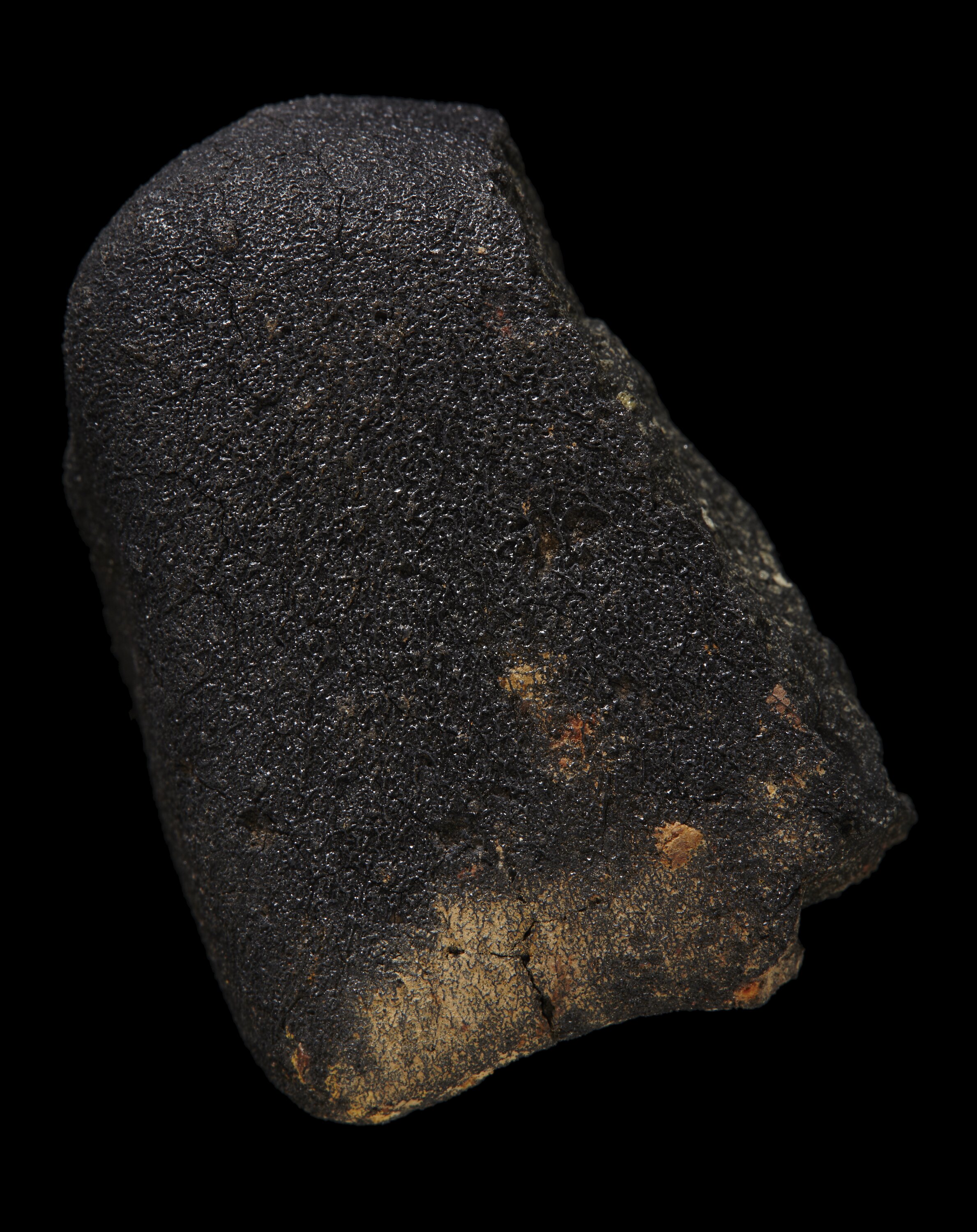
The grains reached Earth inside the Murchison meteorite, which entered the atmosphere over Victoria, Australia, at about 10:58 local time on September 28, 1969. Witnesses saw a bright fireball fragment over the Murchison area before stones fell across a strewn field measuring at least 11 × 3 km (6.8 × 1.9 miles). More than 100 kg (220 lb) was eventually recovered, although a later scientific reconstruction concluded that this represented only part of the total mass that reached the ground.
The scientific importance of the age measurements lies in a problem that astronomical observations cannot solve directly. Telescopes can characterize populations of interstellar dust, but they cannot determine how long a particular microscopic grain traveled through interstellar space. Physical grains preserved inside meteorites allow that history to be investigated in the laboratory.
Heck et al. (2020) examined 40 large presolar silicon carbide grains extracted from the Murchison CM2 carbonaceous chondrite. Presolar grains are microscopic mineral particles whose isotopic compositions show that they formed outside the Solar System. They condensed around earlier generations of stars, traveled through interstellar space and later became incorporated into the material from which the Solar System formed about 4.6 billion years ago.
The researchers reconstructed the grains’ interstellar exposure histories from cosmogenic neon-21. Galactic cosmic rays are high-energy particles that strike atoms inside a grain and trigger nuclear reactions. Some of the products accumulate while the grain remains exposed, allowing their measured abundance to act as a clock for the time spent in interstellar space.

The measured exposure ages ranged from 3.9 ± 1.6 million years to approximately 3 ± 2 billion years before the beginning of the Solar System. About 60% of the grains had interstellar exposure ages below 300 million years, while at least about 8% exceeded 1 billion years.
Those values are cosmic-ray exposure ages, not direct measurements of the date on which each grain condensed. An exposure age describes the interval during which a grain accumulated products generated by cosmic rays. The grain itself must already have existed for that clock to operate.
The distinction is important because several different timescales appear in descriptions of the Murchison material. The Field Museum reported that most grains analyzed in the study were about 4.6 to 4.9 billion years old and that some were older than 5.5 billion years. The museum described the material more broadly as stardust formed between 5 and 7 billion years ago.
The approximately 7-billion-year figure has a different meaning again. Heck and colleagues concluded that the silicon carbide grains condensed in outflows from asymptotic giant branch stars less than 4.9 billion years ago and proposed that many of the parent stars could have formed during an episode of enhanced star formation around 7 billion years ago.

The study therefore does not establish that one of the analyzed grains was precisely 7 billion years old. The value refers to a proposed period of enhanced star formation that could have produced part of the stellar population from which the grains later condensed.
Asymptotic giant branch stars are evolved stars that lose substantial amounts of material through stellar winds. Dust can condense in those outflows and enter the interstellar medium. A fraction can survive until it becomes incorporated into later generations of planetary systems.
The distribution of exposure ages allowed the researchers to examine how long that survival can last. The large population of grains with ages below 300 million years was interpreted as evidence compatible with increased dust production before the Solar System formed, while the much older grains showed that some particles remained in interstellar space for far longer.

The measurements also indicate that some grains were not traveling through interstellar space as isolated particles. Differences in cosmic-ray-produced helium-3 and neon-21 led the researchers to conclude that at least 12 of the 40 grains had once been parts of larger aggregates.
For some grains, the objects exposed to cosmic rays could have been as much as 30 times larger than the particles eventually analyzed. Material surrounded by a larger aggregate retains and loses cosmic-ray reaction products differently from an isolated grain, leaving information about its earlier physical environment.
Keep reading

The researchers also examined whether a large share of the cosmogenic nuclides could have accumulated after the grains entered the young Solar System, when energetic particles from the early Sun were stronger than today. Their analysis concluded that most of the grains acquired the bulk of the measured cosmogenic products during residence in interstellar space.
Murchison provided unusually valuable material for such work because the meteorite was witnessed falling and a large quantity was recovered. Museums Victoria records that fragments fell over an area of around 35 km2 (13.5 mi2). Around 100 kg (220 lb) was collected, with more than 80 kg (176 lb) entering scientific collections.
The largest recovered piece weighed nearly 7 kg (15.4 lb). Museums Victoria reports that nearly 52 kg (115 lb) went to the Field Museum in Chicago, nearly 20 kg (44 lb) went to the Smithsonian Institution in Washington, D.C., and more than 7 kg (15.4 lb) remained at the University of Melbourne before much of the Australian material was later transferred to Museums Victoria.
Murchison is a CM2 carbonaceous chondrite that experienced substantial interaction with water on its parent body. Museums Victoria reports that the meteorite is about 8% water and that more than 70 amino acids have been identified in it, adding organic chemistry and astrobiology to the long list of fields in which the recovered material has been studied.

The presolar grains preserve a still earlier chapter. Their isotopic compositions identify them as material produced outside the Solar System, while cosmic-ray products accumulated inside individual grains record part of the interval between their formation around other stars and their incorporation into material that eventually became the Solar System.
The age calculations retain substantial uncertainty, especially at the oldest end of the distribution. The oldest reported exposure age is approximately 3 ± 2 billion years before Solar System formation, and assumptions about cosmic-ray production, recoil losses, and the former sizes of grains or aggregates affect the calculated values.

The measurements nevertheless show that individual pieces of presolar dust can preserve interstellar exposure histories spanning from a few million years to more than 1 billion years. Unlike light collected from distant stars, the Murchison grains are physical samples that can be isolated, measured, and repeatedly reanalyzed as laboratory techniques improve.
The sequence recorded in those microscopic particles extends across several stages of Galactic history: their parent stars formed, silicon carbide condensed in stellar outflows, the grains traveled through interstellar space, some became parts of larger aggregates, and the material was eventually incorporated into the Solar System. Billions of years later, fragments carrying that record reached the ground around Murchison.
References:
1 Heck, P. R., Greer, J., Kööp, L., Trappitsch, R., Gyngard, F., Busemann, H., Maden, C., Ávila, J. N., Davis, A. M., & Wieler, R. (2020). Lifetimes of interstellar dust from cosmic ray exposure ages of presolar silicon carbide. Proceedings of the National Academy of Sciences, 117(4), 1884–1889. DOI: 10.1073/pnas.1904573117
2 Zolensky, M., Russell, S., & Brearley, A. (2021). The fall of the Murchison meteorite. Meteoritics & Planetary Science, 56(1), 8–10. DOI: 10.1111/maps.13596
3 Meteorite contains the oldest material on Earth: 7-billion-year-old stardust – Field Museum – January 13, 2020
4 The Murchison meteorite – Museums Victoria

The Watchers Staff covers earthquakes, volcanoes, severe weather, space weather and other natural events. Published since 2011, The Watchers reports on a changing planet and the science behind it.
More reporting
- Surface dust differences may explain why some Martian storms encircle the planet
- Moonquake shaking travels much farther than Earth-based models predict
- Vesuvius, the volcano that buried Pompeii, wrecked dozens of American bombers parked at its foot when it last erupted in 1944
- The small Utah town of Milford has been rocked by more than 200 earthquakes in two weeks, the largest magnitude 3.1; seismologists now tie the swarm to geothermal work at the Utah FORGE field lab.
