
Moonquake shaking travels much farther than Earth-based models predict
A new ground-motion model developed for the Moon predicts substantially stronger shaking at large distances than models designed for earthquakes on Earth. Apollo seismic observations show substantial motion persisting beyond 1 000 km (621 miles), even for small-magnitude moonquakes, revealing why future lunar structures will need seismic hazard assessments based on the Moon’s own physical conditions.
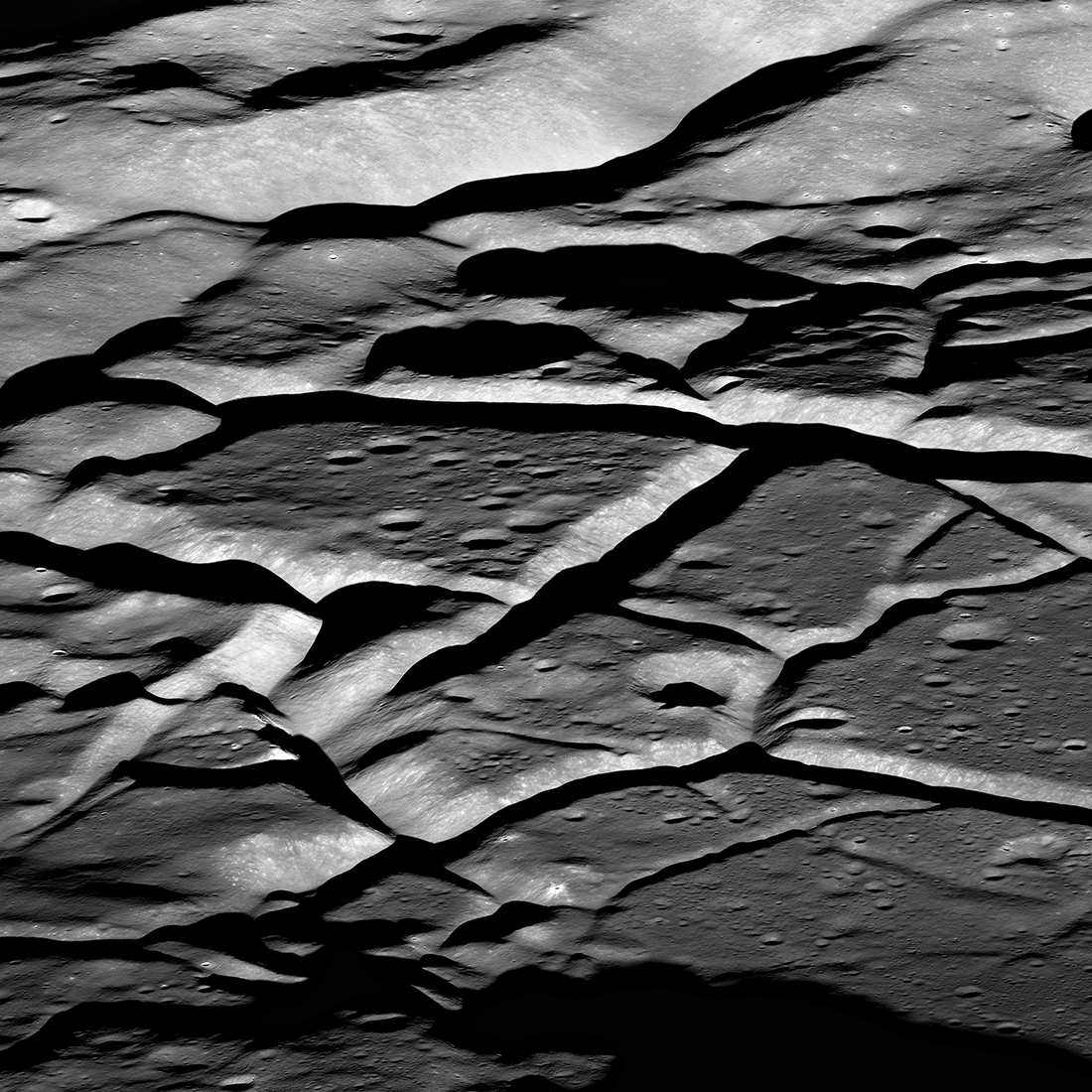
Deep fractures cut across the floor of Komarov crater on the Moon’s far side, photographed by NASA’s Lunar Reconnaissance Orbiter. The fractures formed when rising magma uplifted and fractured the crater floor without erupting onto the surface. The image covers an area approximately 15 km (9.3 miles) wide. Credit: NASA/GSFC/Arizona State University.
Williams et al. (2026) developed the lunar-specific model using seismic recordings collected by Apollo astronauts and physics-based simulations incorporating the Moon’s geological properties. The Seismological Society of America described the study, published in Seismological Research Letters, as the first ground-motion model developed specifically for shallow moonquakes. Its purpose is to estimate the shaking that future lunar structures might experience without relying entirely on relationships derived from terrestrial earthquakes.
The difference matters because ground-motion models are used to estimate how strongly the ground will move at a given distance from a seismic source. On Earth, seismic waves generally weaken substantially over several hundred kilometers. The Moon’s seismic observations do not follow the same pattern. A terrestrial model can consequently underestimate shaking at large lunar distances, making the choice of model important for engineers assessing future construction sites.
At 200 km (124 miles), a distance considered large in terrestrial ground-motion modeling, lunar shaking remains within what the researchers describe as a short-to-moderate distance range. Apollo measurements contain substantial seismic motion beyond 1 000 km (621 miles), including signals from small-magnitude moonquakes. The researchers’ new model predicts higher ground motions at large distances than terrestrial models, reflecting the different way seismic energy propagates through the Moon.
The physical explanation involves two important differences between Earth and the Moon. According to the research team, the Moon has a colder, more solid interior that dissipates less seismic energy as waves travel through it. Attenuation is the gradual reduction in seismic-wave amplitude during propagation, caused by processes including geometrical spreading and the loss of wave energy within geological materials. Earth-based models incorporate attenuation behavior observed in terrestrial rocks, but those relationships do not necessarily describe the lunar interior.
The heavily fractured lunar surface introduces another complication. Billions of years of impacts have broken and disturbed the uppermost geological materials, producing a complex region of regolith and fractured rock. When seismic waves encounter changes in material properties and numerous fractures, some of their energy is redirected along different paths. This process, known as seismic scattering, can spread the arrival of seismic energy over a much longer period.
Scattering also helps explain why lunar seismic records can continue long after the first waves reach an instrument. The extended, gradually weakening portion of a seismic record is called the coda. Rather than arriving along a single path, seismic energy may be scattered repeatedly before reaching the detector, creating a complicated sequence of later arrivals. The researchers identify this behavior as an important difference between lunar and terrestrial seismic recordings.
To reproduce the observed behavior, Williams and colleagues combined Apollo-era recordings with physics-based ground-motion simulations using lunar-specific inputs. These simulations represent how seismic waves propagate through the assumed physical structure of the Moon. Williams reported that the simulations provided a better match to Apollo observations after the researchers incorporated the Moon’s distinctive propagation characteristics.
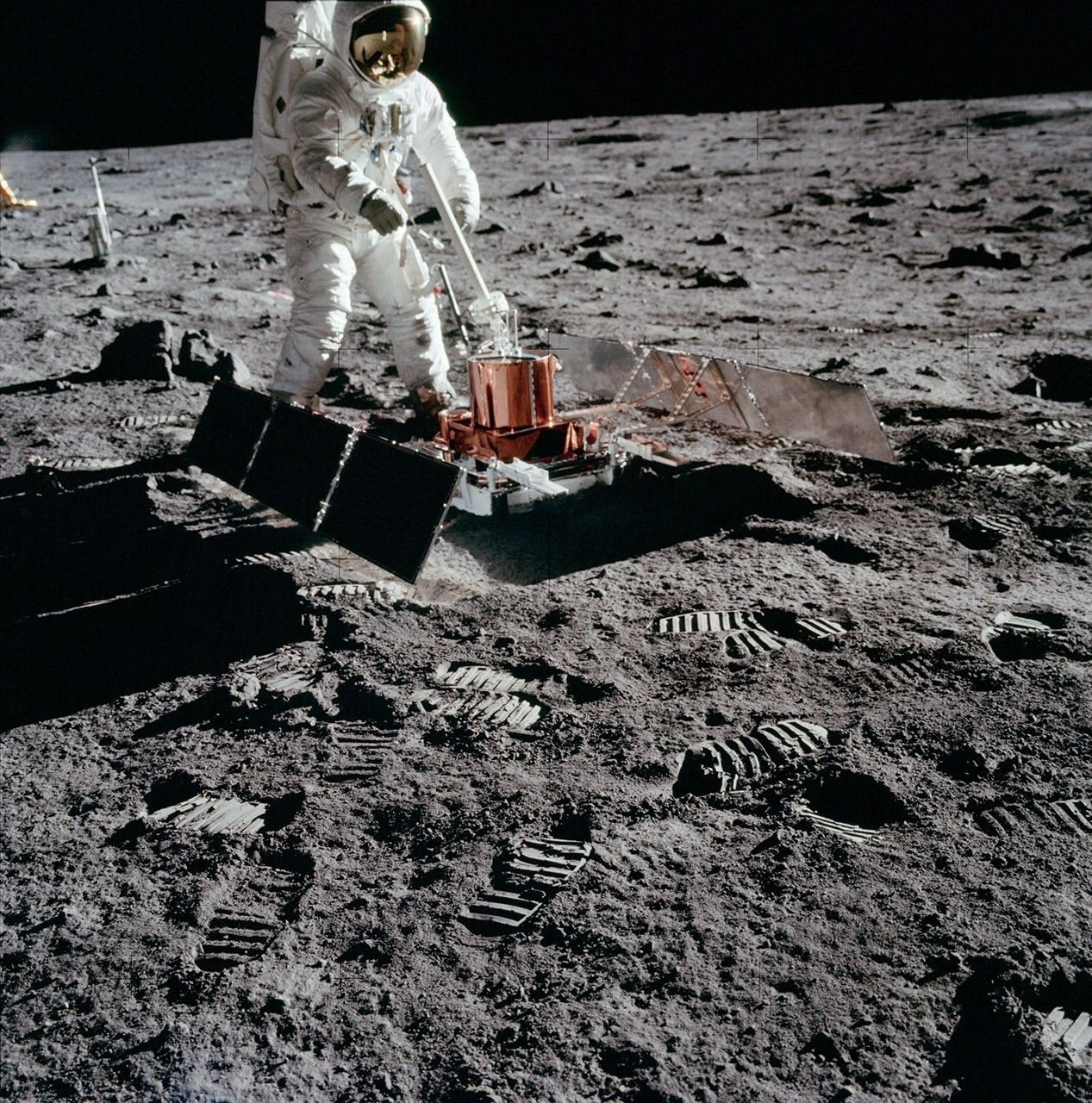
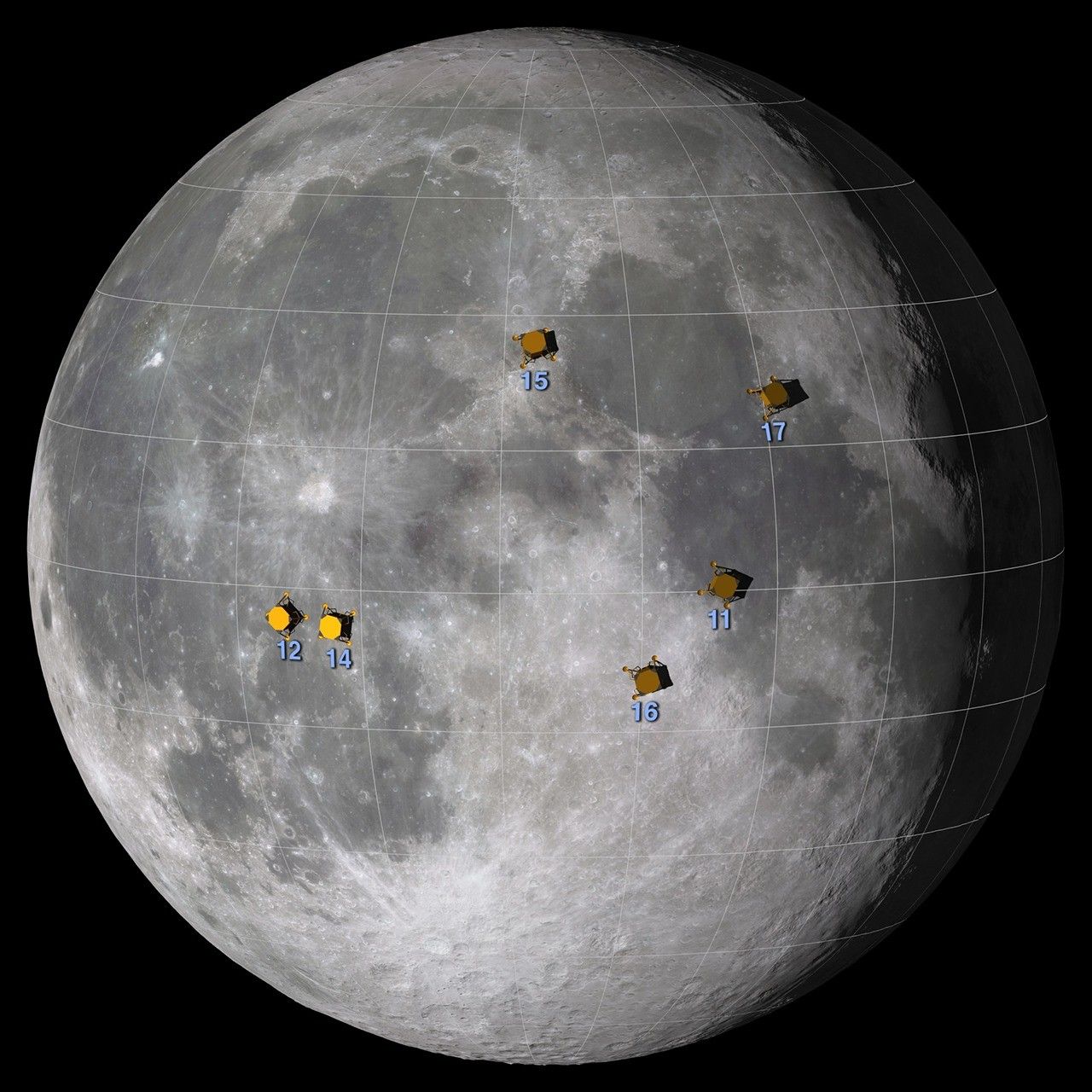
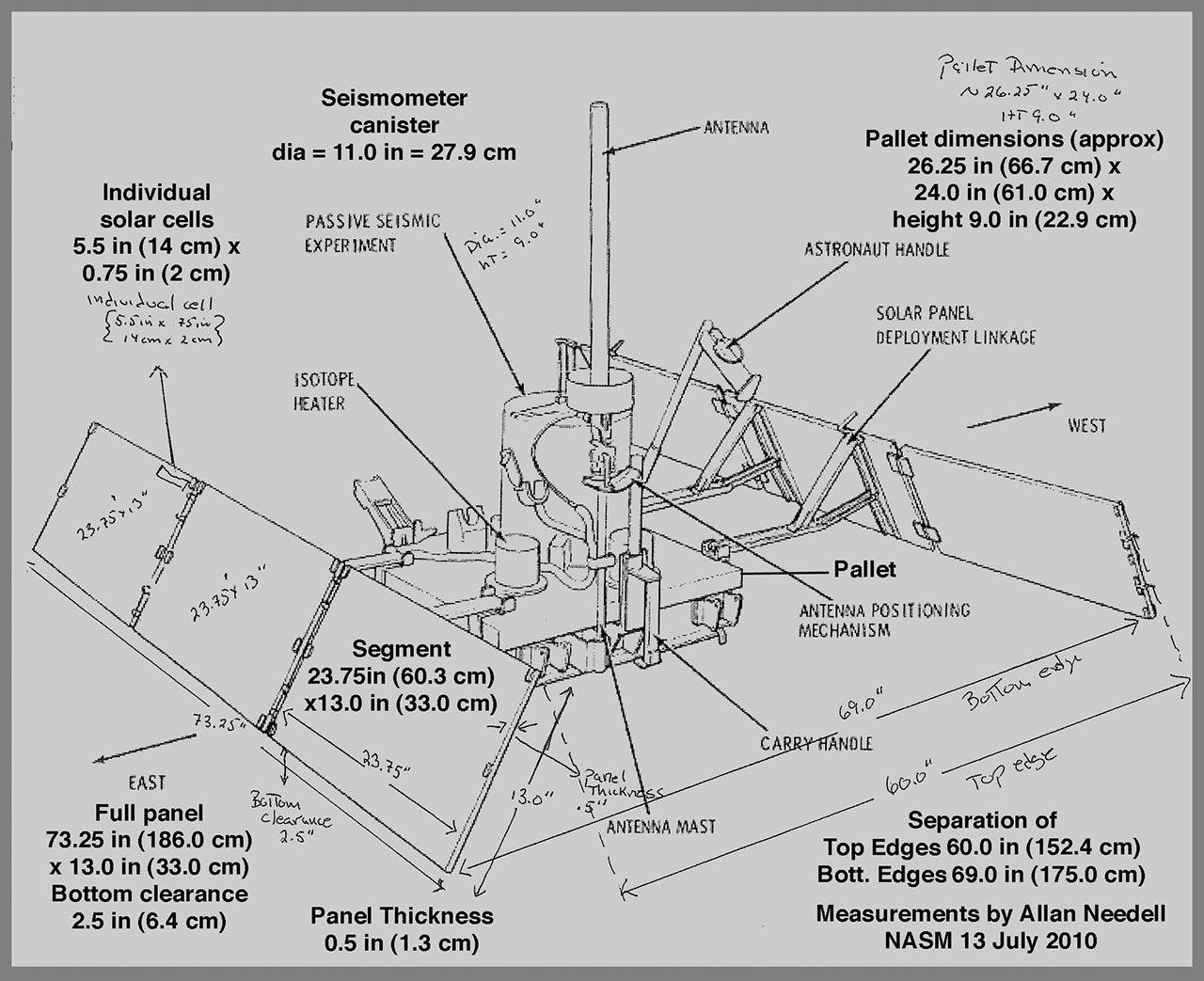
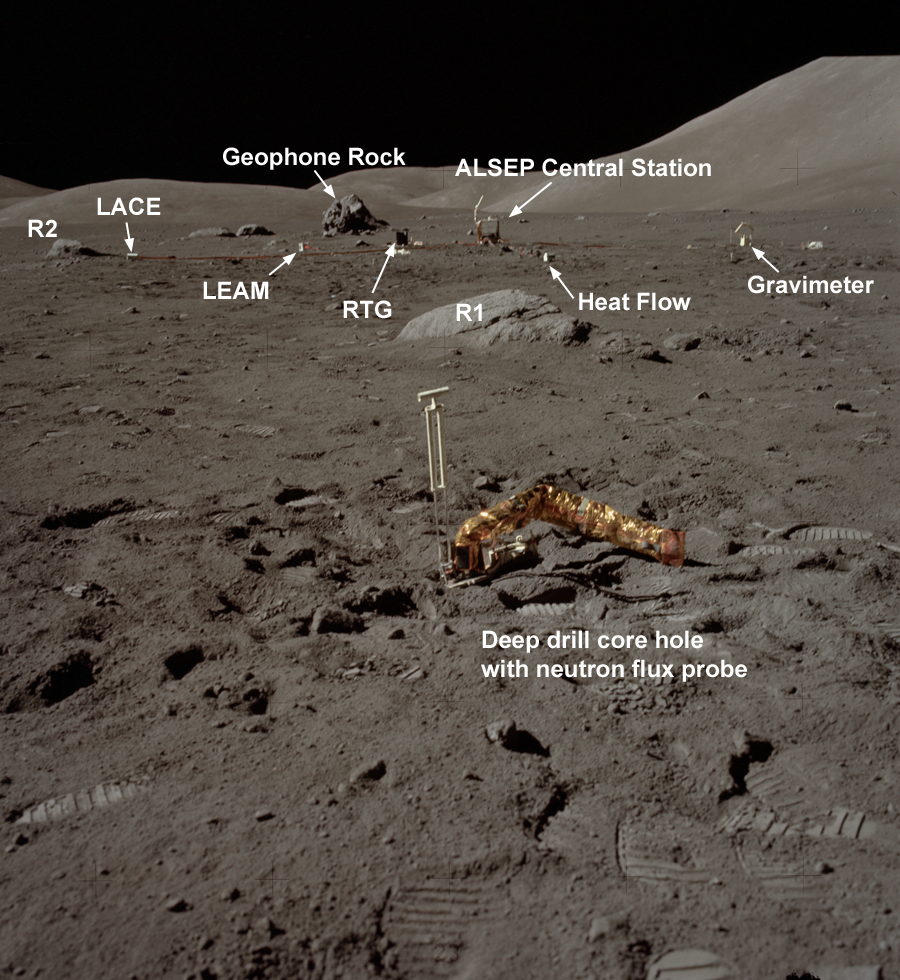
The underlying observations came from a relatively small network of instruments installed during the Apollo program. Apollo 11 deployed the first passive seismic experiment in July 1969, but the instrument operated for only about three weeks. More advanced passive seismic experiments were subsequently deployed by Apollo 12, 14, 15 and 16. Together, those four stations formed the long-running lunar seismic network, which transmitted observations until September 1977.
The instruments recorded vibrations caused by moonquakes and other seismic sources, allowing scientists to examine the Moon’s internal structure and the transmission of seismic waves through it. Their measurements provide the observational foundation for the new ground-motion model. However, the network covered only a relatively limited region of the lunar nearside, leaving much of the Moon without comparable direct seismic measurements.
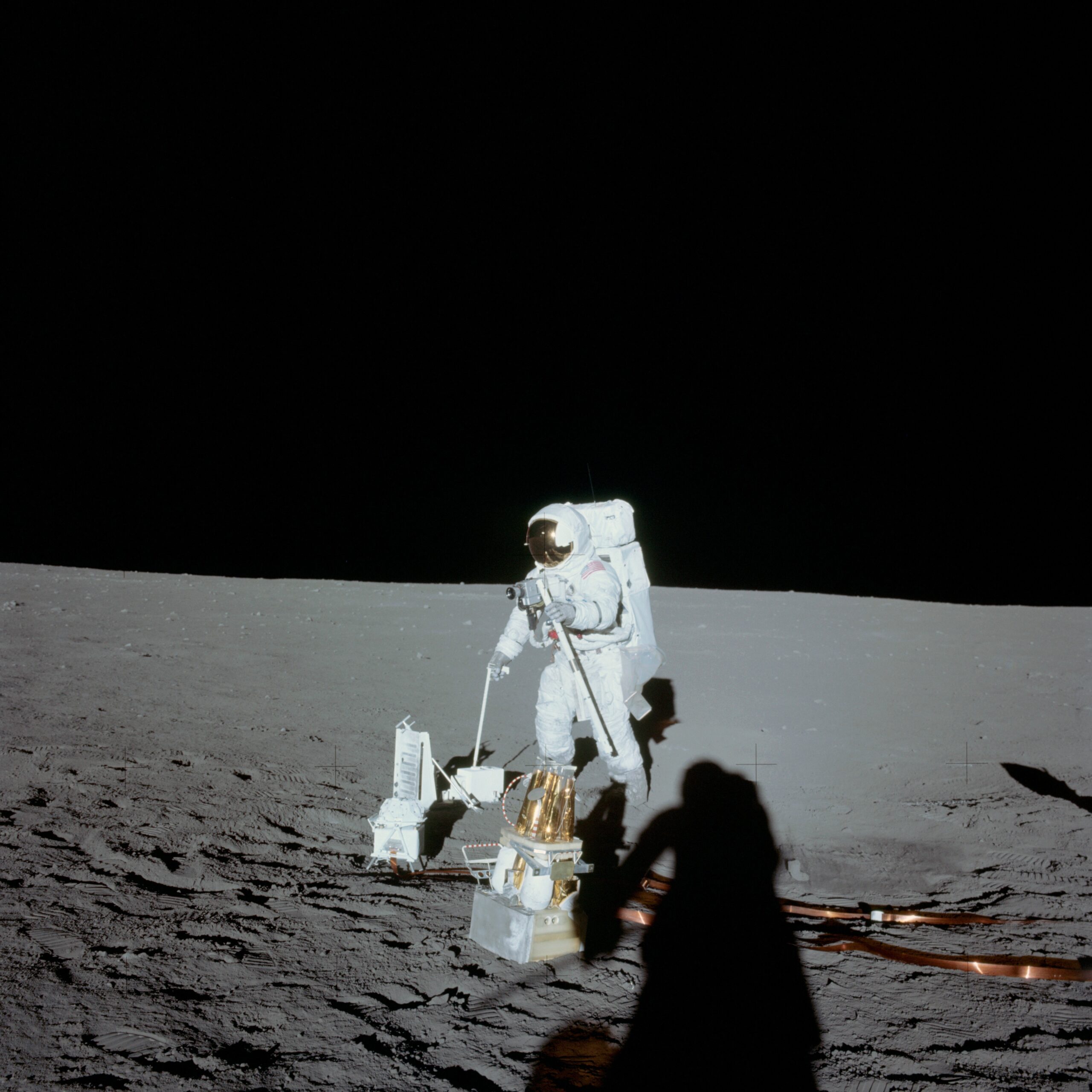
One of the most unusual characteristics of the recordings is their duration. Williams reported that Apollo seismic records show an average strong-shaking duration of about 54 minutes, compared with typically less than one minute for shallow crustal earthquakes on Earth. The researchers attribute much of this difference to scattering within the fractured upper lunar crust, which spreads seismic energy into a prolonged coda.
That duration measurement requires an important qualification. The new ground-motion model does not reproduce or predict shaking duration. Its principal contribution concerns the amplitude of seismic motion and how it changes with distance. The approximately 54-minute figure describes an average derived from Apollo recordings, not a modeled prediction that every moonquake will produce 54 minutes of equally strong or damaging shaking.
Both shaking amplitude and duration matter to seismic engineering, but they describe different aspects of ground motion. Amplitude concerns how strongly the surface moves, while duration describes how long the motion continues. The response of a structure also depends on the frequency content of the shaking and the structural properties of the building or equipment. A model developed for the Moon can help characterize part of that seismic demand, but the available observations do not yet constrain every quantity needed for detailed engineering assessments.
The researchers identified the limited Apollo dataset as a major constraint. The four stations were relatively close together compared with the size of the Moon, and their recordings covered a narrow frequency band. This restricts the range of seismic conditions that can be directly evaluated. As a result, the new model remains dependent on a combination of sparse observations and simulations rather than extensive instrumental measurements across multiple lunar regions.
Williams said modern broadband, three-component seismometers would provide measurements across a wider range of frequencies relevant to structures. Three-component instruments measure ground motion in different directions, allowing researchers to examine the vertical and horizontal components of seismic waves. Additional stations distributed over a wider range of locations and distances would improve the spatial coverage available for determining how lunar shaking changes from one region to another.

The observational gap has implications for future lunar exploration. Civil engineers evaluating habitats, equipment foundations and other surface infrastructure need estimates of the ground motion that structures may experience during seismic events. The model developed by Williams and colleagues is intended to support that assessment, although its results do not establish a complete lunar construction code or remove the need for further measurements.
NASA is also developing new instrumentation to improve lunar seismic observations. In August 2026, the agency reported that hardware development and testing had been completed for the Lunar Environment Monitoring Station (LEMS), a compact instrument package designed to monitor ground motion caused by moonquakes and meteorite impacts near the lunar south pole. The payload includes two sensitive seismometers and was awaiting assignment to an Artemis lunar surface mission. It was not used to produce the newly published Apollo-based model.
Records from future larger-magnitude moonquakes would provide another important test of the model. The researchers note that more measurements across different depths and distances could help refine predictions for seismic hazard assessment. Larger events would be especially useful because the Apollo archive provides only limited observational constraints on the range of shaking conditions that future lunar structures might encounter.
An important remaining question is how accurately the model will describe shaking at sites and frequencies not well represented by the Apollo observations. Measurements from a more geographically distributed lunar seismic network would allow researchers to compare the model’s predictions with independent events and investigate whether the same propagation relationships apply across different geological regions. Those observations would also help determine how amplitude, frequency content and unusually long shaking duration should be incorporated into future assessments of lunar seismic hazards.
References:
1 Williams, T., Clifford, T., Murphy, D. G., Abrahamson, N., Čaluk, N., Jehn, I., & Lee, P. (2026). Ground-motion model development for shallow moonquakes. Seismological Research Letters. DOI: 10.1785/0220260181
2 First Lunar-Specific Ground Motion Model Could Guide Seismic Hazard Assessments on Moon – Seismological Society of America – November 18, 2026
3 NASA Completes Astronaut-Deployed Science Instrument for Lunar Surface – NASA – August 11, 2026

I’m a science journalist and researcher at The Watchers, contributing to the Epicenter edition, where I cover peer-reviewed scientific research and emerging discoveries across Earth and space sciences. With a background in astronomy and a passion for environmental science, I’ve worked in shark and coral conservation in Fiji, conducting reef and shark-behavior research, contributing to mangrove restoration, and earning PADI Open Water and Coral Reef Certifications. I bring a blend of scientific rigor and storytelling to illuminate the discoveries shaping our planet and beyond.
Published in the last 24 hours
- Hera’s first thermal images of Didymos-Dimorphos reveal cooling hidden from visible cameras Epicenter
- Surface dust differences may explain why some Martian storms encircle the planet Epicenter
- Airline pilots reported red flashes shooting upward from thunderstorms for decades, until a camera being tested in Minnesota in 1989 caught one by accident above a distant storm Epicenter
- Luxor sits inside the 258 km wide path of the total solar eclipse of 2 August 2027, and totality will last up to 6 minutes 23 seconds near the city, with the Sun 82 degrees overhead at greatest eclipse. Epicenter
