
Surface dust differences may explain why some Martian storms encircle the planet
Differences in the distribution and size of dust particles across Mars may help explain why some Martian dust storms spread around the planet while others remain regional. A study published in June 2026 found that accounting for these surface differences produces a sharper change between weak dust emission and the rapid growth associated with planet-encircling storms, offering a possible explanation for the planet’s unpredictable global dust-storm cycle.
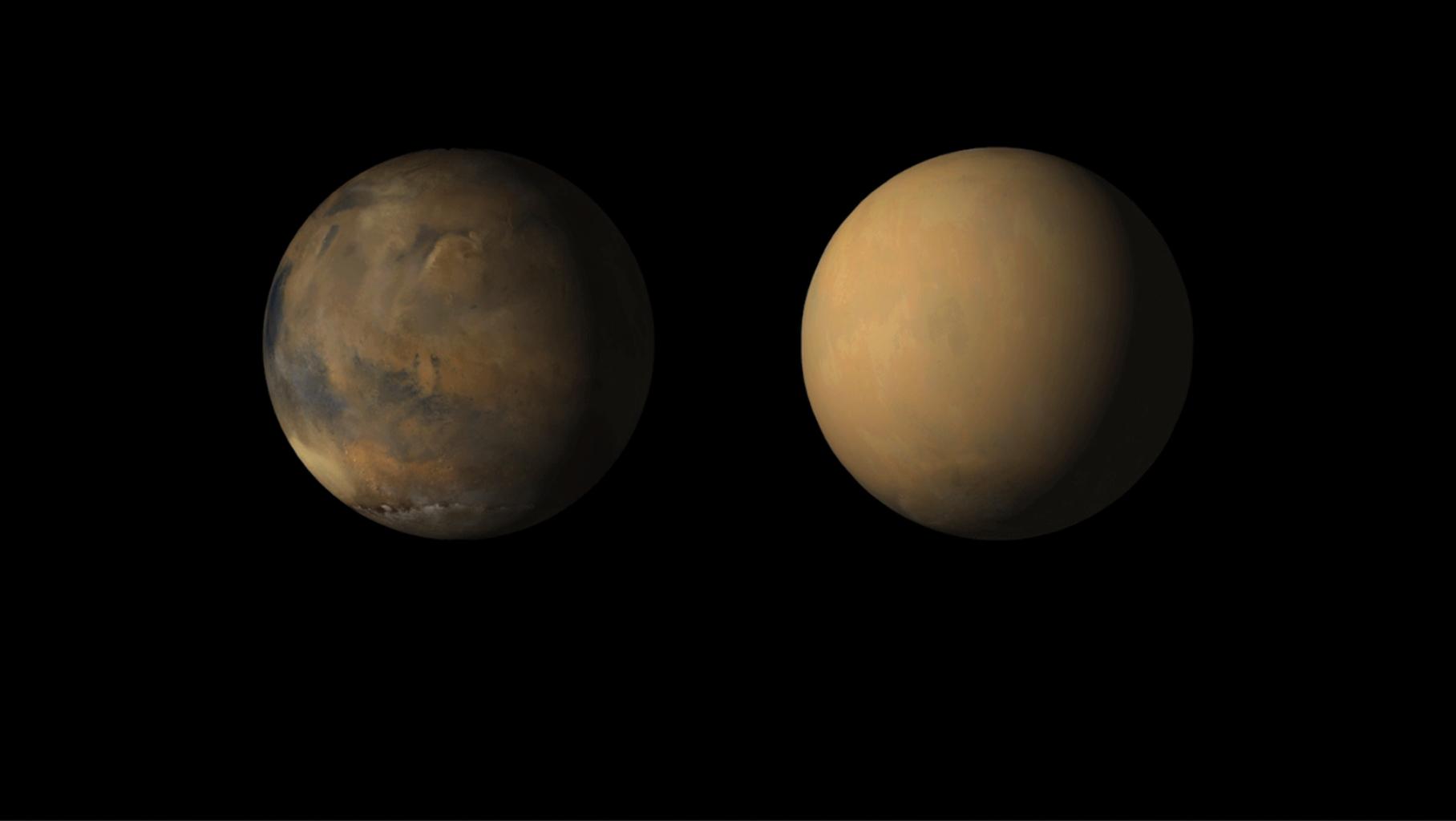
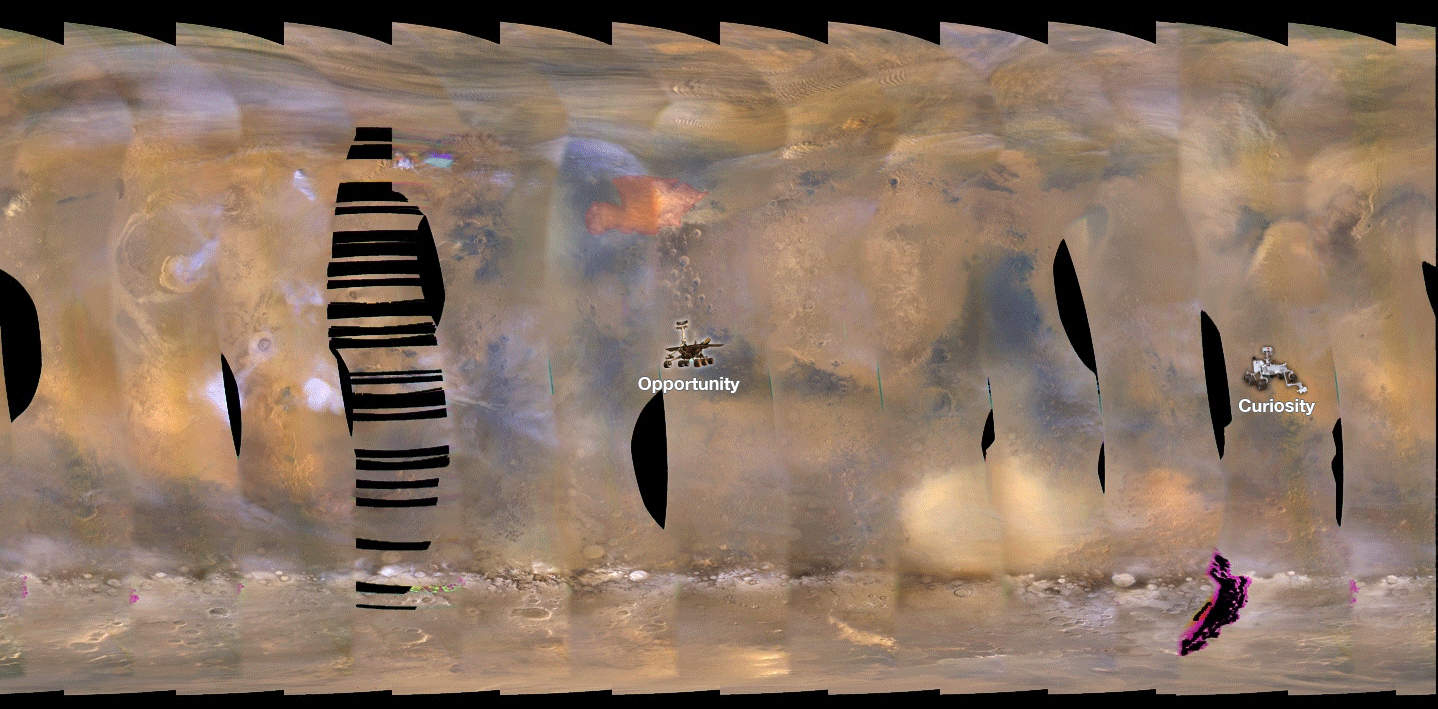
Mars before and during the global storm. Credit: NASA/JPL-Caltech/MSSS
Global Dust Events (GDEs) occur only every few Martian years, despite the recurring seasonal conditions that favor dust activity. Scientists have long investigated why relatively small differences between years can produce such different outcomes, from limited regional storms to dust clouds that encircle the planet. Ramette et al. (2026) examined whether the answer partly depends on how much fine dust is available at different locations and how easily winds can mobilize it.
The central finding is that geographically uneven surface dust properties allow a simplified model to reproduce a much stronger distinction between relatively quiet years and years with rapid dust-storm growth. The result suggests that the transition toward a global event may depend on wind conditions crossing particle-mobilization thresholds in particular dust-rich regions. The study does not establish this as the sole cause of planet-encircling storms, but identifies a possible missing factor in models that cannot consistently reproduce their year-to-year variability.
The researchers compared simulations in which dust-emission properties were uniform across Mars with simulations in which those properties varied geographically. Under the tested uniform-surface parameter combinations, none could produce both a maximum global dust-emission rate below 20 teragrams per Martian day during weak-wind conditions and a rate above 50 teragrams per Martian day under stronger winds. Several geographically heterogeneous parameter combinations satisfied both conditions.
Those thresholds correspond to 20 million metric tonnes (approximately 22 million US short tons) and 50 million metric tonnes (approximately 55 million US short tons) per sol, respectively. A sol is one Martian solar day, lasting about 24 hours and 39 minutes. The figures describe modeled rates of dust entering the atmosphere, not observed quantities of dust accumulated during a real storm. Their importance lies in the model’s ability to produce both low- and high-emission states using the same parameter framework under different wind conditions.
That distinction matters because global storms are not simply the largest examples of ordinary local storms. They involve rapid atmospheric dust loading followed by changes in heating and circulation that can support further dust lifting. A model that produces strong dust emission in every simulated year cannot adequately represent the years when Mars remains comparatively quiet. The study found that adding geographic differences in surface dust characteristics improved the separation between those two conditions.
The physical process begins with the movement of particles along the ground. Wind stress must overcome forces holding surface material in place before grains can move. On Mars, grains around 100 micrometers (0.004 inches) in diameter are particularly relevant to saltation, a process in which wind-driven grains hop across the surface and strike other particles. Those impacts can help release finer dust, including particles smaller than 10 micrometers (0.0004 inches), which can then be carried upward by atmospheric turbulence.
Very fine particles are not necessarily the easiest to mobilize. As particle size decreases, cohesive forces between grains become increasingly important. Surfaces dominated by fine dust may therefore require greater wind stress before substantial lifting begins, even when they contain large quantities of material capable of entering the atmosphere. Once that higher threshold is exceeded, the available dust can contribute to much stronger emission.
Ramette and colleagues investigated this effect using the Martian Dust Cover Index (DCI), derived from remote-sensing observations of surface reflectivity and thermal inertia. Reflectivity helps distinguish darker, relatively dust-free surfaces, while thermal inertia indicates how quickly surface materials heat and cool. Thick deposits of fine dust generally have low thermal inertia. The index provides a way to estimate broad differences in surface dust cover without directly measuring every particle across the planet.
The researchers simplified the surface into three classes representing low, intermediate and high dust cover. Each class was assigned different dust-emission properties, including the threshold wind stress required for mobilization and the efficiency with which moving surface grains release dust. The framework was based on saltation theory and tested using wind-stress scenarios produced by the Mars Planetary Climate Model, version 6 (Mars PCM6).
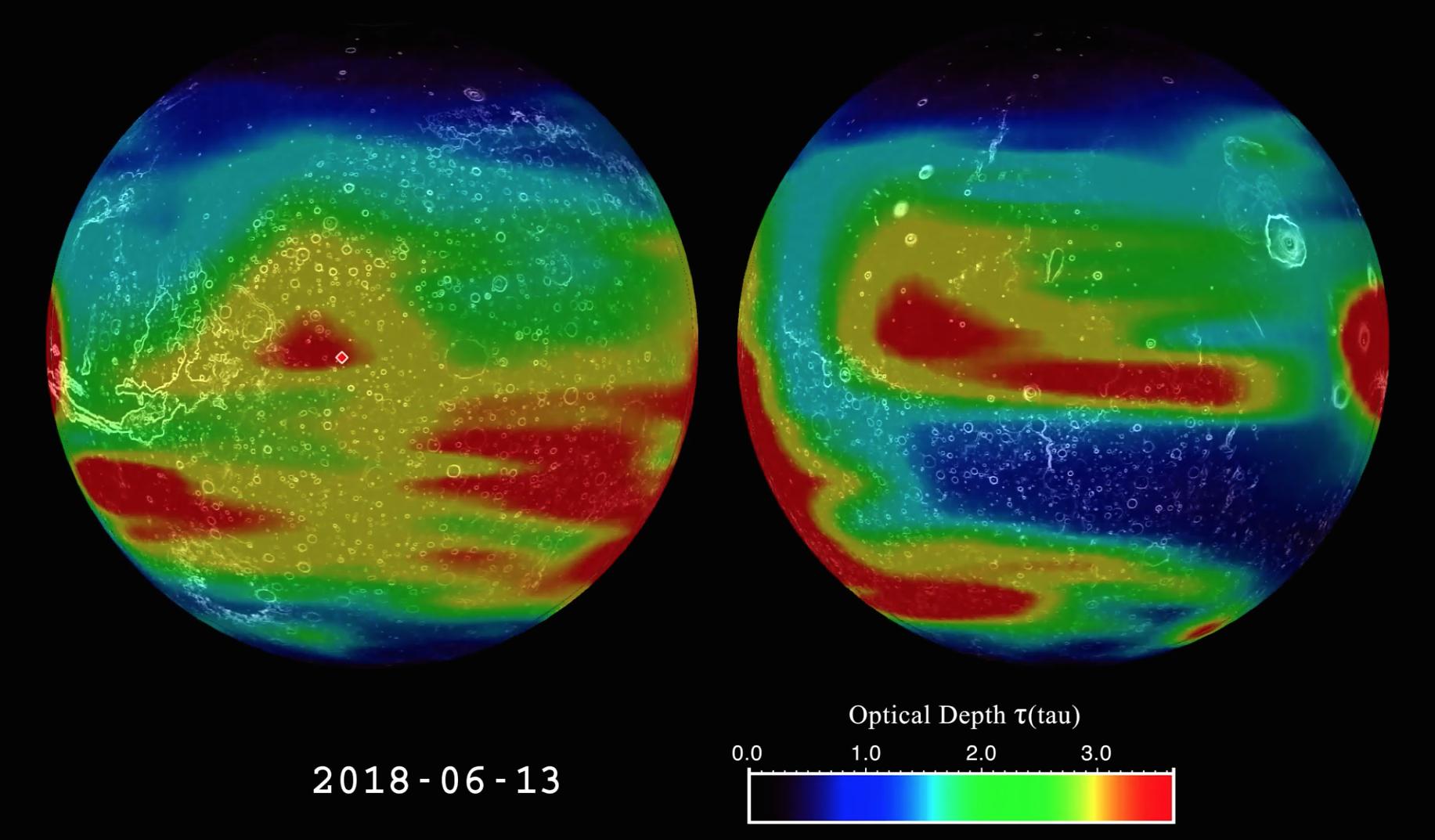
Those scenarios represented relatively quiet conditions and conditions associated with a global dust event during Mars Year 25. The model’s atmospheric dust inputs were informed by remote-sensing-derived dust optical-depth records. Dust optical depth describes how strongly suspended particles block or scatter radiation along a path through the atmosphere. The study used the resulting modeled wind stresses to investigate how different surface properties affect dust-emission rates. The wind fields and emission estimates should not be confused with direct measurements of surface dust flux.
The simulated response was particularly sensitive to the properties of regions with extensive surface dust. During weaker-wind conditions, fine-grained surfaces could remain relatively inactive because the mobilization threshold was not reached. With stronger winds, those same regions could become much more productive sources. In the heterogeneous simulations, this behavior created the stronger contrast between low-emission and high-emission conditions that was missing from the tested uniform-surface parameter combinations.
Once dust enters the atmosphere in sufficient quantities, its effects can extend beyond the original source regions. Suspended particles absorb and redistribute radiation, changing atmospheric temperatures and modifying circulation. Stronger circulation can increase surface wind stress and mobilize more particles, producing a positive feedback between atmospheric dust loading and dust emission. The researchers propose that geographically varying surface thresholds may influence how readily the Martian atmosphere enters this rapid-growth regime.
The atmospheric feedback itself is not a newly discovered process. Earlier Martian climate research had already established that airborne dust affects heating, circulation and surface winds. The contribution of the 2026 study is to examine how geographic differences in surface particle populations alter the amount of dust released when those winds strengthen. It connects a known atmospheric feedback with a spatially varying surface reservoir rather than treating dust availability and mobilization properties as uniform across Mars.
The simplified simulations nevertheless have important limitations. When the researchers transferred the parameters obtained from their wind-stress experiments into a fully interactive Martian dust-cycle model, the results did not reproduce atmospheric dust loading at levels expected during global events. Dust emission appeared to be underestimated particularly in the southern mid-latitudes, leaving the simulated global atmospheric dust content too low.
Several uncertainties could contribute to that discrepancy. Surface particle-size distributions remain insufficiently constrained in some regions, particularly where intermediate dust cover occurs. The model may also inadequately represent smaller-scale winds, including flows associated with the retreating southern polar ice cap. Assumptions about the sizes and densities of particles entering the atmosphere introduce additional uncertainty because those properties influence how dust interacts with radiation.
These limitations prevent the current framework from being treated as a reliable global dust-storm forecasting method. The authors found that spatial heterogeneity improved the simplified model’s ability to distinguish different wind regimes, but the parameter values could not be transferred directly into a fully interactive dust-cycle simulation without producing substantial biases. More complete models must reproduce realistic dust emission, atmospheric loading and geographic source patterns together.
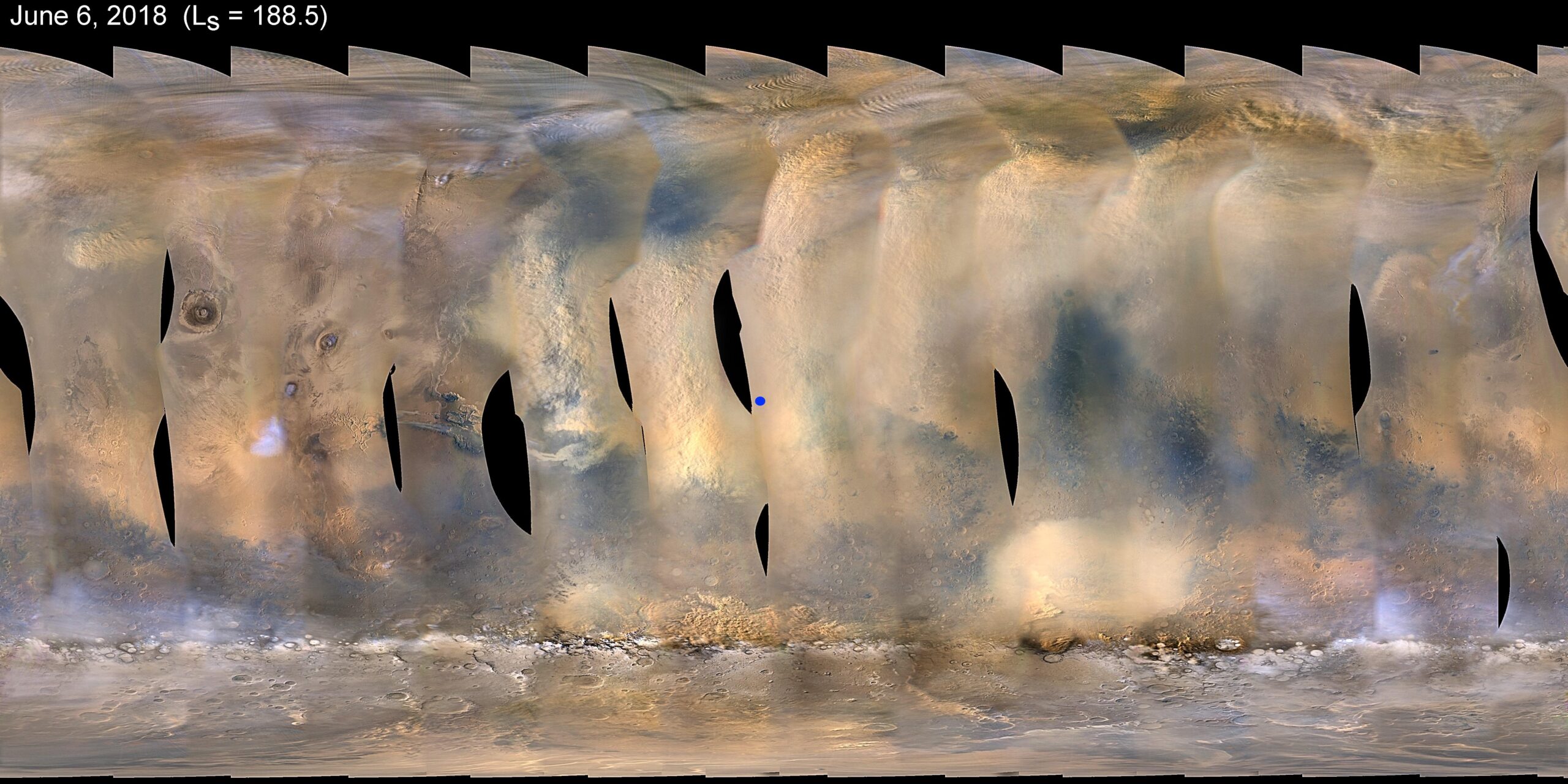
The consequences of planet-encircling dust storms are evident from previous observations. During the 2018 event, the expanding storm was classified as planet-encircling by June 19. Although such storms are often described as global, they do not necessarily cover every part of Mars. Airborne dust substantially reduced sunlight reaching the surface and interfered with the operation of NASA’s solar-powered Opportunity rover, which last communicated with Earth on June 10, 2018.

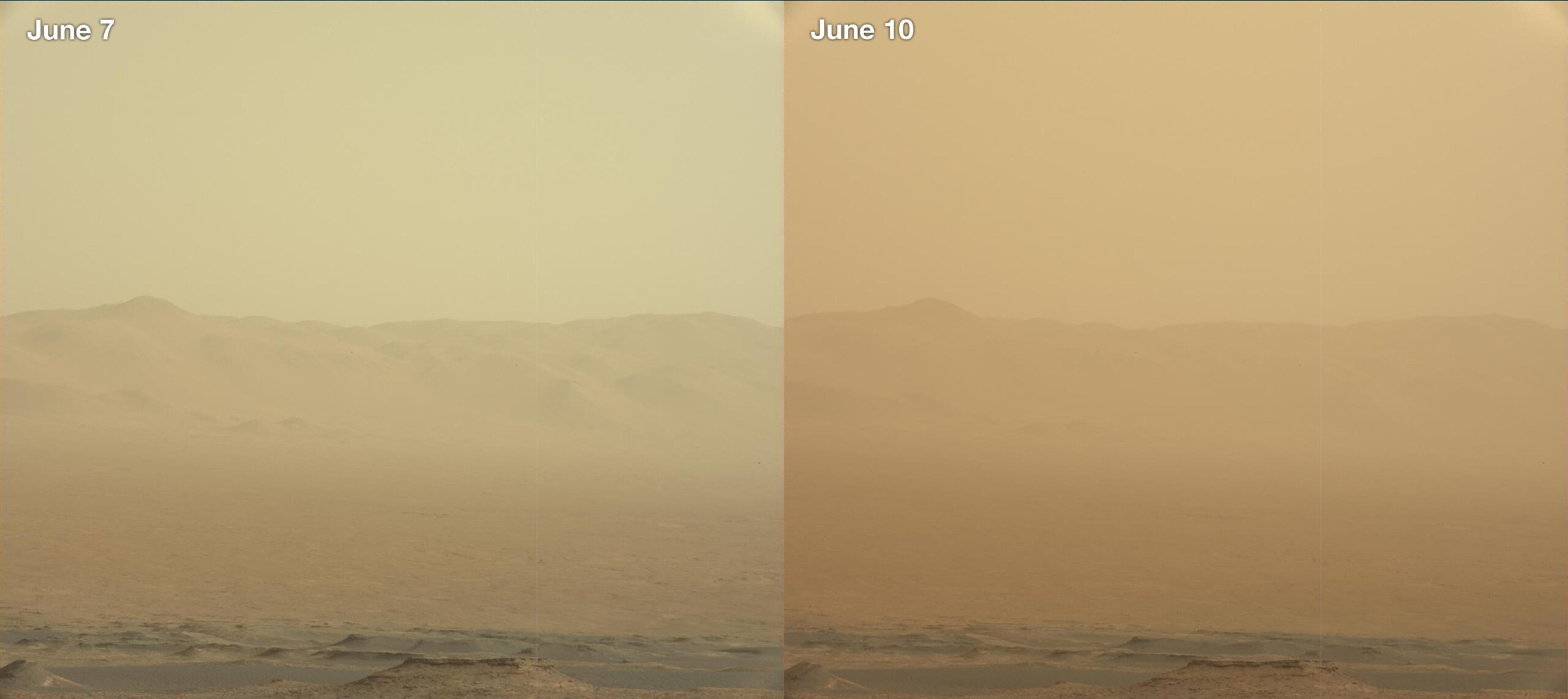
Curiosity, which uses a radioisotope power system rather than relying on solar panels for its main electrical supply, continued operating during the same storm. Its cameras documented increasing haze and changes in the color of light reaching the Martian surface. Those observations illustrate how airborne dust affects visibility and illumination even when a spacecraft does not depend directly on sunlight for electrical power.
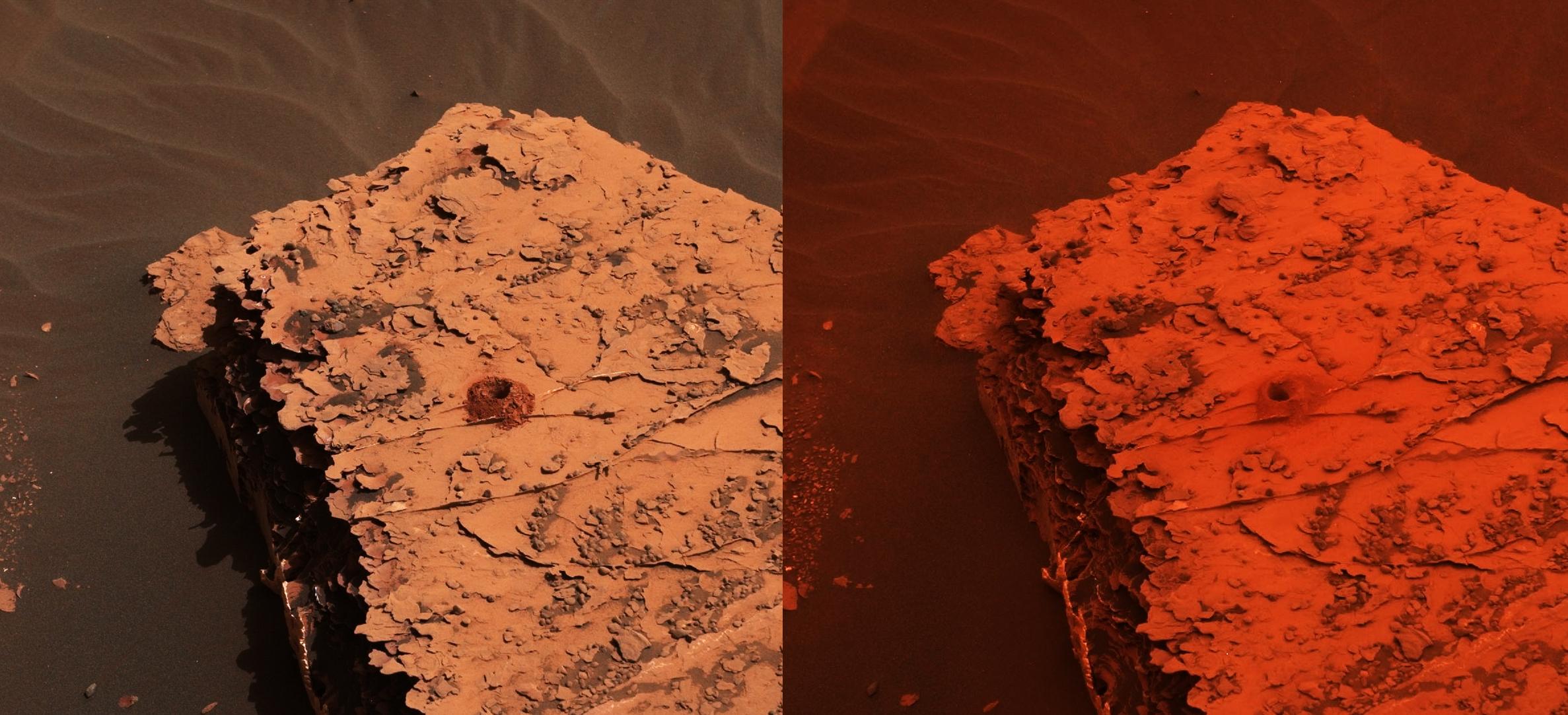
The 2018 event provides an observational example of a planet-encircling storm, but the 2026 modeling study does not establish that the proposed surface-heterogeneity mechanism triggered that specific event. The study instead tests a more general physical explanation for why some Martian years develop much greater dust-emission rates than others. Applying the proposed mechanism to individual historical storms would require additional model comparisons and observational constraints.

Further tests will require improved general circulation models, more detailed remote-sensing measurements of surface particle sizes and laboratory experiments using Martian regolith analogs. The researchers also recommend examining geographic differences together with changes in surface dust cover over time, including the effects of material deposited after major storms.
One unresolved question is whether dust deposited during the decline of a global storm temporarily changes the surface enough to reduce the likelihood of another event in the following Martian year. The authors suggest that fresh deposits of fine material could increase mobilization thresholds until processes such as mixing, weathering and granular movement alter the surface again. Testing that possibility would help determine whether the Martian dust cycle contains a multi-year memory controlled partly by the changing state of the surface.
References:
1 Ramette, D., Noack, L., Merrison, J. P., & Schepanski, K. (2026). Investigating the impact of the spatially heterogeneous surface dust cover on Martian global dust event occurrence. Geophysical Research Letters, 53(11), e2026GL122003. DOI: 10.1029/2026GL122003
2 Mars 2018 Global Dust Storm – NASA Scientific Visualization Studio – August 5, 2018
3 Curiosity’s View of the June 2018 Dust Storm – NASA Jet Propulsion Laboratory – June 13, 2018
4 Mars Climate Sounder Studies 2018 Dust Storm – NASA Jet Propulsion Laboratory – October 30, 2018
5 Mars24 Sunclock: Technical Notes on Mars Solar Time – NASA Goddard Institute for Space Studies

I’m a science journalist and researcher at The Watchers, contributing to the Epicenter edition, where I cover peer-reviewed scientific research and emerging discoveries across Earth and space sciences. With a background in astronomy and a passion for environmental science, I’ve worked in shark and coral conservation in Fiji, conducting reef and shark-behavior research, contributing to mangrove restoration, and earning PADI Open Water and Coral Reef Certifications. I bring a blend of scientific rigor and storytelling to illuminate the discoveries shaping our planet and beyond.
Published in the last 24 hours
- Asteroid orientation can alter stand-off X-ray deflection by up to fivefold Epicenter
- Hera’s first thermal images of Didymos-Dimorphos reveal cooling hidden from visible cameras Epicenter
- Moonquake shaking travels much farther than Earth-based models predict Epicenter
- Airline pilots reported red flashes shooting upward from thunderstorms for decades, until a camera being tested in Minnesota in 1989 caught one by accident above a distant storm Epicenter
