
Niagara Falls shrank to a trickle for more than a day in March 1848 when ice jammed the river, and people walked the dry riverbed picking up weapons from the War of 1812
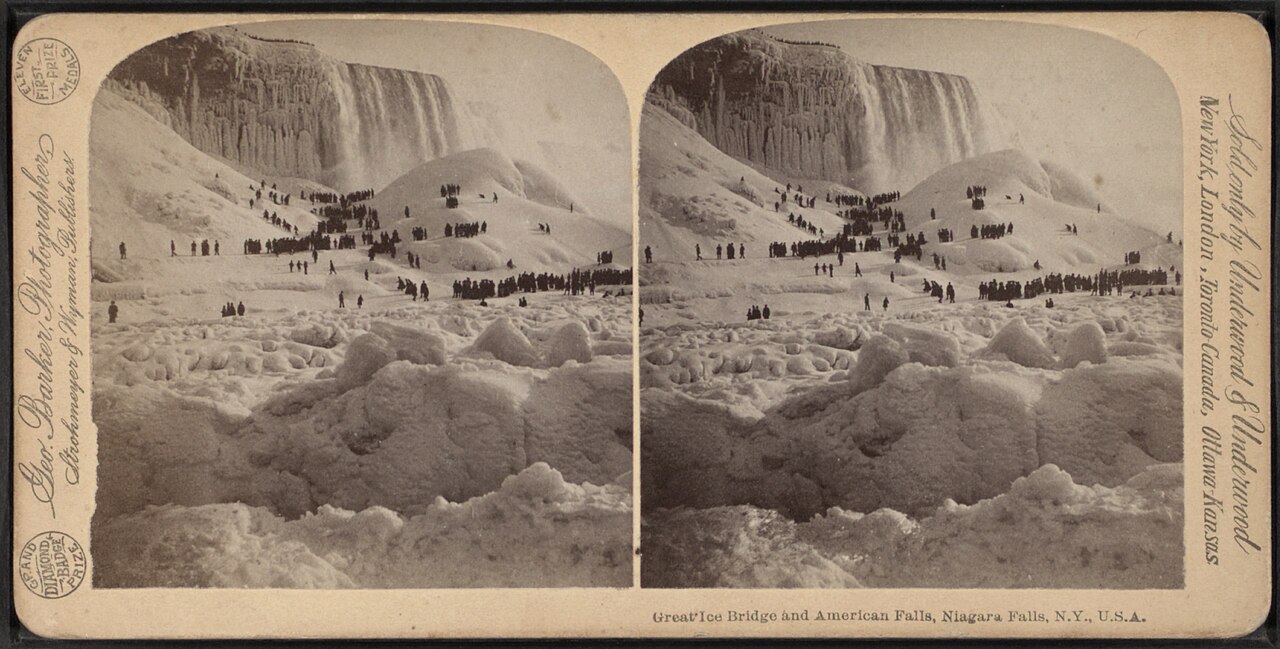
An enormous ice dam formed where Lake Erie drains into the Niagara River on March 29, 1848, severely restricting the river and reducing Niagara Falls to a trickle for more than a day. As normally submerged ground emerged below the Falls, people ventured onto the riverbed and recovered lost objects including weapons from the War of 1812 before rising temperatures and shifting winds broke apart the blockage.
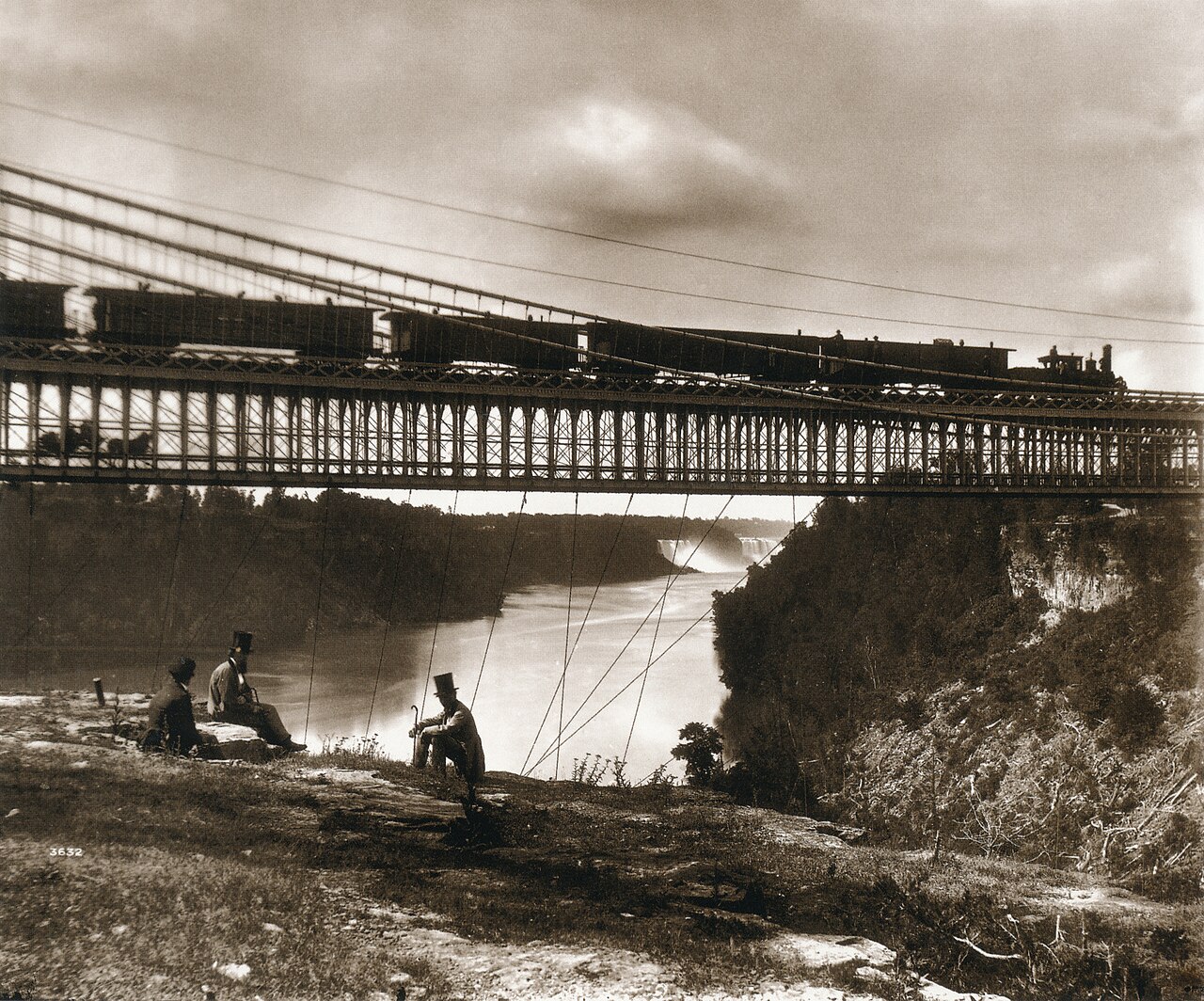
A steam train crosses the Niagara Falls Suspension Bridge in 1859 while Niagara Falls appears in the distance. The photograph was made 11 years after the 1848 ice-jam event and provides a near-contemporary view of the river corridor. Credit: William England / Wikimedia Commons. Public domain.
The blockage developed at the head of the Niagara River rather than at the waterfalls themselves. Lake Erie drains through the river toward Niagara Falls, so an ice jam at the lake outlet can sharply restrict the volume of water reaching both the American and Horseshoe falls without either waterfall freezing solid.
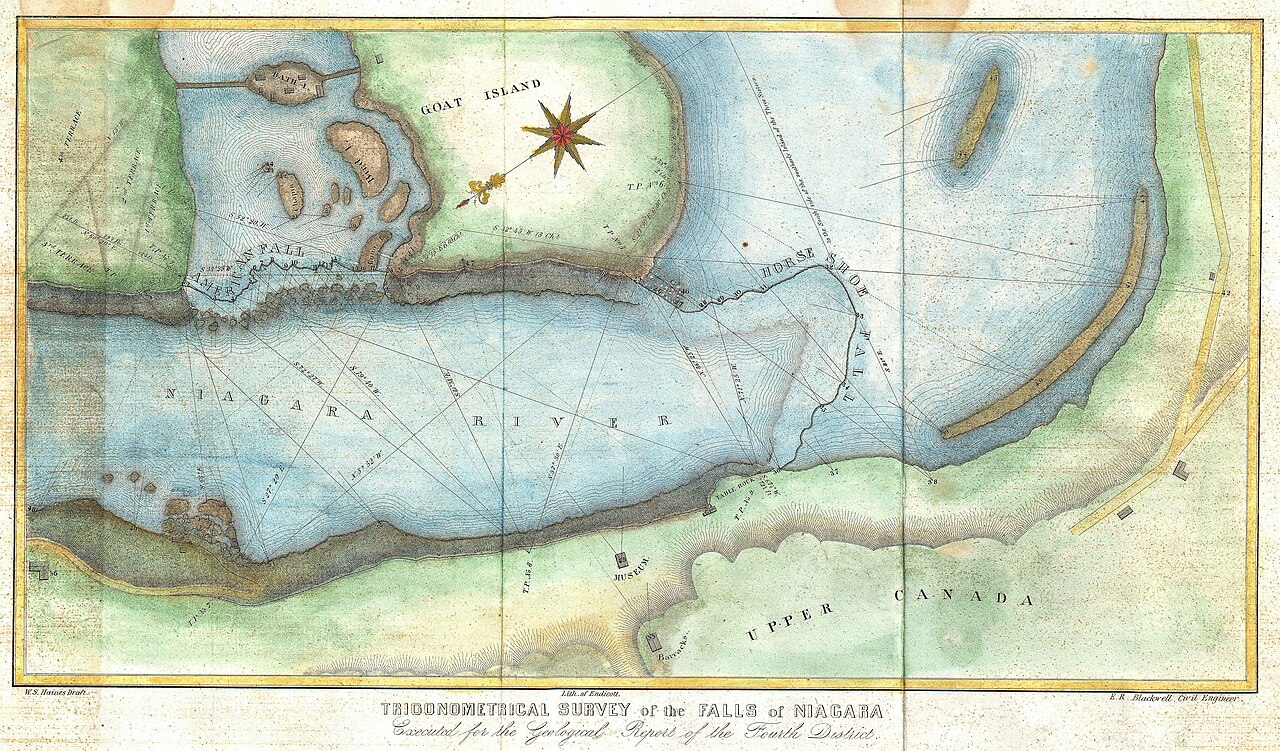
The March 1848 episode provides an unusually clear historical example of how river ice can alter a major waterway. Later engineering research on the upper Niagara River described the same physical problem in modern terms: large volumes of moving Lake Erie ice can enter the river, accumulate downstream and interfere with river flow and hydroelectric operations.
The Library of Congress records that an enormous ice dam formed at the source of the Niagara River on the eastern shore of Lake Erie on March 29, 1848. Shortly after midnight, the river’s flow became severely restricted and the usual roar of Niagara Falls subsided. The restriction continued through the following day and into the next evening.
Brock University Library places the broader period of substantially reduced flow from March 29 through March 31. Its Niagara in Winter archive describes ice floes accumulating where Lake Erie drains into the Niagara River until the obstruction reduced the Falls to a trickle.
An ice jam develops when moving floes accumulate faster than the channel can carry them downstream. As the mass builds, resistance to flow increases and water levels and discharge can change sharply across the affected reach. At the Niagara River, the amount of Lake Erie ice entering the narrow river outlet eventually became important enough to require permanent ice-management measures.
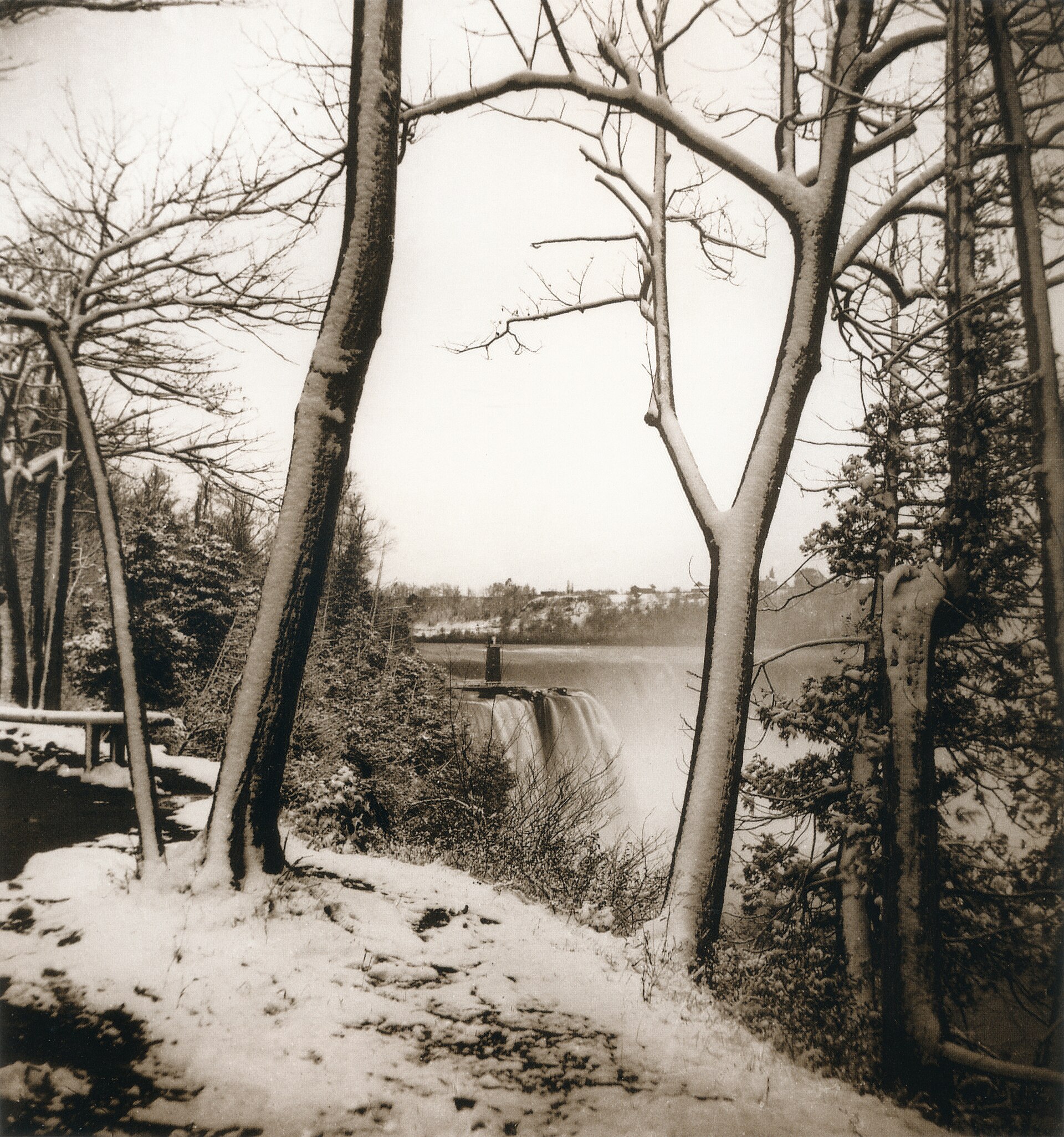
As water levels below the Falls dropped in 1848, normally submerged areas of the riverbed became accessible. Brock University Library records that people ventured onto the exposed ground and recovered lost items, including weapons dating from the War of 1812.
The exposed riverbed also opened areas that were normally inaccessible. Brock University Library records that operators of the Maid of the Mist used the low-water interval to dynamite rocks in the riverbed that posed hazards to their vessels.
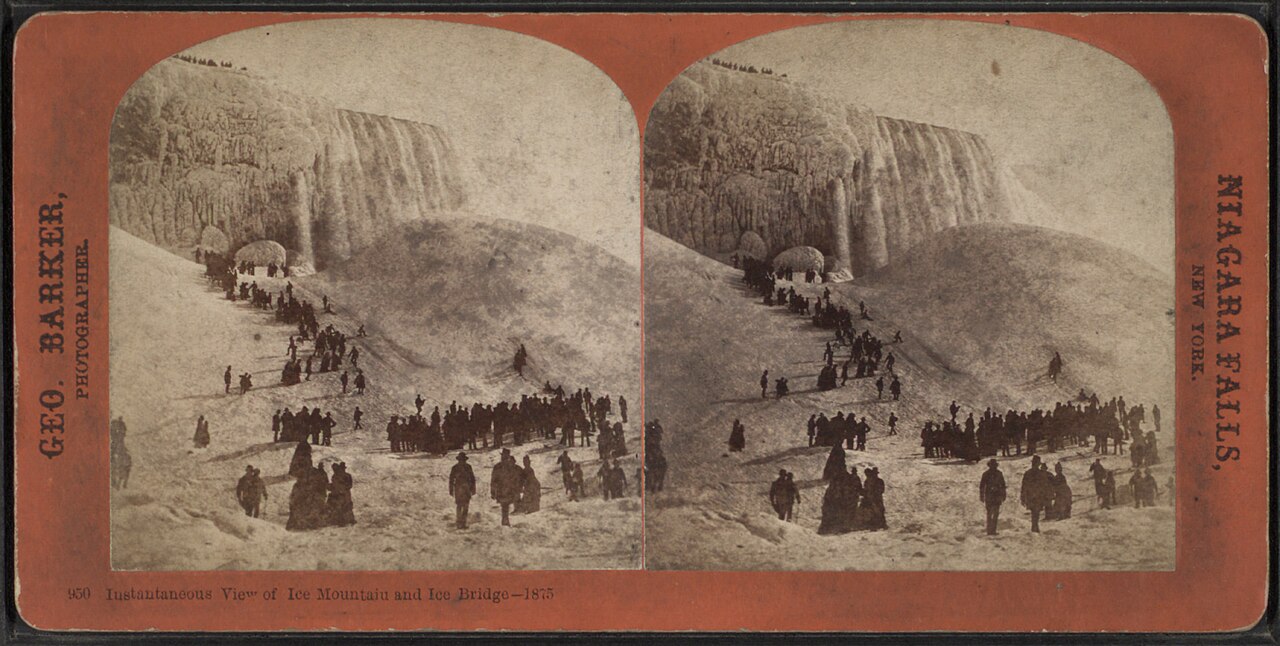
The episode ended during the night of March 31. Brock University Library states that temperatures rose and winds shifted, breaking apart the ice dam. Water from Lake Erie again moved freely into the Niagara River and normal flow returned over the Falls.
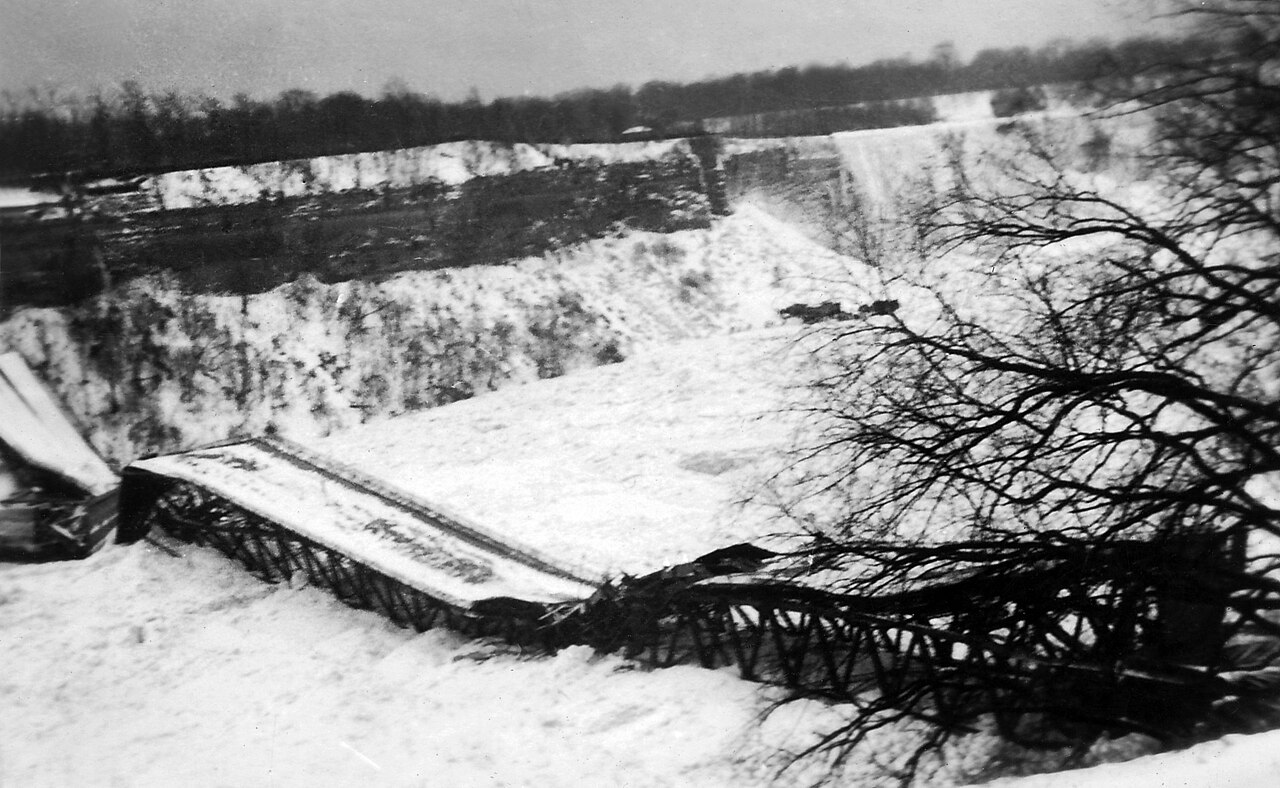
Later ice jams demonstrated that the underlying process was not unique to 1848. Brock University’s Niagara collections document major ice-related disruption in 1909, 1938, 1955 and 1963, including damage to generating facilities, shoreline structures, docks and bridges.
The 1938 event caused particularly serious infrastructure problems. Ice accumulated around the Ontario Power Generating Station near the base of Horseshoe Falls, disabling equipment and obstructing access, while the Falls View Bridge, widely known as the Honeymoon Bridge, collapsed during the same period of severe ice conditions.
Keep reading
- Vesuvius, the volcano that buried Pompeii, wrecked dozens of American bombers parked at its foot when it last erupted in 1944
- The small Utah town of Milford has been rocked by more than 200 earthquakes in two weeks, the largest magnitude 3.1; seismologists now tie the swarm to geothermal work at the Utah FORGE field lab.

Engineers later studied the same process quantitatively. Shen, Lu and Crissman modeled ice transport across the Lake Erie-Niagara River ice boom and examined how sustained discharges of lake ice into the river can produce jam conditions near hydroelectric intakes. Their analysis treated the boom as a means of promoting a stable Lake Erie ice cover and reducing the amount of moving ice released into the Niagara River.
Ice control at the lake outlet had already become an operational response decades earlier. In 1964, the International Joint Commission approved installation of a floating ice boom near the entrance to the Niagara River to promote formation and stabilization of the natural ice arch at the Lake Erie outlet and reduce heavy ice runs downstream.
The boom extends about 2.7 km (1.7 miles) across the outlet of Lake Erie, approximately 3 km (2 miles) upstream of the Peace Bridge when installed. It does not dam the lake or stop water from entering the Niagara River. Water continues to move beneath the ice while the boom helps retain large ice fields in the lake and limits the amount released into the river at once.

Peer-reviewed engineering work explains why that control matters. Large ice discharges can produce jams in the upper river and interfere with hydropower operations, while the boom is designed to reduce those discharges without obstructing the underlying water flow. The engineering response addresses the same fundamental interaction between lake ice and river hydraulics that produced the exceptional restriction recorded in 1848.
The historical evidence therefore does not support describing the episode as Niagara Falls freezing. Liquid water continued to flow from Lake Erie, but the upstream ice obstruction reduced the amount entering the Niagara River enough to expose normally submerged ground below the Falls. Later ice-jam research and control measures show that the 1848 event was an extreme expression of a physical process that continued to affect Niagara River infrastructure long after normal flow returned.
References:
1 Shen, H. T., Lu, S., & Crissman, R. D. (1997). Numerical simulation of ice transport over the Lake Erie-Niagara River ice boom. Cold Regions Science and Technology, 26(1), 17–33. DOI: 10.1016/S0165-232X(97)00005-0
2 Bryce, J. B. (1968). Ice and river control. Journal of the Power Division, 94(2), 183–197. DOI: 10.1061/JPWEAM.0000586
3 Ice Jam on the Niagara – Library of Congress – historical archive
4 Ice Jams – Niagara in Winter – Brock University Library – historical exhibit
5 Lake Erie-Niagara River Ice Boom – International Joint Commission – ice-control mandate and specifications

I’m a science journalist and researcher at The Watchers, contributing to the Epicenter edition, where I cover peer-reviewed scientific research and emerging discoveries across Earth and space sciences. With a background in astronomy and a passion for environmental science, I’ve worked in shark and coral conservation in Fiji, conducting reef and shark-behavior research, contributing to mangrove restoration, and earning PADI Open Water and Coral Reef Certifications. I bring a blend of scientific rigor and storytelling to illuminate the discoveries shaping our planet and beyond.
More reporting
- Tornadoes killed 42 people in one Florida night during the record El Niño winter of 1997–98, most of them asleep in mobile homes
- A fire tornado with winds over 143 mph spun into Redding, California, in 2018 and killed a fire inspector in its path
- Rain fell on the very top of Greenland's ice sheet, more than 2 miles up, for the first time on record in August 2021
- A man locked in a jail cell lived through the 1902 volcanic blast that killed about 28,000 people in the Caribbean city of Saint-Pierre
