• ESA proposes Ramses mission to rendezvous with asteroid Apophis ahead of 2029 Earth flyby

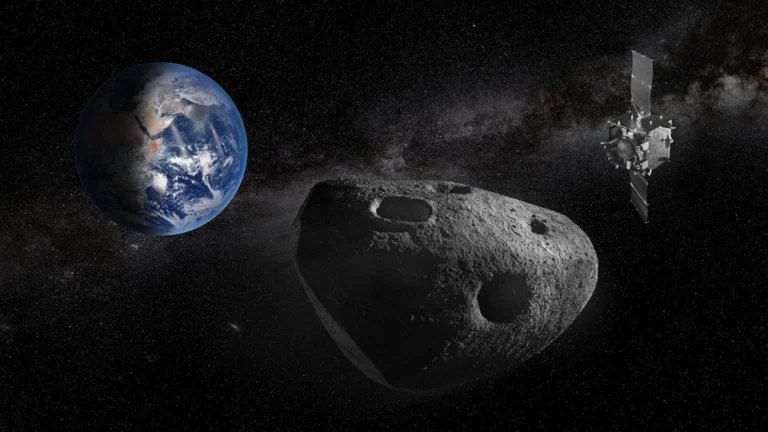
    Asteroid 99942 Apophis will sweep within about 32 000 km (19 900 miles) of Earth’s surface on April 13, 2029, passing inside the orbit of many geostationary satellites. ESA’s proposed Ramses spacecraft aims to fly alongside it and observe this near miss up close.

  • What a runaway black hole did to a galaxy 31 million light-years away

    Astronomers using the James Webb Space Telescope (JWST) and ALMA have identified a 20 000 light-year (6 kiloparsec) scar of gas and dust slicing through the spiral galaxy NGC 3627. The feature was likely created by a massive black hole or the nucleus of a dwarf galaxy that passed through the galactic disk about 20 million years ago.

  • South Atlantic Anomaly, weak spot in Earth’s magnetic field, expanding steadily since 2014

    New data from the European Space Agency’s Swarm mission show that the South Atlantic Anomaly, a weak region in Earth’s magnetic field over the South Atlantic Ocean, has expanded steadily since 2014, now covering nearly 1 % of the planet’s surface. The 11-year record marks the most detailed satellite observation of the field’s uneven weakening to date.

  • Swirling dust devils expose hidden power of Martian winds

    For decades, spacecraft have photographed small spiraling columns of dust drifting across Mars. These dust devils form when sunlight heats the surface, causing warm air to rise through cooler layers and spin into tall, narrow vortices that can stretch hundreds of meters into the sky. The new study, led by Valentin Bickel from the University…