Large landslide triggers localized tsunami in Tracy Arm, Alaska
A large landslide hit Tracy Arm, Southeast Alaska at approximately 05:30 LT (13:30 UTC) on August 10, 2025, generating a localized tsunami, according to the Alaska Earthquake Center.

A large landslide hit Tracy Arm, Southeast Alaska at approximately 05:30 LT (13:30 UTC) on August 10, 2025, generating a localized tsunami, according to the Alaska Earthquake Center.

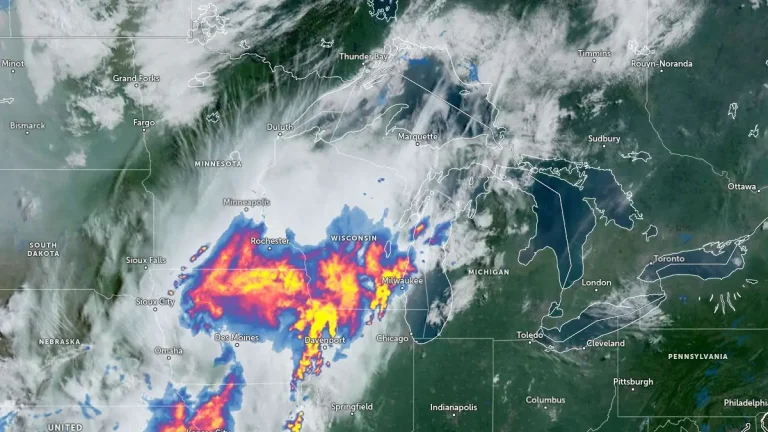
Milwaukee recorded its second-wettest day on August 9, 2025, with 146 mm (5.74 inches) of rain causing historic flooding across the city and nearby areas.

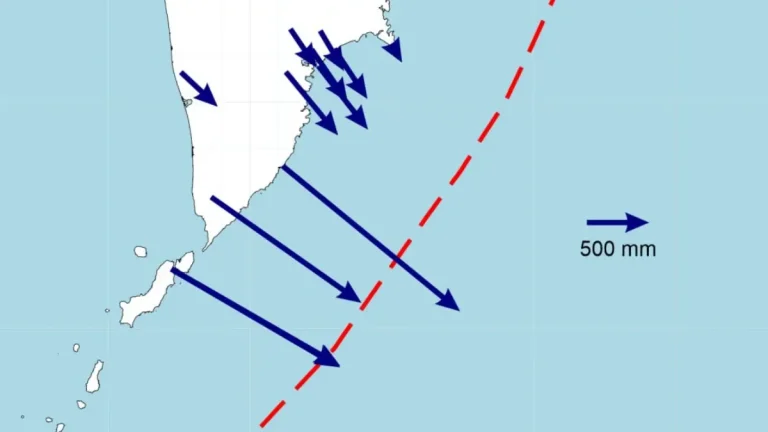
Preliminary data from KBGSRAS shows that the southern part of the Kamchatka Peninsula shifted southeastward by nearly 2 m (6.6 feet) after M8.8 earthquake on July 29. This is comparable in scale to displacement observed during the 2011 M9.1 Tōhoku earthquake in Japan.

The M8.8 earthquake off Russia’s Kamchatka Peninsula sent tsunami waves of up to 1.2 m (4 feet) to Crescent City Harbor, California, on July 30, 2025, coinciding with high tide. The tsunami waves caused damages worth nearly USD 1 million. The city also set a new record for the highest tsunami waves on record for the continental United States.

A massive dust storm swept across the Ica Valley, southern Peru, on July 31, 2025, with experts describing it as unprecedented in the region. The phenomenon reduced visibility to near zero, disrupted transport, and was driven by an unusual convergence of high‑ and low‑pressure systems.

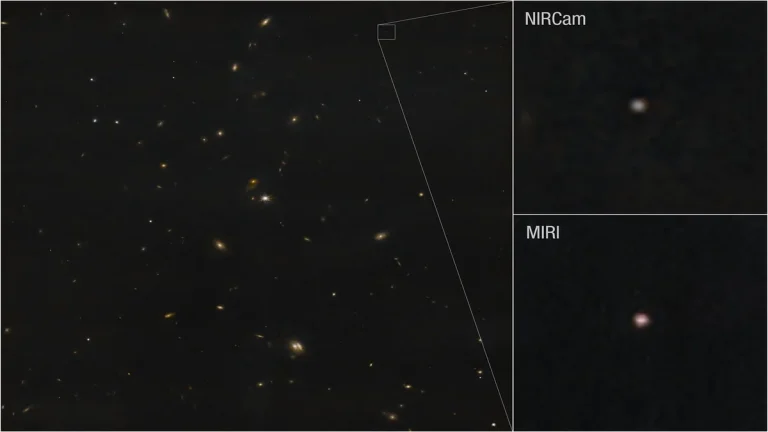
Asteroid 2024 YR4 has a 4 % chance of striking the Moon on December 22, 2032, potentially ejecting up to 100 million kg of lunar debris into space, with as much as 10 % of it reaching Earth and producing a rare, slow-moving meteor storm.

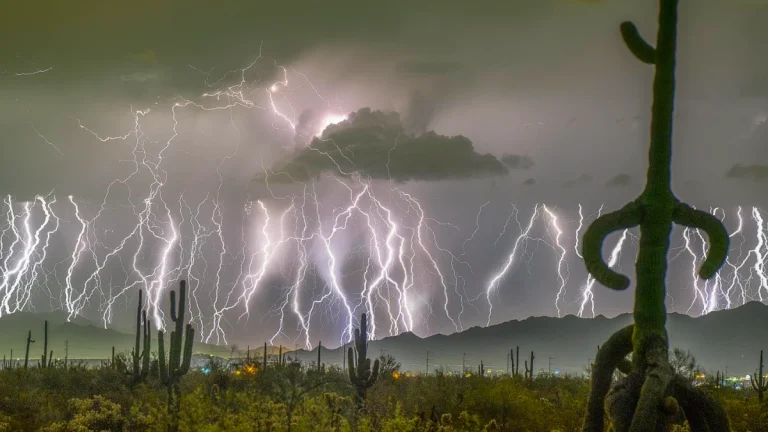
The World Meteorological Organization confirmed a new lightning flash record spanning 829 km (515 miles) across the Great Plains, United States, observed on October 22, 2017.

Machine learning algorithms applied to waveform data from 2008 to 2022 have revealed 86 276 earthquakes beneath the Yellowstone caldera, U.S., approximately 10 times more than previously recorded. The revised catalogue, published in Science Advances on July 18, 2025, was created by researchers from Western University, Universidad Industrial de Santander, and the U.S. Geological Survey.

Earth is predicted to spin about 1.34 milliseconds faster than usual on July 22, 2025, making it one of the shortest days on record. If the latest data holds up, July 22 is likely to be the second-shortest day of 2025 with July 10 likely being the first with 1.36 milliseconds, once confirmed.

The Peruvian Geophysical Institute investigated a mound near Songoña in the Cusco region, dubbed the ‘smallest volcano in the world’ by local media, and confirmed it as a small mud volcano.