I am an Assistant Editor and Severe Weather & Science Journalist at The Watchers, specializing in real-time severe weather coverage, geophysical event reporting, and research-driven scientific analysis. You can reach me at rishav(at)watchers(.)news.

  • La Niña continues as NOAA forecasts transition to ENSO-neutral in February-April 2026

    La Niña persisted across the equatorial Pacific in January 2026, with below-average sea surface temperatures and atmospheric patterns remaining consistent with the phase, according to the Climate Prediction Center Diagnostic Discussion issued on February 12, 2026. A transition to ENSO-neutral is expected during February–April 2026 with a 60% probability, while ENSO-neutral conditions are likely to continue through the Northern Hemisphere summer.

  • Evacuation Warnings issued for Palisades and Eaton burn scars ahead of high-impact winter storm in California

    Evacuation Warnings were issued for residents living near the Palisades and Eaton burn scar areas in Los Angeles County, California, effective from 21:00 LT (05:00 UTC) on Sunday, February 15, through 09:00 LT (17:00 UTC) on Tuesday, February 17, 2026, ahead of a winter storm forecast to bring heavy rainfall. Officials warned that debris flows and mudflows could damage property and pose life-threatening risks in recently burned areas. Winter storm warnings were also issued across parts of California and Nevada for heavy mountain snowfall and strong winds.

  • Heavy rainfall and severe storms forecast from Texas to the Carolinas this Valentine’s weekend

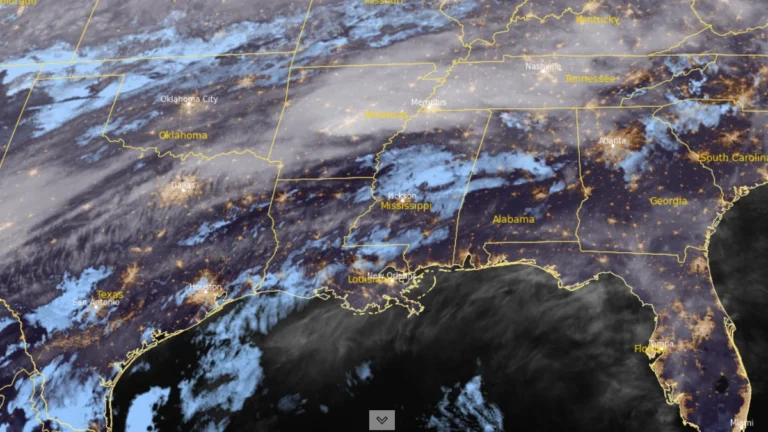
    A storm moving from the Southern Plains into the Southeast will generate widespread showers, locally heavy rainfall, and severe thunderstorms across the southern and eastern United States through February 16, 2026. Slight Risk areas for Severe Thunderstorms and Excessive Rainfall extend from east Texas into the lower Mississippi Valley, with additional Marginal Risk areas across the Southeast and Mid-Atlantic.

  • Gezani destroys 18 800 homes, claims 40 lives in Madagascar

    At least 40 fatalities have been confirmed, and over 18 800 homes have been destroyed as of February 13, 2026, since Tropical Cyclone Gezani made landfall over Madagascar. The storm remains active and is forecast to continue intensifying through February 13 while remaining in open waters.

  • Pair of mid-level troughs forecast to bring widespread precipitation to California

    Two mid-level troughs with associated surface lows are forecast to bring widespread precipitation to California between February 14 and 19, 2025. The first system is forecast to begin affecting the state on February 14–15, followed by a second trough deepening offshore from February 16–17. Snowfall totals over the Sierra Nevada could exceed 60 cm (24 inches), while rainfall totals of 25–50 mm (1–2 inches) are forecast across much of the state during the initial 72-hour period.

  • Storm Nils kills 1 in France, triggers rare Red Avalanche Alert in Savoie as 850 000 lose power

    At least one person was reported dead as Storm Nils brought damaging winds to France late on February 11, 2026, with gusts exceeding 180 km/h (112 mph) recorded in parts of the country. More than 900 000 customers were left without power as authorities issued red and orange alerts across multiple departments, while Savoie was placed under a rare red avalanche alert on February 12 after multiple avalanches were reported.

  • Cross-country storm to bring heavy rain to the South and snow to the West and Great Lakes

    An atmospheric river affecting California on February 11, 2026, is forecast to evolve into a cross-country storm moving across the southern U.S. through February 13–14, 2026. Widespread rainfall totals of 25 to 75 mm (1–3 inches), with locally higher amounts, are possible across Texas to Georgia. Heavy snow is ongoing in the Sierra Nevada, with additional accumulations expected in the Wasatch and central Rockies.

  • Wind chills to −57°C (−70°F) as Extreme Cold and Blizzard Warnings continue across Alaska

    Extreme Cold Warnings and Blizzard Warnings remain in effect across northern and western Alaska on February 11, 2026, with the National Weather Service forecasting wind chills as low as −57°C (−70°F) along the Arctic Coast and Brooks Range and wind gusts up to 105 km/h (65 mph) on St. Lawrence Island. Air temperatures near −46°C (−50°F) combined with increasing winds are expected to intensify frostbite risk across the North Slope, while snowfall of 7–15 cm (3–6 inches) and visibility reductions to 400 m (0.25 miles) or less are forecast in parts of western Alaska through early February 12.