• A fog linked to about 12 000 excess deaths in London in 1952 puzzled scientists for decades, until researchers reconstructed how coal smoke formed acidic haze

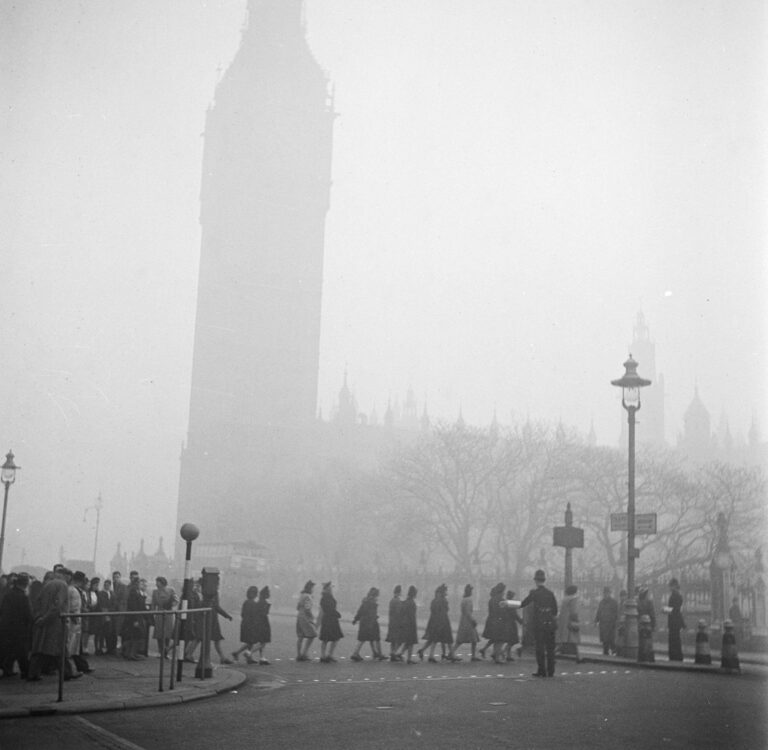
    London’s Great Smog of December 5–9, 1952 is associated with an estimated 12 000 excess deaths, but one part of the disaster remained unresolved for decades: how sulfur dioxide from coal smoke could be converted rapidly enough into sulfate and sulfuric acid under the conditions over the city. A 2016 study combining laboratory experiments with measurements from polluted air in China identified aqueous oxidation of sulfur dioxide by nitrogen dioxide as a pathway capable of explaining that missing chemistry.


  • In 2012, cameras filming a thunderstorm in western China caught ball lightning by accident, and its 1.64-second glow carried iron, silicon, and calcium from the soil it rose out of

    **Researchers studying ordinary cloud-to-ground lightning on China’s Qinghai Plateau accidentally recorded a natural ball-lightning event lasting 1.64 seconds in July 2012, obtaining what was reported as the first optical emission spectrum of the phenomenon. The spectrum contained persistent emission from silicon, iron and calcium, providing rare field evidence consistent with a proposed soil-strike formation mechanism without establishing that mechanism as the general explanation for ball lightning.**

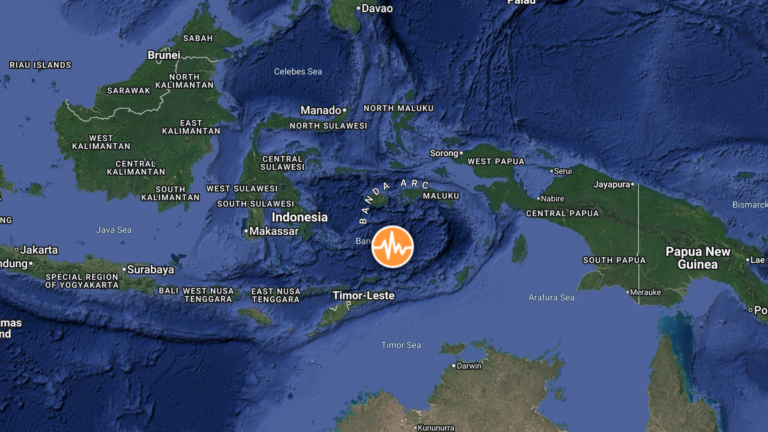
  • Strong M6.8 earthquake hits Kepulauan Barat Daya, Indonesia, near Timor-Leste

    A strong earthquake registered by the USGS as M6.8 struck 103 km NE of Lospalos, Timor-Leste, at 09:42:10 UTC on November 21, 2026. The USGS is reporting a depth of 143.4 km (89 miles). EMSC is reporting M6.8 at a depth of 144 km (89.5 miles), locating the event in Kepulauan Barat Daya, Indonesia. There is no tsunami threat from this earthquake.

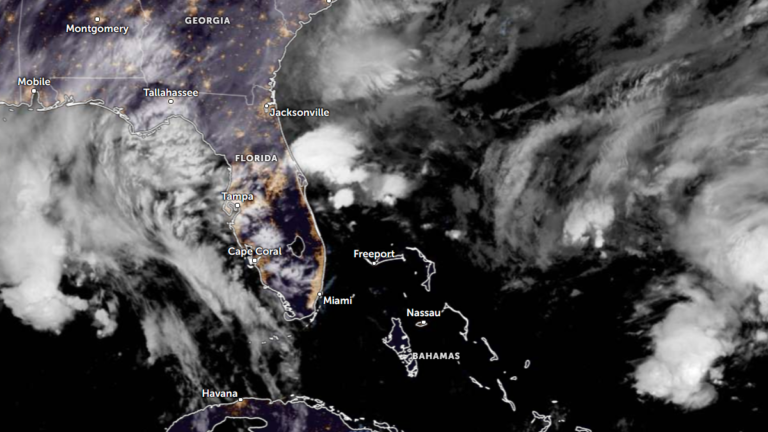
  • High Risk of excessive rainfall covers Florida’s Space Coast as St. Johns River near Cocoa reaches 5.67 m

    Parts of Florida’s east coast between Daytona Beach and Melbourne face a High Risk of excessive rainfall from 12:00 UTC Friday, November 20, through 12:00 UTC Saturday, November 21, after multiple reports of 152–305 mm (6–12 inches) of rain in Brevard County. The St. Johns River near Cocoa reached 5.67 m (18.6 feet) early Friday, well into major flood stage.

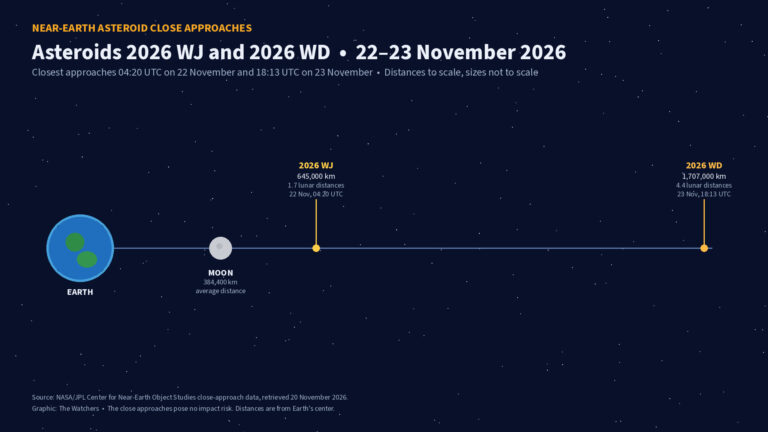
  • Four small asteroids will pass close to Earth from November 21 to 23

    Four small near-Earth asteroids are expected to pass within 4.5 lunar distances of Earth between November 21 and 23, 2026, according to current NASA/JPL close-approach solutions. The closest, 2026 WA1, will pass about 474 000 km (295 000 miles) from Earth’s center at approximately 22:27 UTC on November 21, followed by the larger 2026 WJ at about 645 000 km (401 000 miles), or 1.7 lunar distances, at approximately 04:19 UTC on November 22. None of the four November 2026 encounters intersects Earth.

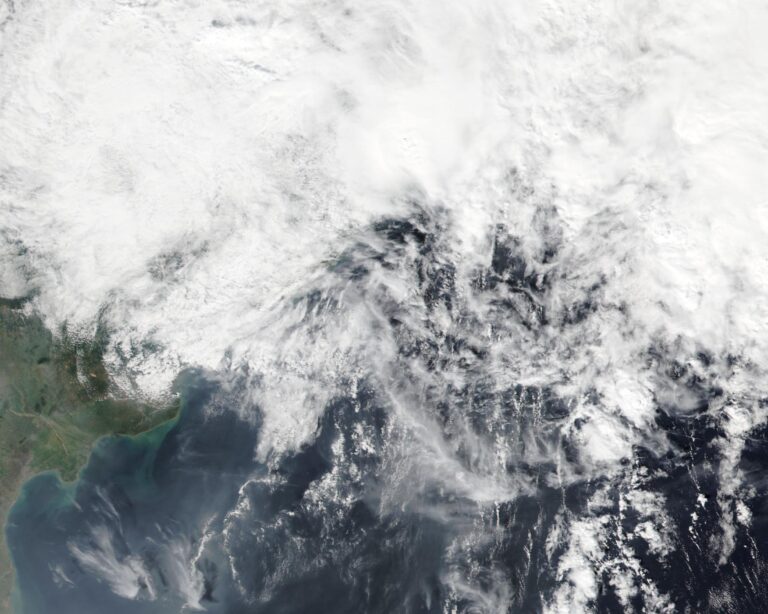
  • Cyclone Akvan weakens after landfall near Gopalpur; more than 300 000 evacuated in Odisha, India

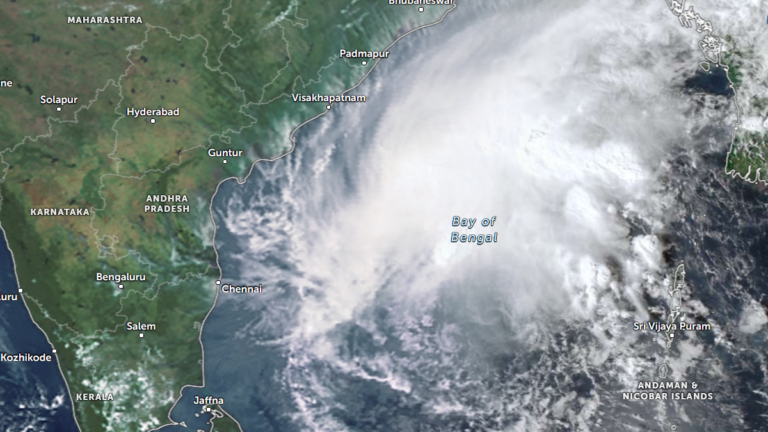
    Cyclone Akvan crossed the north Andhra Pradesh and south Odisha coasts near Gopalpur between 02:00 and 03:00 UTC (07:30–08:30 IST) on November 20, 2026, with sustained winds of 70–80 km/h (43–50 mph) and gusts to 90 km/h (56 mph), the India Meteorological Department (IMD) said. By 09:00 UTC (14:30 IST), the remnant was a deep depression about 80 km (50 miles) north of Gopalpur, while Odisha officials reported that more than 300 000 people had been moved to shelters and no deaths or major damage had been reported in the initial assessment.

  • Bay of Bengal system to become Cyclone Akvan, landfall forecast between Nellore and Tuni on November 20, India

    Cyclonic Storm Akvan was over the southern Bay of Bengal at 03:00 UTC (08:30 IST) on November 17, with sustained winds of 70–80 km/h (43–50 mph) and gusts to 90 km/h (56 mph). The India Meteorological Department (IMD) forecasts it to cross the Andhra Pradesh and Yanam coasts between Nellore and Tuni around 06:00 UTC (11:30 IST) on November 20 as a very severe cyclonic storm, with winds of 120–130 km/h (75–81 mph) and gusts to 145 km/h (90 mph).

  • 2 atmospheric rivers to bring heavy Sierra snow and California flood risk

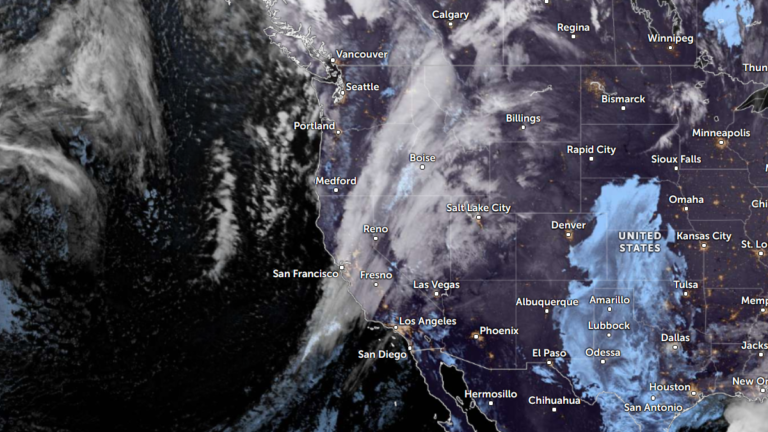
    Two Pacific storms will bring rain, mountain snow and gusty winds to the western U.S. during the week of November 16, 2026. The stronger storm is expected to reach California Tuesday night into Wednesday, raising the risk of flooding along central and southern parts of the coast and major travel disruption in the Sierra Nevada.

  • A fireball over northern China on 6 November 2026 punched a crater into a wheat field at Beigucheng village in Hebei; the Institute of Geochemistry has now classified the fallen stones as L6 ordinary chondrites.

    More than 200 kg (440 pounds) of meteorites has been recovered near Shijiazhuang in China’s Hebei province after the November 6, 2026 fireball, according to an estimate from an observatory engineer. The recovered rocks have been provisionally classified as L6 ordinary chondrites. The designation points to heating inside their parent body long before they reached Earth.