I’m a science journalist and researcher at The Watchers, contributing to the Epicenter edition, where I cover peer-reviewed scientific research and emerging discoveries across Earth and space sciences. With a background in astronomy and a passion for environmental science, I’ve worked in shark and coral conservation in Fiji, conducting reef and shark-behavior research, contributing to mangrove restoration, and earning PADI Open Water and Coral Reef Certifications. I bring a blend of scientific rigor and storytelling to illuminate the discoveries shaping our planet and beyond.

  • Seasonal microfractures beneath Alaska’s Barry Arm reveal hidden instability signals

    Short, high-frequency seismic signals recorded between 2020 and 2023 beneath Cascade Glacier in Alaska’s Barry Arm display a recurring seasonal cycle that may reflect freeze-thaw cracking in subsurface rock. The study, published on December 2, 2025, in Seismological Research Letters, provides new insight into processes that influence one of the most dangerous landslide hazards in the United States.

  • Lahars reshape landscapes and redefine volcanic danger worldwide

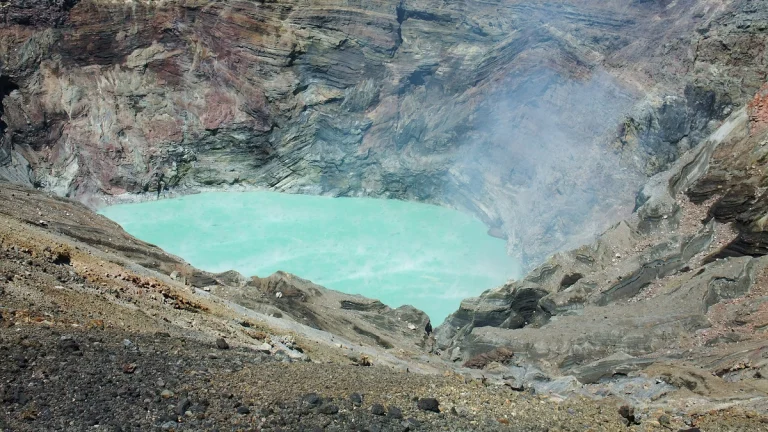
    Lahars are rapid volcanic mudflows capable of traveling tens of kilometers down valleys with little warning, moving at speeds of up to 65 km/h (40 mph) and carrying trees, boulders, and buildings. They form when water mixes with volcanic ash and rock during eruptions, heavy rainfall, or crater-lake breaches, creating a dense flow that can bury settlements, reshape river systems, and alter landscapes long after volcanic activity ends.

  • Interstellar comet 3I/ATLAS reveals signs of metal, carbon, and possible cryovolcanism

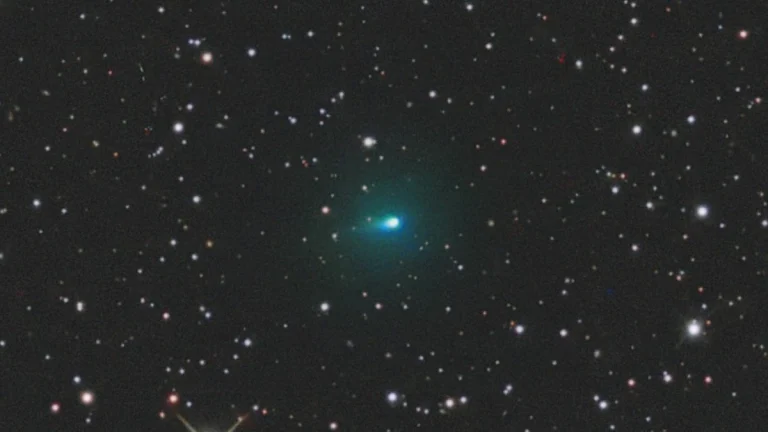
    New analyses of interstellar comet 3I/ATLAS show that this rare visitor is a carbon-rich, metal-bearing body with an unusually bright coma dominated by carbon dioxide, suggesting a complex chemistry possibly linked to catalytic and cryovolcanic processes.

  • Sugars from asteroid Bennu complete the extraterrestrial inventory for life’s building blocks

    Scientists have confirmed that asteroid Bennu contains ribose, glucose, and other foundational sugars of life — the final missing pieces of prebiotic chemistry beyond Earth. The discovery shows that the building blocks of RNA and metabolic energy were present in the early solar system, strengthening the view that life’s chemistry began as a cosmic process rather than a strictly terrestrial one.

  • Rogue lightning and what it tells us about explosive eruptions

    Volcanic eruptions can generate spectacular “rogue lightning,” as ash-filled plumes become electrically charged and discharge massive bolts, the U.S. Geological Survey (USGS) and National Oceanic and Atmospheric Administration (NOAA) report. Lightning detection networks have helped identify eruptions within second, a critical tool for aviation and hazard monitoring.

  • Strongest hurricane wind ever measured confirmed in Hurricane Melissa

    A NOAA dropsonde released into Hurricane Melissa near Jamaica on October 28, 2025, recorded a wind gust of 406 km/h (252 mph), later verified by the U.S. National Science Foundation National Center for Atmospheric Research as the strongest hurricane wind speed ever measured by a dropsonde.

  • 2024 M7.4 Chile quake reveals hidden mechanism that amplifies earthquake power

    A study published recently in Nature Communications shows that the 2024 M7.4 Calama earthquake in northern Chile ruptured deeper than expected, breaking through thermal limits once thought to prevent seismic rupture and revealing a new process that can intensify deep earthquakes.

  • The role of ENSO in shaping global rainfall, storms and temperature patterns

    The El Niño–Southern Oscillation (ENSO) is one of the primary drivers of year-to-year climate variability, influencing rainfall, monsoons, heat extremes and storm patterns worldwide. Late 2025 observations indicated a weak La Niña, with many climate models projecting a transition toward neutral conditions early in 2026.