
Mayon Volcano generates largest PDCs of 2026 eruption, ashfall hits Camalig and Guinobatan
Mayon Volcano in Albay, Philippines, generated its largest pyroclastic density current (PDC) events of the ongoing eruption on February 9, 2026, producing ashfall over 32 barangays in Camalig and Guinobatan. PHIVOLCS recorded 52 PDCs and 396 rockfall events that day, with the farthest PDC runout reaching 4 km (2.5 miles) in the Mi-isi Gully. Alert Level 3 remains in effect.
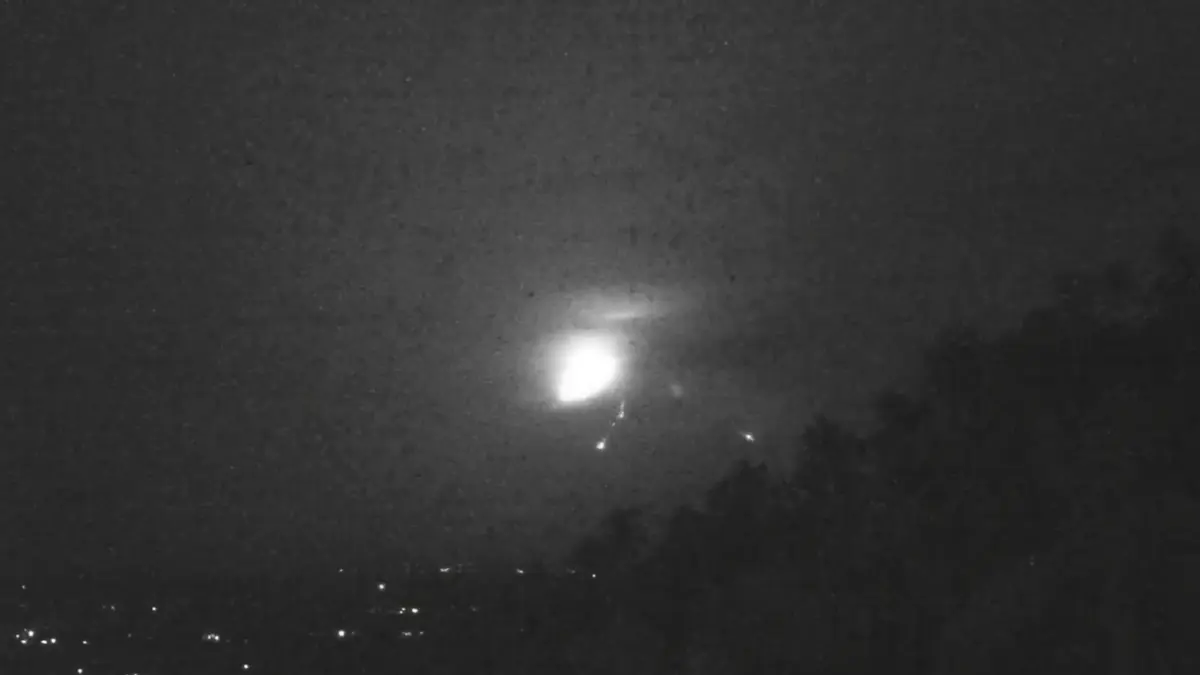
Lava effusion from the Mayon Volcano summit crater recorded at 22:18 LT February 10. Credit: PHIVOLCS/X
Mayon Volcano generated three major pyroclastic density currents between 02:30 LT and 02:44 LT on February 9, followed by at least 12 successive major PDC events from 10:35 LT to 11:37 LT, according to the Philippine Institute of Volcanology and Seismology (PHIVOLCS). The largest event occurred at 10:59 LT and lasted approximately seven minutes based on seismic records.
Ash clouds from the late-morning PDC sequence rose to heights exceeding 2 km (1.2 miles) above the summit and were blown westward by winds of approximately 40 km/h (25 mph). Heavy and occasionally wet to trace ashfall was reported in 32 barangays in the municipalities of Camalig and Guinobatan, Albay.
Affected barangays in Camalig included Sua, Cabangan, Tumpa, Barangays 1–7, Quirangay, Sumlang, Ligban, Libod, Bariw, Salugan, Anoling, and Gapo. In Guinobatan, ashfall was reported in Travesia, Sinungtan, Maninila, Quitago, Ilawod, Inamnan Pequeño, Lower Binogsacan, Doña Mercedes, Malipo, Poblacion, Quibongbongan, Tandarora, San Rafael, and Masarawag.
A total of 52 pyroclastic density currents and 396 rockfall events were recorded on February 9. PHIVOLCS said the farthest PDC runout reached 4 km (2.5 miles) down the Mi-isi Gully, marking the longest distance recorded during the 2026 eruptive phase.
The agency reported that increased rockfall activity preceded the major PDC episode, with rockfalls peaking at 469 events on February 8. PHIVOLCS attributed the February 9 escalation to substantial lava supply feeding the Mi-isi lava flow, resulting in the collapse of accumulated material near the crater and along the upper slopes.
Since Mayon entered a magmatic eruption phase on January 6, activity has been characterized by non-explosive lava effusion from the summit crater, generating lava flows, rockfalls, and collapse-fed PDCs affecting the Mi-isi, Bonga, and Basud Gullies on the southern and eastern slopes.
As of February 8, lava flows had advanced to radial distances of 1.3 km (0.8 miles) in the Mi-isi Gully, 1.6 km (1.0 miles) in the Bonga Gully, and 3.8 km (2.4 miles) in the Basud Gully. Rockfall and PDC runouts remained mostly within 3 km (1.9 miles) of the summit crater prior to the February 9 event. The total volume of erupted magma was estimated at 22 million m3 based on deposit measurements.
During the 24-hour monitoring period from 00:00 LT on February 10 to 00:00 LT on February 11, PHIVOLCS recorded six PDCs, 360 rockfall events, and two volcanic earthquakes. Sulfur dioxide emissions measured on February 10 reached 3 749 metric tons per day.
Alert Level 3 remains in effect over Mayon Volcano. Entry into the 6 km (3.7 miles) Permanent Danger Zone is prohibited due to the risk of lava flows, PDCs, rockfalls, and ashfall. Residents within the 8 km radius, particularly on the southern and eastern slopes, are advised to prepare for evacuation should conditions escalate to Alert Level 4.
PHIVOLCS also advised increased vigilance against lahars and sediment-laden streamflows along channels draining the edifice, especially those headed on the Mi-isi, Bonga, and Basud Gullies, in the event of intense rainfall. Civil aviation authorities were advised to instruct pilots to avoid flying close to the summit due to the hazard posed by volcanic ash.
References:
1 PHIVOLCS: 32 Albay barangays affected by Mayon Volcano ashfall – GMA Integrated News – February 10, 2026

I’m a science journalist and researcher at The Watchers, contributing to the Epicenter edition, where I cover peer-reviewed scientific research and emerging discoveries across Earth and space sciences. With a background in astronomy and a passion for environmental science, I’ve worked in shark and coral conservation in Fiji, conducting reef and shark-behavior research, contributing to mangrove restoration, and earning PADI Open Water and Coral Reef Certifications. I bring a blend of scientific rigor and storytelling to illuminate the discoveries shaping our planet and beyond.
