I’m a science journalist and researcher at The Watchers, contributing to the Epicenter edition, where I cover peer-reviewed scientific research and emerging discoveries across Earth and space sciences. With a background in astronomy and a passion for environmental science, I’ve worked in shark and coral conservation in Fiji, conducting reef and shark-behavior research, contributing to mangrove restoration, and earning PADI Open Water and Coral Reef Certifications. I bring a blend of scientific rigor and storytelling to illuminate the discoveries shaping our planet and beyond.

  • High solar activity caused Earth’s faint radio signal to disappear

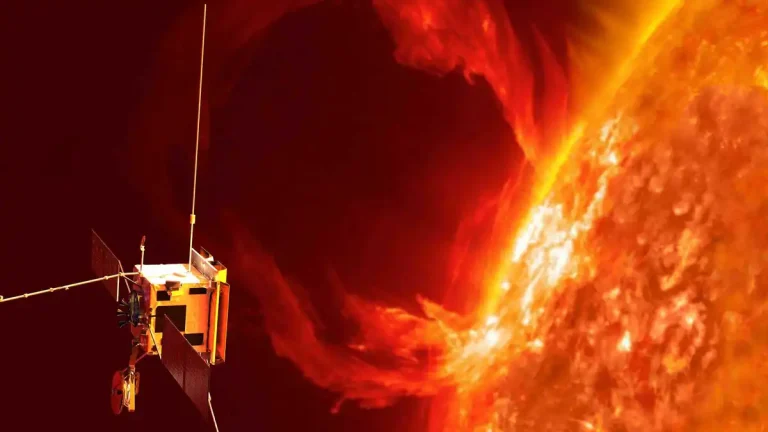
    A team from the Higher School of Economics (HSE) and the Space Research Institute of the Russian Academy of Sciences (IKI RAS) analyzed seven years of satellite data and confirmed that Earth produces a natural radio emission called the hectometer continuum — a faint signal that vanished in mid-2022 as the Sun’s activity increased.

  • Jet stream and its role in global weather and aviation

    High above Earth, narrow bands of fast-moving air circle the planet near the tropopause at 9–16 km (30 000–52 000 feet). These fast-moving corridors are known as jet streams, and they steer storm systems, influence temperature patterns, and shape how aircraft move across the globe. Understanding how they form and change over time helps explain many of the weather shifts we experience at the surface. Their behavior also connects daily weather with long-term climate patterns, making them one of the atmosphere’s most influential features.

  • New climate pattern discovered in the tropics may extend storm prediction weeks ahead

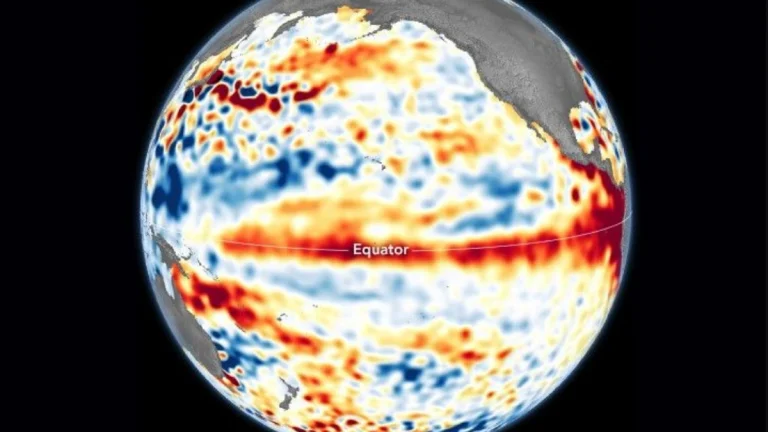
    Researchers from the Institute of Science and Technology Austria (ISTA) and collaborators have identified a previously unknown cyclic climate pattern, the tropics-wide intraseasonal oscillation (TWISO), evident across tropical regions on 30–60-day timescales. The discovery, described as one of the most significant advances in climate dynamics, may help improve medium-range forecasts by revealing a predictable rhythm in tropical activity.