
Second Al Khor meteorite fragment discovered in Qatar desert after four months
A second fragment of the Al Khor meteorite was recovered in northern Qatar after a four-month search effort. The find was confirmed by Sheikh Salman bin Jabor al-Thani, head of the Qatar Astronomical Centre, who announced the recovery on January 10, 2026.
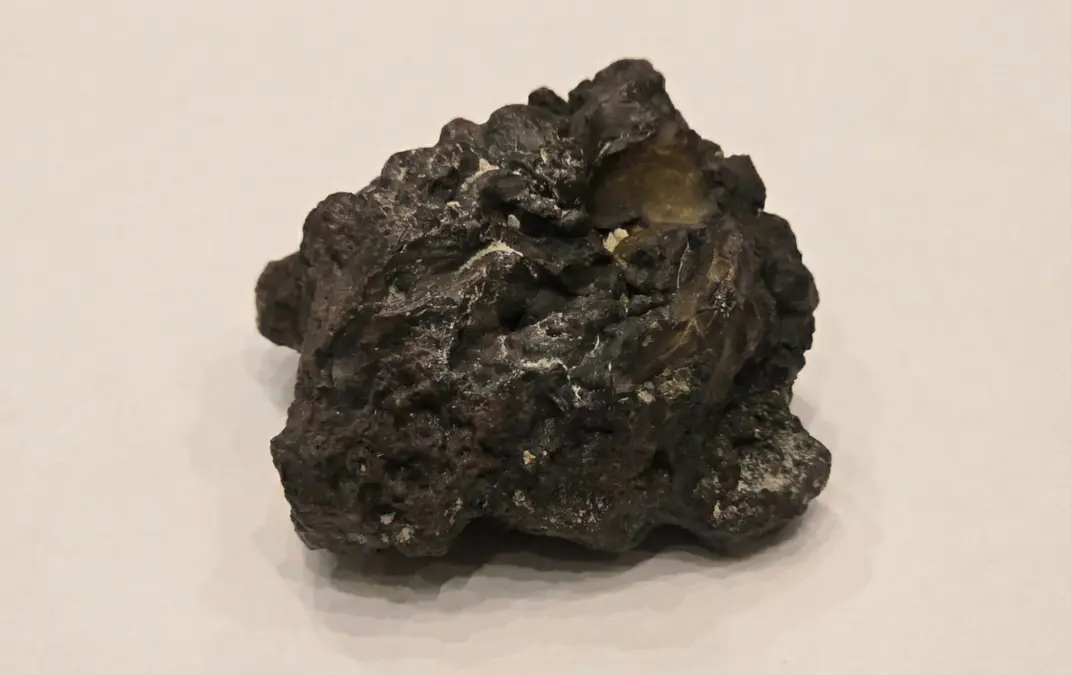
Second fragment of Al Khor meteorite. Credit: Qatar Astronomical Centre
A second fragment from the meteorite fall believed to have occurred around September 2025 has been recovered near Al Khor, northern Qatar. The discovery strengthens evidence that the event generated a structured meteorite strewn field rather than an isolated impact.
The search campaign was led by Sheikh Salman and conducted over several months. Using a scientifically reconstructed atmospheric entry trajectory, teams deployed aerial drones and systematic ground searches on foot. Search zones were prioritized based on modeling of potential fragment dispersion following high-altitude breakup.
Laboratory analysis confirmed that the recovered object is an iron meteorite. Iron meteorites are uncommon and originate from the metallic cores of differentiated parent bodies, providing direct evidence of early solar system processes, including planetary core formation and asteroid differentiation.
Trajectory modeling suggests that the debris field extends over more than 10 km (6 miles), presenting significant logistical challenges for recovery efforts in open desert conditions. The distribution pattern matches the expected fragmentation behavior of an object disintegrating under intense aerodynamic stress during atmospheric entry.
Sheikh Salman stated that the second recovery was achieved through precise modeling, persistence, and systematic field verification rather than chance observation. Drones were used to trace the predicted fall line, while teams traversed large distances on foot to inspect the surface.
Search operations are ongoing with the objective of locating further fragments and fully mapping the strewn field. The findings are expected to contribute to regional astronomical research and improve scientific documentation of meteorite falls in Qatar and the wider Gulf region.

I’m a science journalist and researcher at The Watchers, contributing to the Epicenter edition, where I cover peer-reviewed scientific research and emerging discoveries across Earth and space sciences. With a background in astronomy and a passion for environmental science, I’ve worked in shark and coral conservation in Fiji, conducting reef and shark-behavior research, contributing to mangrove restoration, and earning PADI Open Water and Coral Reef Certifications. I bring a blend of scientific rigor and storytelling to illuminate the discoveries shaping our planet and beyond.

Commenting rules and guidelines
We value the thoughts and opinions of our readers and welcome healthy discussions on our website. In order to maintain a respectful and positive community, we ask that all commenters follow these rules.