
New microbes discovered in NASA cleanrooms reveal unexpected resilience and biotech value
They were supposed to be some of the cleanest places on Earth — yet inside NASA’s spacecraft assembly cleanrooms, scientists have discovered 26 previously unknown bacterial species, organisms that not only survived extreme sterilization protocols but also carry genetic traits that could help them endure the harsh conditions of space.
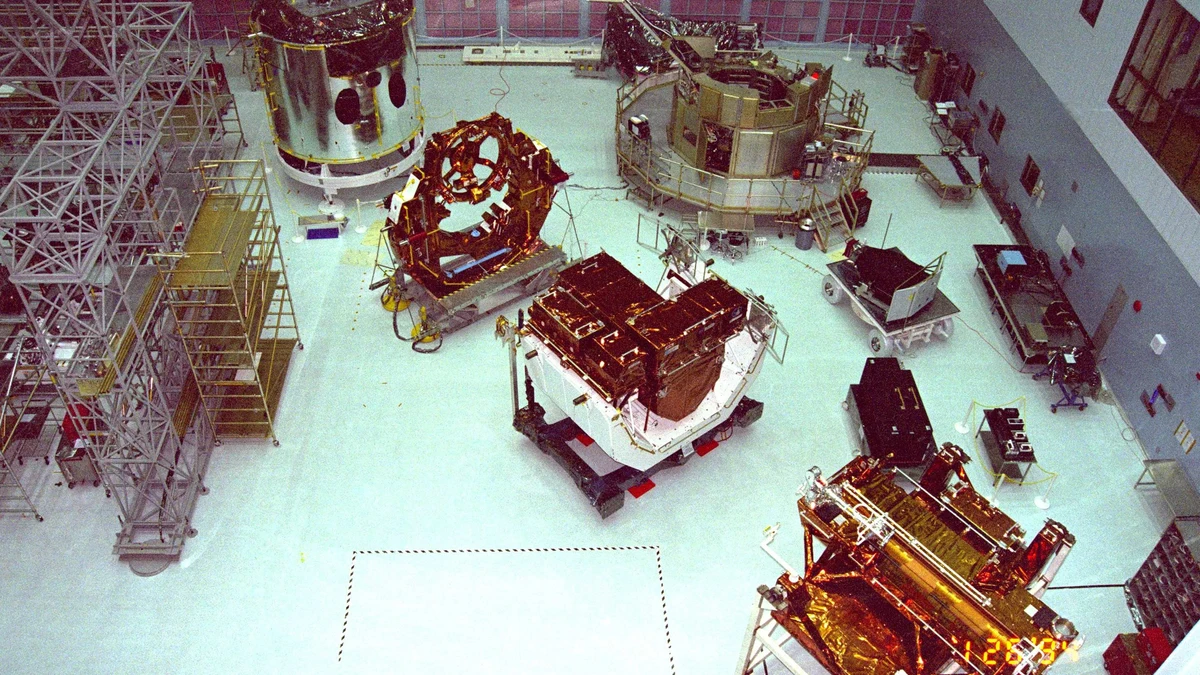
The High Bay Clean Room at NASA's Goddard Space Flight Center houses Hubble simulators and other equipment in a massive space. Credit: NASA
Spacecraft assembly cleanrooms built for missions of the National Aeronautics and Space Administration are designed to suppress life as completely as possible. Yet a new peer-reviewed study has shown that these facilities harbor rare bacteria with genetic traits that allow them to withstand conditions similar to those encountered during space travel. Scientists identified 26 previously unknown bacterial species living inside cleanrooms used during NASA missions, including the Phoenix Mars mission.
The discovery matters for two reasons. First, it directly affects planetary protection, the effort to prevent Earth life from contaminating other worlds. Second, it reveals a hidden source of microbes with properties useful for biotechnology, medicine, and industry.
Researchers sequenced the genomes of 215 bacterial isolates collected from cleanrooms at the Kennedy Space Center Payload Hazardous Servicing Facility in Florida during spacecraft assembly operations in 2007. Whole genome analysis showed that 53 of these isolates belonged to 26 novel species that had never been described before. These organisms span three major bacterial groups and 18 genera, confirming that cleanrooms can host a surprisingly broad range of microbial diversity.
These bacteria were not abundant. Metagenomic analysis of more than 160 cleanroom samples collected between 2016 and 2018 showed that DNA from the newly identified species accounted for less than 0.1% of all reads. Despite their rarity, many of the species persisted for nearly a decade, indicating long-term survival rather than accidental contamination.
Cleanrooms are extreme environments. They are nutrient-poor, dry, and repeatedly exposed to chemical disinfectants, ultraviolet radiation, and controlled airflow that removes particles. Such conditions eliminate most microorganisms but favor those that can tolerate desiccation, oxidative stress, and radiation. The study shows that these pressures select for microbes with specialized survival strategies rather than fast-growing generalists.
Genomic analysis revealed that many of the newly identified species carry genes associated with DNA repair, stress response, and resistance to radiation. All spore-forming species possessed multiple genetic systems known to protect cells from radiation damage. Several non-spore-forming species also carried radiation-related genes, showing that spores are not the only route to survival under extreme conditions. These traits help explain how bacteria can endure spacecraft assembly processes and potentially survive aspects of space travel.
Another important finding was the ability of many species to form biofilms. Biofilms are structured microbial communities encased in protective matrices that enhance resistance to disinfectants and environmental stress. Genes involved in biofilm formation were found across multiple species, suggesting that biofilms play a role in persistence on cleanroom surfaces despite repeated sterilization.
The genomes also contained numerous antimicrobial resistance genes. These genes were associated with resistance to disinfectants and several antibiotic classes, including tetracyclines and glycopeptides. While phenotypic testing is still required, the presence of these genes suggests that some cleanroom microbes may tolerate chemical treatments currently used during spacecraft assembly.
Beyond survival, the study uncovered significant biotechnological potential. Three species contained complete gene clusters for epsilon poly-L-lysine, a biodegradable antimicrobial compound used in food preservation and biomedical applications. Two newly identified Sphingomonas species carried genes for zeaxanthin, a carotenoid antioxidant valued for its role in protecting cells from oxidative stress and its relevance to eye health.
Other species possessed biosynthetic pathways for compounds such as bacillibactin, an iron-binding molecule important for microbial growth under nutrient limitation, alkylresorcinols with antimicrobial and anticancer properties, and paeninodin, a cyclic lipopeptide with agricultural and industrial applications. In total, researchers detected 138 biosynthetic gene clusters, most of which showed little similarity to known compounds, highlighting the untapped chemical diversity of cleanroom microbes.
The research provides NASA with detailed genomic data on the types of microorganisms most likely to survive in spacecraft assembly environments. This information supports more accurate risk assessments for forward contamination during robotic exploration of Mars and other bodies. It also challenges assumptions that only spore-forming bacteria are relevant for planetary protection.
The work was led by scientists at King Abdullah University of Science and Technology in collaboration with NASA Jet Propulsion Laboratory and research institutes across India. According to the authors, understanding how rare microbes adapt to extreme, human-designed environments improves contamination control strategies while opening new avenues for biotechnology and applied microbiology.
The findings show that even the cleanest environments built by humans are not lifeless. Instead, they act as filters that reveal how adaptable life can be. By studying these rare survivors, scientists gain insight into the limits of microbial resilience on Earth and refine expectations for where life might persist beyond it.
References:
1 Tough microbes found in NASA cleanrooms hold clues to space survival and biotech – King Abdullah University of Science and Technology – May 13, 2025
2 Genomic insights into novel extremotolerant bacteria isolated from the NASA Phoenix mission spacecraft assembly cleanrooms – Schultz, J., Jamil, T., Sengupta, P. et al. – Springer Nature Link – May 12, 2025 – https://doi.org/10.1186/s40168-025-02082-1 – OPEN ACCESS

I’m a science journalist and researcher at The Watchers, contributing to the Epicenter edition, where I cover peer-reviewed scientific research and emerging discoveries across Earth and space sciences. With a background in astronomy and a passion for environmental science, I’ve worked in shark and coral conservation in Fiji, conducting reef and shark-behavior research, contributing to mangrove restoration, and earning PADI Open Water and Coral Reef Certifications. I bring a blend of scientific rigor and storytelling to illuminate the discoveries shaping our planet and beyond.

Commenting rules and guidelines
We value the thoughts and opinions of our readers and welcome healthy discussions on our website. In order to maintain a respectful and positive community, we ask that all commenters follow these rules.