
Eruptive episode 52 begins at Kīlauea volcano, Hawaii
Kīlauea’s ongoing summit eruption entered episode 52 at 19:10 HST (05:10 UTC on July 29), July 28, 2026, as sustained lava fountaining began from the north vent inside Halemaʻumaʻu crater, prompting the U.S. Geological Survey’s Hawaiian Volcano Observatory (HVO) to raise the volcano’s Alert Level from ADVISORY to WATCH and its Aviation Color Code from YELLOW to ORANGE.
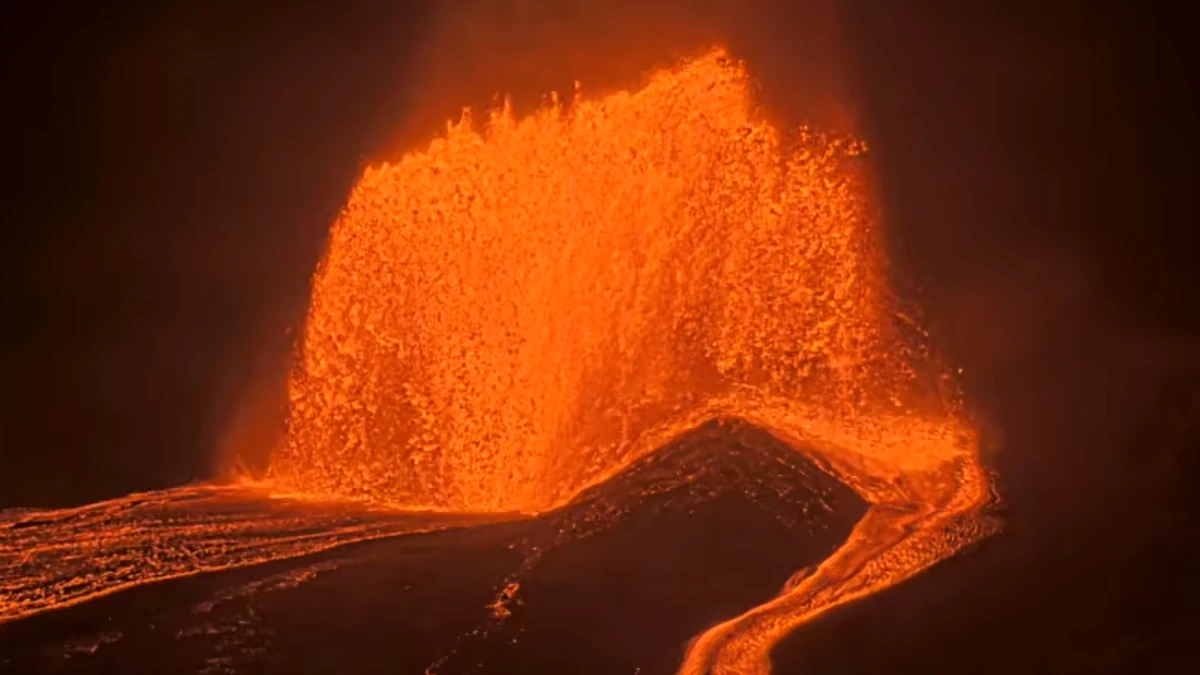
Lava fountaining at Kīlauea volcano, Hawaii on July 28, 2026. Credit: USGS
Kīlauea’s ongoing summit eruption entered episode 52 on Tuesday evening, July 28, after several hours of escalating precursory activity culminated in sustained lava fountaining from the north vent inside Halemaʻumaʻu crater.
The U.S. Geological Survey’s Hawaiian Volcano Observatory (HVO) raised the volcano’s Alert Level from ADVISORY to WATCH and the Aviation Color Code from YELLOW to ORANGE as eruptive activity intensified.
At 19:10 HST, episode 52 officially began as lava fountains emerged from the north vent, initially reaching about 30 m (100 feet) in height. HVO reported that only glow was visible at the south vent, with no eruptive activity occurring there.

The eruption intensified rapidly over the next hour. By 19:51 HST, the north vent fountain had grown to approximately 60 m (200 feet), with HVO forecasting peak fountain heights within the following one to two hours.
Just 13 minutes later, the fountain had reached about 90 m (300 feet) and was continuing to grow. At the same time, volcanic tremor continued to increase, the summit transitioned into rapid deflation, and lava flows had already covered roughly 10% of the floor of Halemaʻumaʻu crater.
The eruption followed nearly a full day of escalating precursory activity. Continuous overflow from the north vent began at 10:22 HST, initially fed by a small dome fountain measuring 1.5 to 3 m (5 to 10 feet) high while the summit continued to inflate. By mid-afternoon, the overflow persisted, supported by a larger dome fountain reaching approximately 5 to 10 m (20 to 30 feet), accompanied by steady volcanic tremor and continued summit inflation.

Before lava fountaining commenced, HVO advised that low-level winds from the north to northeast could carry volcanic ash and tephra toward Pāhala and Nāʻālehu, while higher-level winds could disperse tephra into Hawaiʻi Volcanoes National Park.
All eruptive vents and lava flows remain confined to Halemaʻumaʻu crater within the national park. Although volcanic ash is typically heaviest within 5 km (3 miles) of the vents, lighter ash and Pele’s Hair may be transported much greater distances.
Volcanic gases, including sulfur dioxide (SO₂) from Kilauea, can generate vog capable of causing respiratory irritation, while volcanic ash, Pele’s Hair, and other tephra fragments may produce skin, eye, and respiratory irritation.

The observatory warned of ongoing hazards around Kīlauea’s summit caldera, including unstable crater walls, ground cracking, rockfalls, and localized landslides near the crater rim, which has remained closed to the public since 2007.
According to HVO, most lava fountaining episodes during Kīlauea’s ongoing summit eruption, which began on December 23, 2024, have lasted one day or less.
References:
1 HVO/USGS Volcanic Activity Notice: Kīlauea – USGS/HVO – July 29, 2026

Rishav Kothari is Editor-in-Chief of The Watchers, where he runs the newsroom and covers earthquakes, volcanoes, severe weather and space weather.
Published in the last 24 hours
- 2 atmospheric rivers to bring heavy Sierra snow and California flood risk
- Bay of Bengal system to become Cyclone Akvan, landfall forecast between Nellore and Tuni on November 20, India
- El Niño floods kill 2 in Guayaquil as 172.8 mm of rain swamps Milagro, Ecuador's toll rises to 14
- Southern Thailand braces for heavy rain, 15 provinces on flood and landslide alert for November 18-22
