
Extreme March heat reaches 44.4°C (112°F) as multiple states set records in the western United States
An intense early-season heatwave pushed temperatures to extreme levels across the southwestern United States between March 18 and 22, 2026, as a persistent high-pressure ridge produced widespread daily and monthly March temperature records. Record heat was reported across Arizona, California, Nevada, and other parts of the western United States.
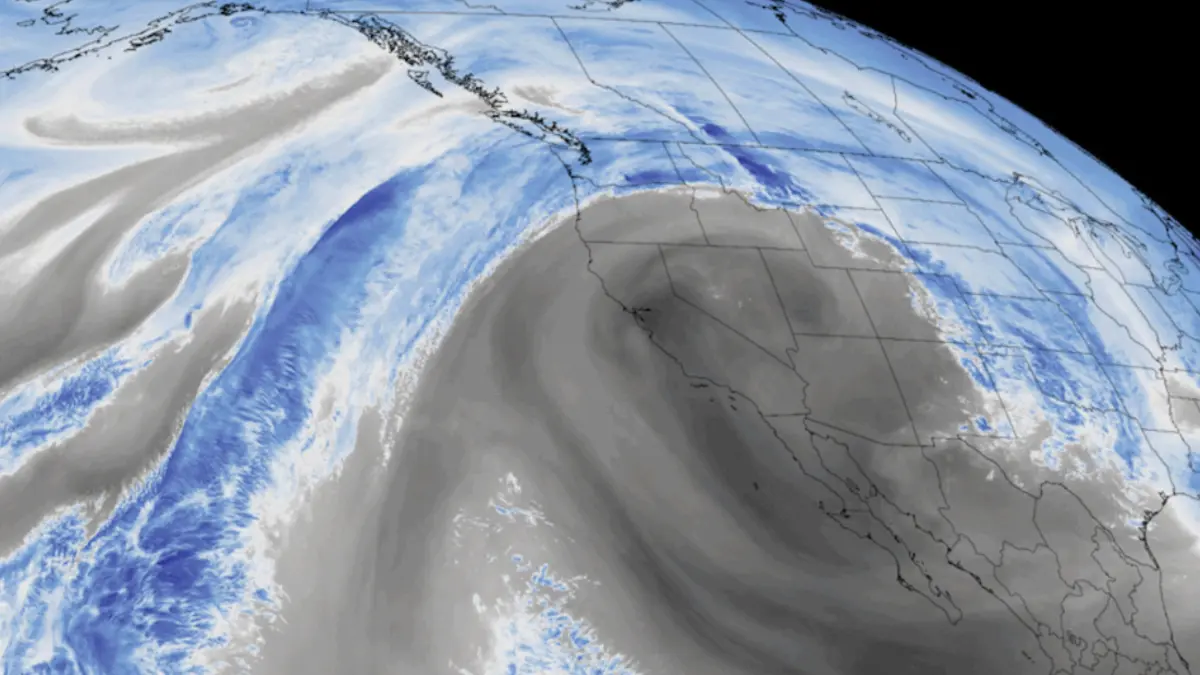
GOES-18 (GOES West) water vapor imagery from the Advanced Baseline Imager shows deep moisture surging northward as a large area of high pressure settles over the southwestern United States on March 18, 2026. Credit: NOAA
An intense and early-season heatwave affected large parts of the southwestern United States between March 18–22, producing widespread temperature records across multiple states, including monthly March records in parts of Arizona, California, and Nevada. The most extreme values were recorded across Arizona and southeastern California as the event intensified over several consecutive days.
The progression of record-breaking temperatures occurred rapidly within a short time frame. Temperatures reached 42.2°C (108°F) on March 18, matching the existing national March record. This was followed by a rise to 43.3°C (110°F) at Martinez Lake, Arizona, on March 19, before reaching 44.4°C (112°F) on March 20, establishing a new national March temperature record.
Ogilby and Winterhaven, California, recorded 44.4°C (112°F) on March 20, setting the state’s highest temperature ever observed in March. These values exceeded previous monthly extremes and confirmed the severity of the heatwave across the lower Colorado River Valley region.
Widespread daily and monthly records were reported across at least 14 states, including Arizona, California, Nevada, New Mexico, Kansas, and Minnesota. More than 160 locations set or tied their warmest March temperatures on record, reflecting the broad geographic extent of the event.
Major urban centers also experienced significant extremes. Las Vegas reached 34.4°C (94°F) on March 18, setting an all-time March temperature record, while Phoenix Sky Harbor reached 38.3°C (101°F), marking a new March record high and one of the city’s earliest triple-digit readings on record.
In coastal southern California, Downtown Los Angeles reached 35°C (95°F) on March 18, 2026, surpassing the previous record of 33.9°C (93°F) set in 1997. Additional station-level records reported by the National Weather Service (NWS) included 32.2°C (90°F) at Palmdale Airport and 31.1°C (88°F) at Paso Robles Airport on the same date, breaking records set in 2004 and 2022, respectively.
The geographic extent of the anomaly extended beyond the Southwest into the central United States. Denver, Colorado reached 29.4°C (85°F) on March 20, approximately 17°C (30°F) above average for this time of year. In parts of the Plains, temperatures were sufficiently high to match or exceed typical April records, indicating a significant seasonal anomaly.
The persistence of the heatwave was driven by a strong and stationary high-pressure ridge, which suppressed cloud formation and allowed continuous solar heating. This pattern maintained elevated temperatures across multiple days, enabling consecutive record-breaking conditions in several locations.
Environmental indicators highlighted the broader impacts of the event. Snowpack levels in Colorado were reported at their lowest levels for mid-March in approximately 40 years, while California’s Sierra Nevada snowpack stood at about 42% of average. These conditions increase the risk of water shortages and contribute to elevated wildfire potential later in the season.
Extreme Heat Warnings and Heat Advisories were issued across parts of Arizona, California, and New Mexico, affecting tens of millions of residents. The early-season timing of the event increased vulnerability, as populations are typically less acclimatized to extreme heat conditions in March.
Forecast guidance indicated that the high-pressure pattern would persist in the near term, with additional record temperatures possible as the heat dome remains in place across the region.
References:
1 NOAA’s GOES West Watches Record Heat Wave – NOAA – March 19, 2026

I’m a science journalist and researcher at The Watchers, contributing to the Epicenter edition, where I cover peer-reviewed scientific research and emerging discoveries across Earth and space sciences. With a background in astronomy and a passion for environmental science, I’ve worked in shark and coral conservation in Fiji, conducting reef and shark-behavior research, contributing to mangrove restoration, and earning PADI Open Water and Coral Reef Certifications. I bring a blend of scientific rigor and storytelling to illuminate the discoveries shaping our planet and beyond.

And here in Southern Maine, we had a dusting of snow overnight with temperatures hovering around the freezing point.