
Severe flooding kills 42 across Kenya as heavy rains trigger flash floods in Nairobi
Severe flooding killed at least 42 people across Kenya by March 9, 2026, after heavy rains triggered flash floods in Nairobi and other parts of the country over the weekend. Available reporting indicated that about 25–26 of the deaths were recorded in the capital, where floodwaters swept away vehicles, disrupted transport, and forced large-scale rescue operations.
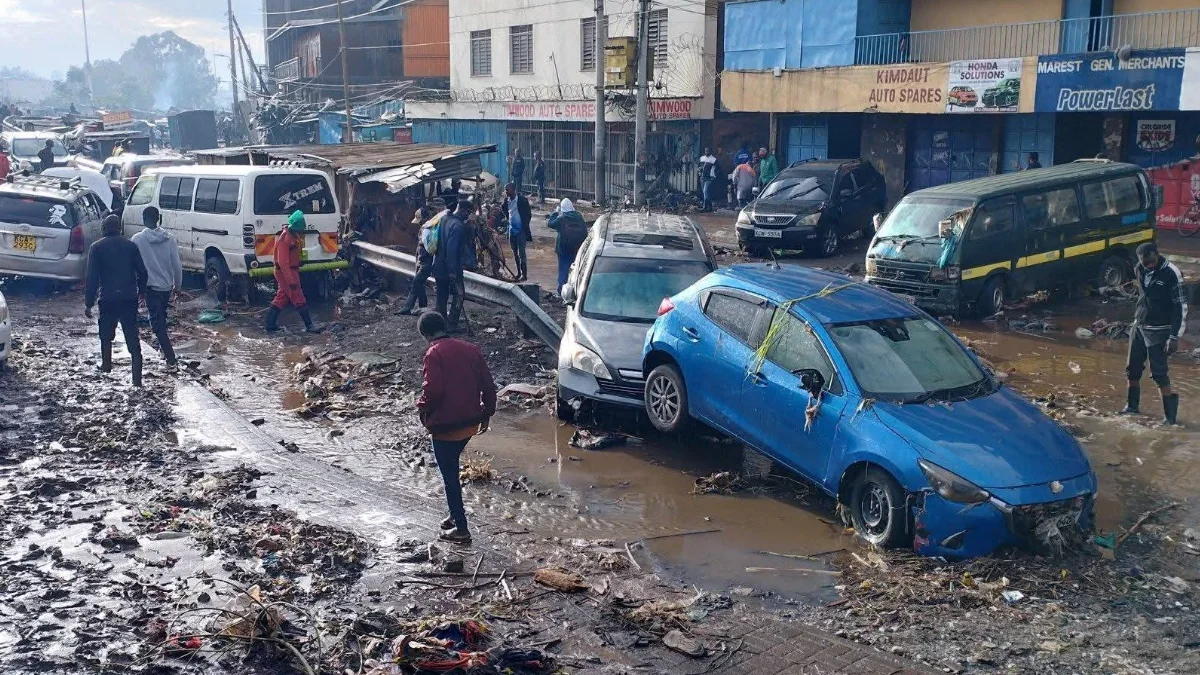
Flood aftermath in Nairobi, Kenya, on March 9, 2026. Credit: James Momanyi
Heavy rainfall affected Nairobi and several other regions of Kenya in early March 2026, with the deadliest flooding reported after heavy rains from March 7 to 9. The Kenya Meteorological Department had warned that heavy rainfall exceeding 20 mm (0.8 inches) in 24 hours would affect multiple parts of the country between March 3 and 9.
By March 9, authorities said at least 42 people had died nationwide. Available reporting indicated that about 25–26 of those deaths occurred in Nairobi, where floodwaters inundated low-lying neighborhoods, submerged roads, and affected residential and commercial districts.
Floodwaters swept through parts of the capital after rivers and drainage channels overflowed. Fast-moving water carried away vehicles, and authorities later said 172 vehicles had been recovered as cleanup and rescue work continued.
Roads in several districts became temporarily impassable as floodwaters submerged major transport routes, hindering emergency response operations in parts of the city.
Kenya Airways reported that several flights scheduled to land in Nairobi were diverted to the coastal city of Mombasa as severe weather and related operational constraints affected airport activity.
President William Ruto ordered the release of relief supplies from the country’s food reserves to support households affected by flooding. Hundreds of families in impacted areas received emergency food assistance and other humanitarian support.
Kenyan authorities deployed emergency responders, including soldiers, to assist with rescue operations and support affected communities. Emergency teams were tasked with evacuations, recovery operations, and the delivery of humanitarian assistance to flood-affected neighborhoods.
Several regions across Kenya experienced heavy rainfall and flooding during the same period. In the Maasai Mara National Reserve in southwestern Kenya, tourists and camp staff were evacuated ahead of further flooding.
“A few days ago, we had the Mara River and the Talek River also burst their banks, so a lot of the tourists and camp staff had already evacuated the camps,” said Marc Goss, CEO of the Mara Elephant Project Trust.
The government also announced it would cover hospital treatment costs and burial expenses for victims of the flooding. Officials indicated that recovery operations remained ongoing and warned that the confirmed death toll could increase as search operations continue in flood-affected areas.

I am an Assistant Editor and Severe Weather & Science Journalist at The Watchers, specializing in real-time severe weather coverage, geophysical event reporting, and research-driven scientific analysis. You can reach me at rishav(at)watchers(.)news.

Commenting rules and guidelines
We value the thoughts and opinions of our readers and welcome healthy discussions on our website. In order to maintain a respectful and positive community, we ask that all commenters follow these rules.