
Strong M6.0 earthquake hits Tyrrhenian Sea near Naples, Italy
A strong earthquake registered by the USGS as M6.0 struck near Naples, Italy, at 23:03 UTC on March 9, 2026 (00:03 LT on March 10). The agency is reporting a depth of 373 km (232 miles). EMSC is reporting M5.9 at a depth of 375 km (233 miles).
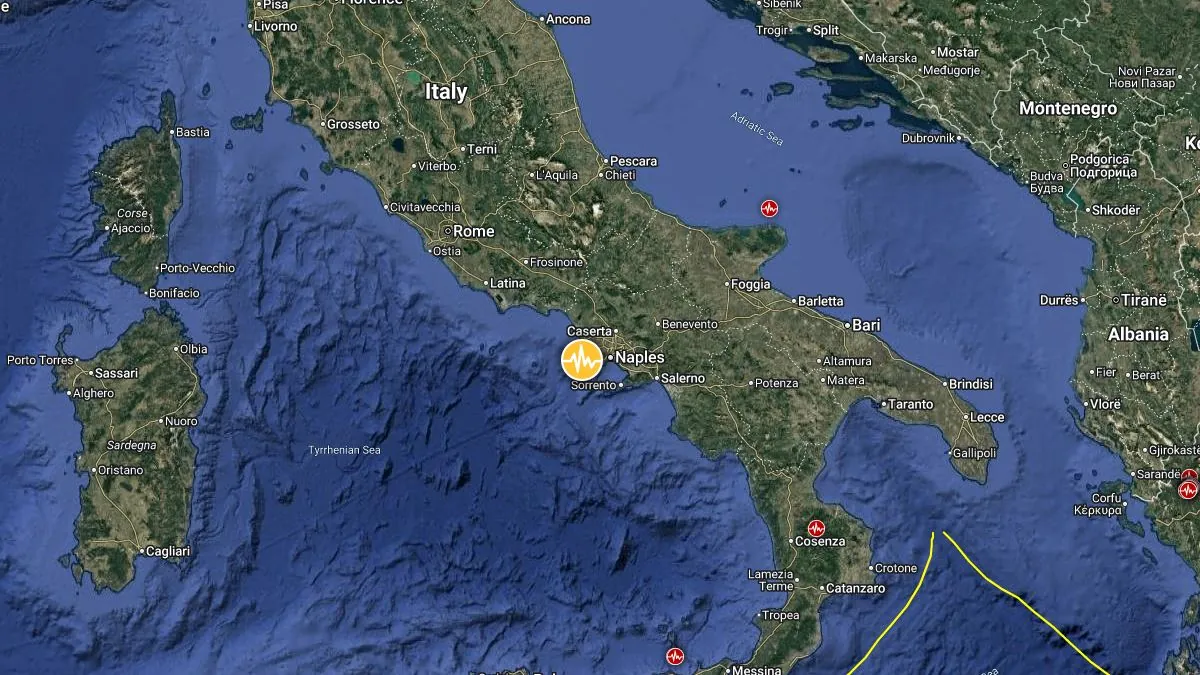
Epicenter of M6.0 earthquake in Tyrrhenian Sea near Naples, Italy on March 9, 2026. Credit: TW/SAM, Google
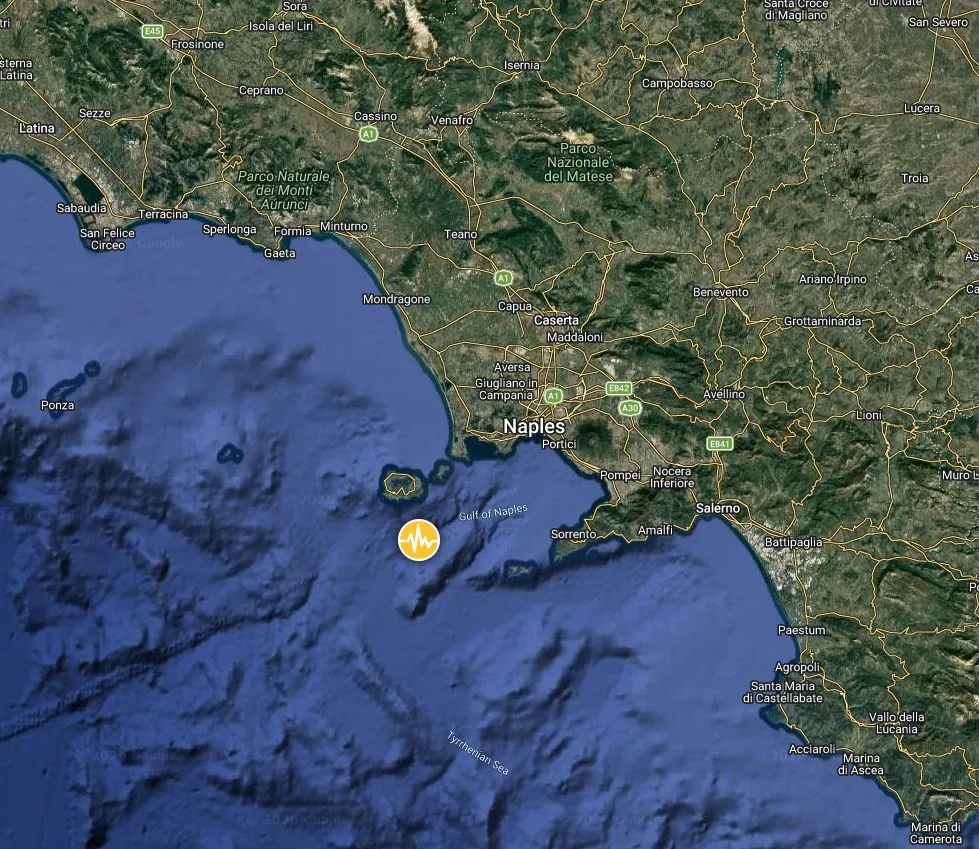
The epicenter was located 16.5 km (10.2 miles) SSE of Sant’Angelo (population 1 245), 19.5 km (12.1 miles) S of Ischia (population 18 564), 19.6 km (12.2 miles) S of Ischia Porto (population 18 192), 21.6 km (13.4 miles) SSE of Forio (population 15 969), and 40.4 km (25.1 miles) SW of Naples (population 909 048), Campania, Italy.
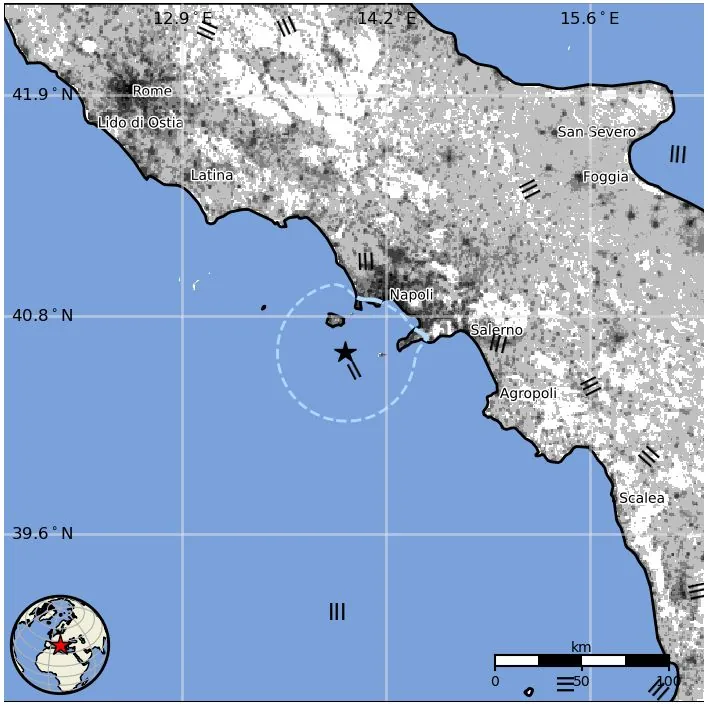
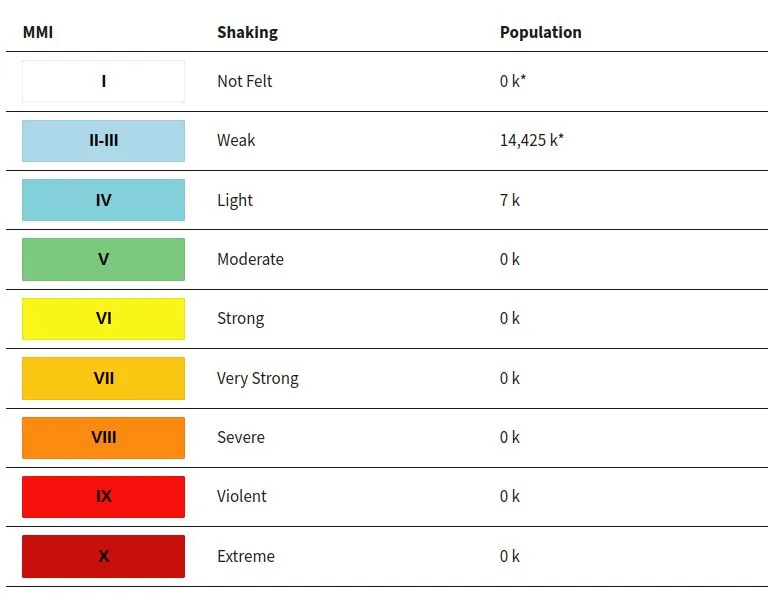
7 000 people are estimated to have felt light shaking, and 14 425 000 weak.
The USGS issued a Green alert for shaking-related fatalities and economic losses. There is a low likelihood of casualties and damage.
Overall, the population in this region resides in structures that are a mix of vulnerable and earthquake-resistant construction. The predominant vulnerable building types are unreinforced brick with mud and unknown or miscellaneous construction types.
Recent earthquakes in this area have caused secondary hazards such as landslides that might have contributed to losses.
The Mediterranean region is seismically active due to the ongoing convergence of the African and Eurasian plates at a rate of about 4 to 10 mm (0.15 to 0.4 inches) per year. This tectonic interaction began roughly 50 million years ago with the closure of the ancient Tethys Ocean, whose remnants form today’s Mediterranean Sea.
Much of the region’s seismicity occurs along major tectonic structures such as the Hellenic subduction zone south of Greece, the North Anatolian Fault Zone in Turkey, and the Calabrian subduction zone beneath southern Italy. These plate interactions generate frequent earthquakes as well as complex crustal deformation across the region.
Historically, destructive earthquakes and tsunamis have affected large parts of the Mediterranean, including Greece, Italy, Turkey, and North Africa. One of the deadliest events in Europe was the 1908 M7.2 Messina earthquake in southern Italy, which caused severe damage and a tsunami, killing an estimated 60 000 to 120 000 people.
Today’s earthquake occurred at a depth of 373 km (232 miles) — deep within the subducting African plate beneath southern Italy. It is unlikely to be related to volcanic activity at Campi Flegrei or Mount Vesuvius.
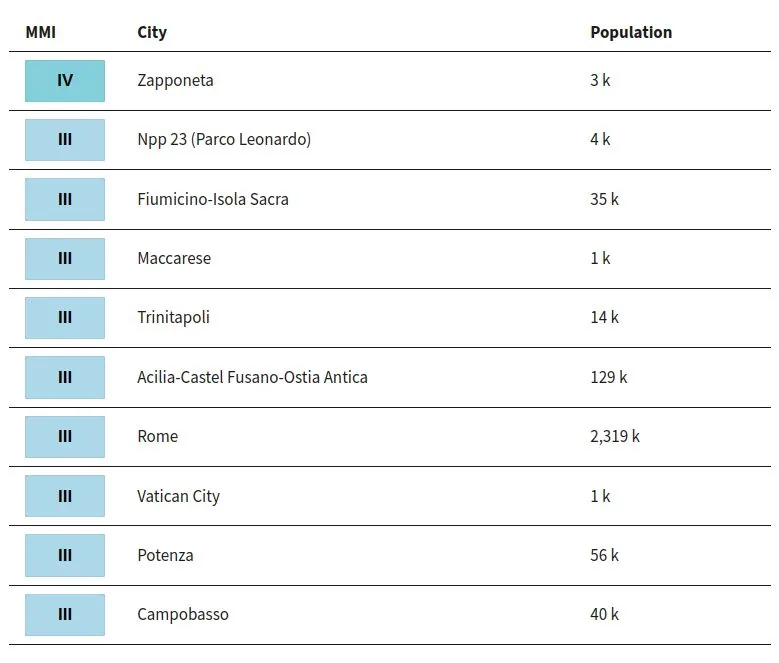
Estimated population exposure to earthquake shaking
Selected cities exposed
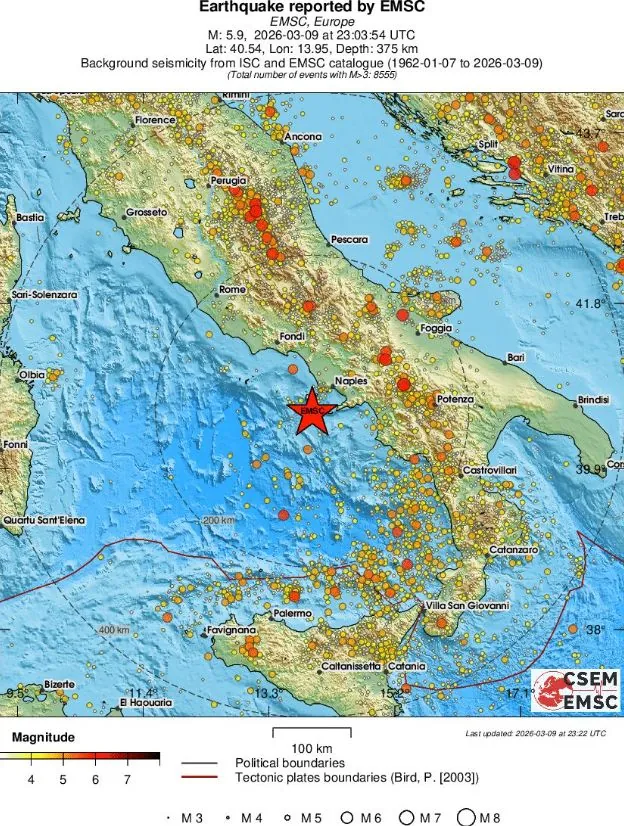
Regional seismicity
References:
1 M6.0 earthquake Tyrrhenian Sea, Italy – USGS – March 9, 2026
2 M5.9 earthquake Tyrrhenian Sea, Italy – EMSC – March 9, 2026

Teo Blašković founded The Watchers in 2011 and edited it until 2026, covering seismic and volcanic activity, extreme weather, space weather and near-Earth objects. Articles on this page are his archive.
Published in the last 24 hours
- Scientists directly observe how submarine landslides unfold in western Canada Epicenter
- Odisha evacuated 983,642 people before Phailin crossed near Gopalpur on 12 October 2013 with winds of 200-210 km/h gusting to 220, and 44 died, against 9,885 in the 1999 super cyclone. Cyclone Akvan crossed the same coast on 20 November 2026. Epicenter
- Lava fountains reached 1,900 feet (580 m) at Kīlauea Iki in 1959, the highest ever recorded at Kīlauea, as USGS forecasts episode 57 fountaining at Halemaʻumaʻu for November 22-26. Epicenter
- Novarupta in Alaska erupted about 3 cubic miles of magma in roughly 60 hours from 6 June 1912, 30 times Mount St. Helens in 1980, and strong northwesterly winds lifted that same loose ash on 16 November 2026, prompting an NWS SIGMET. Epicenter
