
Sudden eruption produces dense ash plume at Erta Ale volcano, Ethiopia
A sudden explosive eruption at Erta Ale volcano in Ethiopia’s Danakil Depression produced a dense ash plume on the morning of July 15, 2025, interrupting its recent phase of steady lava activity.

Dense ash emission at Erta Ale volcano, Ethiopia on July 15, 2025. Credit: Hummed Edris
A sudden eruptive event at Erta Ale volcano in Ethiopia’s Danakil Depression released a short-lived ash plume early on July 15, breaking a months-long pattern of quiet lava activity.
The event was captured on video by Idris Hummed, a local observer, who filmed a dark column of ash rising from the summit crater.
Field volcanologist Luca Lupi, author of a geological guide to the Danakil region, offered a technical explanation. Commenting on the video, he said the event likely resulted from a collapse of the solidified crust covering the summit lava lake, triggered by either the opening of a lateral vent or the formation of a subsurface dike.
“The drop in pressure from the collapsed lava column has drawn new magma from below, which, by releasing gas, has suspended all the fragmented solid material, generating those large columns of dark ash,” Lupi explained.
This behavior aligns with previous transitions between effusive and ash-producing phases at Erta Ale, where structural changes in the vent system lead to sudden degassing and surface disruption. The Global Volcanism Program currently lists Erta Ale’s ongoing eruption as involving both effusive and ash-emitting phases.
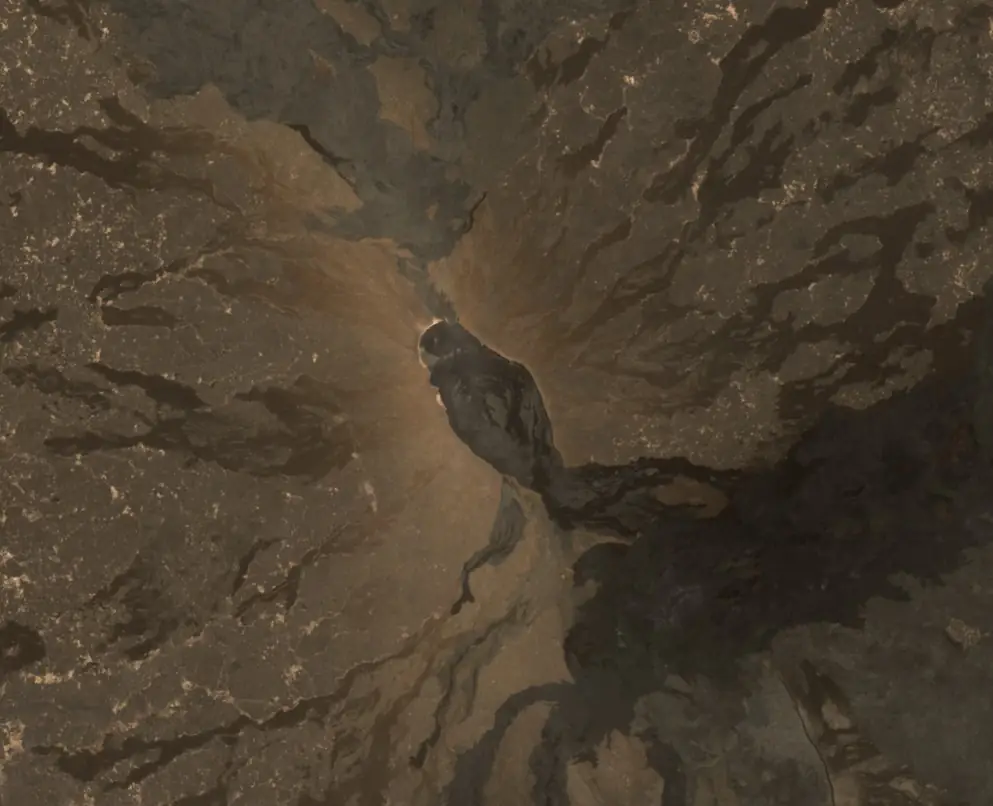
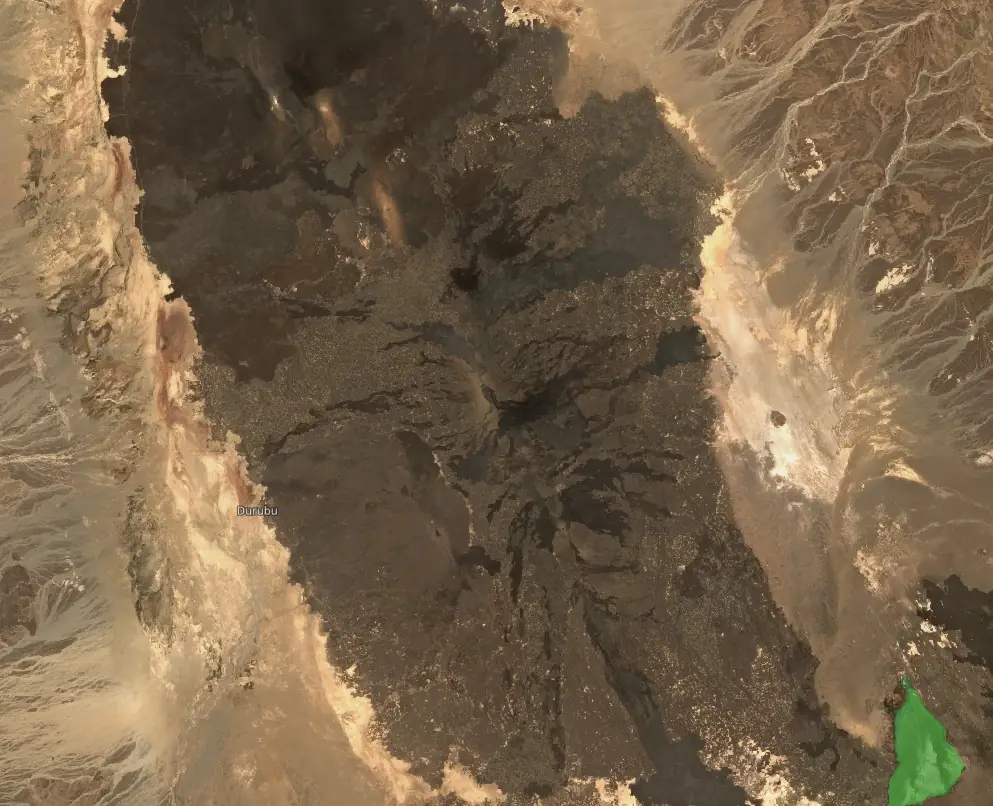
Erta Ale is a basaltic shield volcano with a 50 km (31 miles) wide structure rising more than 600 m (1 970 feet) from below sea level. The summit caldera measures 0.7 x 1.6 km (0.4 x 1 mile) and contains pit craters known for housing one of Earth’s few persistent lava lakes. A larger fault-bound depression lies southeast of the summit.
The current eruption follows an intensification of surface activity recorded in early 2025. In January, lava flows reached a historic campsite near the summit caldera for the first time in two decades. This was followed by ongoing lava effusion and elevated activity through April and May.
The volcano is known for its persistent lava lake, which has been active since at least 1967 and potentially as early as 1906. Lava frequently breaches the summit crater, producing overflows or feeding flows through flank fissures.
Previous confirmed eruptions in 1906, 1940, 1960, and from 1967 onward were all categorized as low-intensity, with a Volcanic Explosivity Index (VEI) of 0. Explosive activity is rare at this system.

I'm a dedicated researcher, journalist, and editor at The Watchers. With over 20 years of experience in the media industry, I specialize in hard science news, focusing on extreme weather, seismic and volcanic activity, space weather, and astronomy, including near-Earth objects and planetary defense strategies. You can reach me at teo /at/ watchers.news.

Commenting rules and guidelines
We value the thoughts and opinions of our readers and welcome healthy discussions on our website. In order to maintain a respectful and positive community, we ask that all commenters follow these rules.