
More than 5 000 cattle dead in Bolivia’s Beni region as severe flooding causes over $34 million in livestock losses
Severe flooding in Bolivia’s Beni region has caused the death of more than 5 000 cattle, with losses in the livestock sector exceeding USD 34 million. The flooding, triggered by intense rainfall since early 2025, has submerged large areas of grassland, resulting in cattle deaths due to exhaustion and inadequate food access.
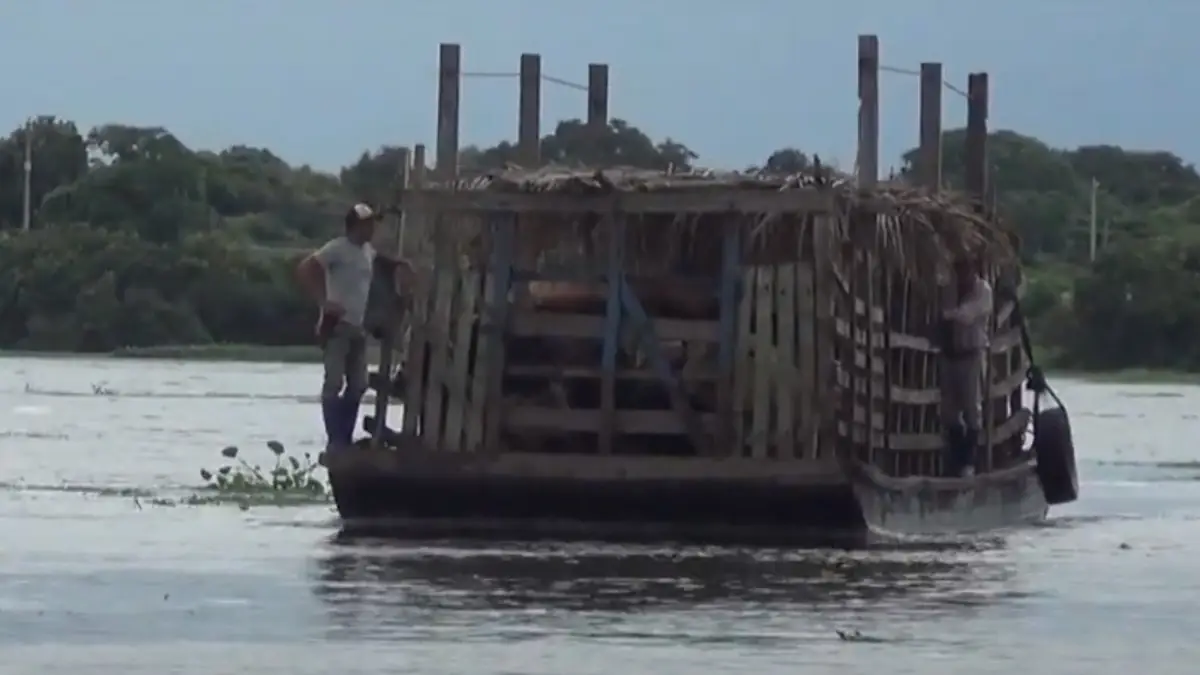
Image credit: FEGABENI
More than 5 000 head of cattle have died in Bolivia’s Beni department due to exhaustion and lack of forage as floodwaters continue to inundate large areas of grazing land, according to the Federation of Livestock Farmers of Beni (Fegabeni). The organization completed a field assessment on April 7, 2025, estimating total economic losses in the livestock sector have exceeded USD 34 million.
Flooding has submerged vast sections of the Llanos de Moxos, one of the largest tropical wetlands in the world and a key pasture region. Cattle have been forced to swim long distances to reach higher ground, while herders continue to face logistical and economic difficulties in relocating animals.
Local estimates indicate that approximately 200 000 cattle—equivalent to 2% of Bolivia’s national herd—are currently at risk due to prolonged exposure to waterlogged conditions, poor nutrition, and physical exhaustion.
Data on economic impact indicates that USD 19.2 million of the losses are due to weight loss in cattle. Additional losses include USD 2.2 million from cattle deaths, USD 3.7 million in damage to livestock infrastructure, USD 552 000 in relocation costs, and USD 8.3 million in losses related to other animal species.
“When you start moving cattle, it incurs losses. Some cows miscarry, others reject their calves afterward. Some become lame and must be taken to slaughter in San Joaquín. They can’t go on,” said Orlando Álvarez, a cattle producer from San Joaquín, describing the ongoing effects of the flooding.
The ongoing flooding in Beni is being described by local authorities and media as one of the most severe events Bolivia has experienced in recent decades. According to data from Bolivia’s Vice Ministry of Civil Defense, the floods have affected more than 590 000 people across the country and resulted in at least 55 fatalities. In addition, over 40 000 homes have been damaged or destroyed, and more than 270 000 ha (667 000 acres) of agricultural land have been inundated.
Rivers such as the Mamoré, Beni, and Iténez remain above critical levels, with several monitoring stations still under red and orange alert as of mid-April. The rainy season, intensified by the 2024–25 El Niño event, has led to prolonged periods of precipitation, overwhelming natural drainage and flooding major agricultural zones.
Soy fields, plantain groves, cassava farms, and other subsistence and commercial crops have also suffered damage, increasing pressure on food supply chains and export capacities. Waterborne disease risks are rising in displaced communities, and access to veterinary support remains limited.
References:
1 Más de 5.000 cabezas de ganado mueren en Beni por falta de alimento y agotamiento – La Patria – April 14, 2025
2 As Bolivia floods, cows swim where they once grazed – Reuters – April 9, 2025

I’m a science journalist and researcher at The Watchers, contributing to the Epicenter edition, where I cover peer-reviewed scientific research and emerging discoveries across Earth and space sciences. With a background in astronomy and a passion for environmental science, I’ve worked in shark and coral conservation in Fiji, conducting reef and shark-behavior research, contributing to mangrove restoration, and earning PADI Open Water and Coral Reef Certifications. I bring a blend of scientific rigor and storytelling to illuminate the discoveries shaping our planet and beyond.

Commenting rules and guidelines
We value the thoughts and opinions of our readers and welcome healthy discussions on our website. In order to maintain a respectful and positive community, we ask that all commenters follow these rules.