
Explosion, cracks reported at Masaya volcano, Nicaragua
A small explosion, releasing gases and ash, occurred at the Masaya volcano in Nicaragua on Sunday, December 22, 2024. This activity was accompanied with large cracks on the southern rim, raising concerns over potential landslides.
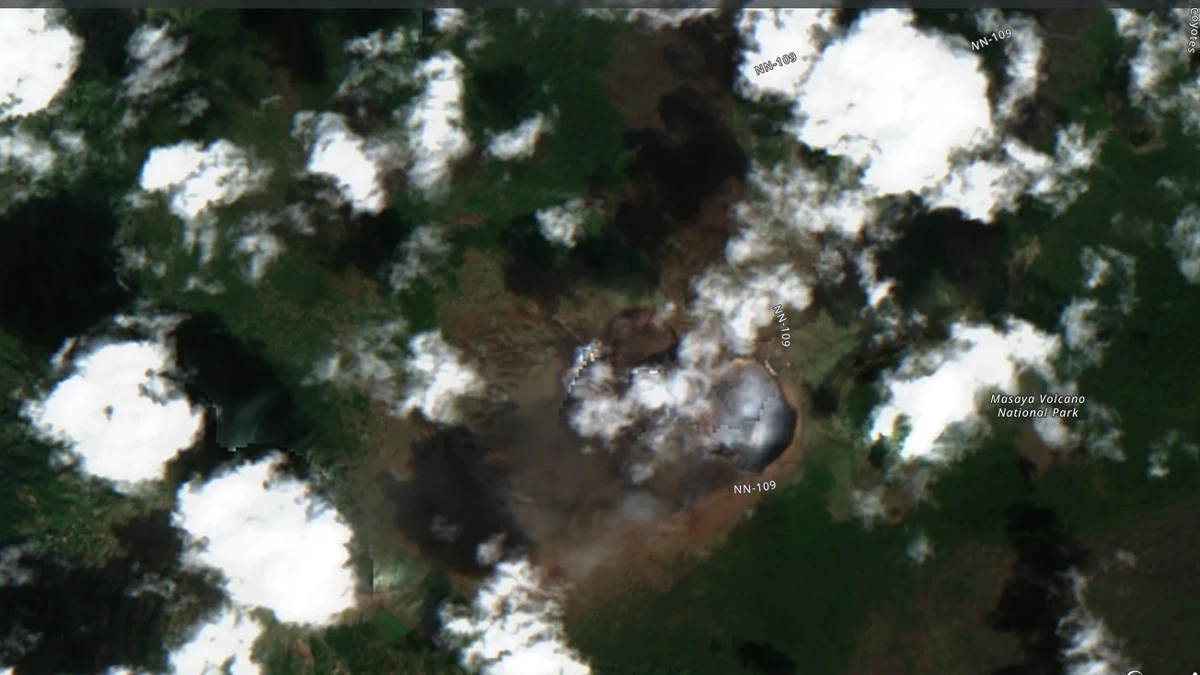
A high-resolution true-color satellite image of Masaya volcano, captured on December 18, 2024. Image credit: CopernicusEU/Sentinel-2, EO browser. The Watchers
A small explosion was reported on December 22 at Masaya volcano, located 23 km (14 miles) southeast of Managua.
Nicaraguan Institute of Territorial Studies (INETER) confirmed ongoing degassing at fumarole number two and observed nocturnal incandescence, a phenomenon associated with high-temperature volcanic activity.
Cracks on the southern edge of the Santiago Crater have also been identified. According to INETER, these cracks are extensive and deep, posing a potential risk of landslides into the volcanic structure. Authorities recommended avoiding the area and closing the park temporarily for public safety.
As of December 22, Masaya Volcano National Park remains closed to visitors. Authorities are conducting continuous monitoring of volcanic activity, mainly the cracks along the southern rim. Other Nicaraguan volcanoes, including San Cristóbal, Telica, Concepción, Cerro Negro, and Momotombo, are reportedly stable.
The Masaya Volcano has shown consistent activity throughout the year.
In September 2024, INETER reported a “very large and deep crack” forming along the southern rim of the Santiago Crater. The crack, located near Viewpoint 2 South, extends in east-west and north-south directions. The formations have been closely monitored, as they pose structural risks in the short to medium term.
Volcanologist Eduardo Mayorga explained during the September events that seismic activity, including tremors and internal explosions, had recently occurred within the volcano. The activity contributed to new fractures in the volcanic system, allowing magma to circulate more freely.
“After those days of explosions, in which the magma overcame the resistance of the sealed or new fractures, everything, from the point of view of seismicity, has returned to ‘normal,'” Mayorga noted.
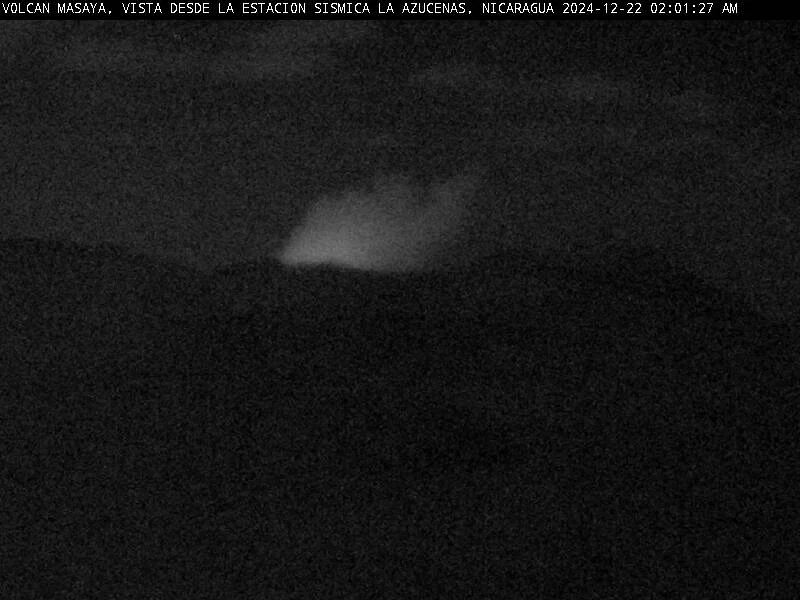
Masaya volcano, part of the Central American Volcanic Arc, lies within the larger Las Sierras Caldera, a basaltic formation with steep walls reaching up to 300 m (984 feet). Historical records show frequent eruptions since the time of the Spanish Conquistadors.
References:
1 Masaya – GVP – Accessed on December 23, 2024
2 Santiago Crater in Masaya records an explosion – LA PRENSA – December 22, 2024
3 Masaya Volcano National Park temporarily closed due to volcanic activity – tn8 – December 22, 2024
4 Explosion reported in Masaya Volcano crater – laGente – December 22, 2024

Rishika holds a Master’s in International Studies from Stella Maris College, Chennai, India, where she earned a gold medal, and an MCA from the University of Mysore, Karnataka, India. Previously, she served as a Research Assistant at the National Institute of Advanced Studies, Indian Institute of Science, Bengaluru, India. During her tenure, she contributed as a Junior Writer for Europe Monitor on the Global Politics website and as an Assistant Editor for The World This Week. Her work has also been published in The Hindu newspaper, showing her expertise in global affairs. Rishika is also a recipient of the Women Empowerment Award at the district level in Haryana, India, in 2022.

Commenting rules and guidelines
We value the thoughts and opinions of our readers and welcome healthy discussions on our website. In order to maintain a respectful and positive community, we ask that all commenters follow these rules.