
Impulsive X2.2 solar flare erupts from Region 3912, glancing blow possible on December 11
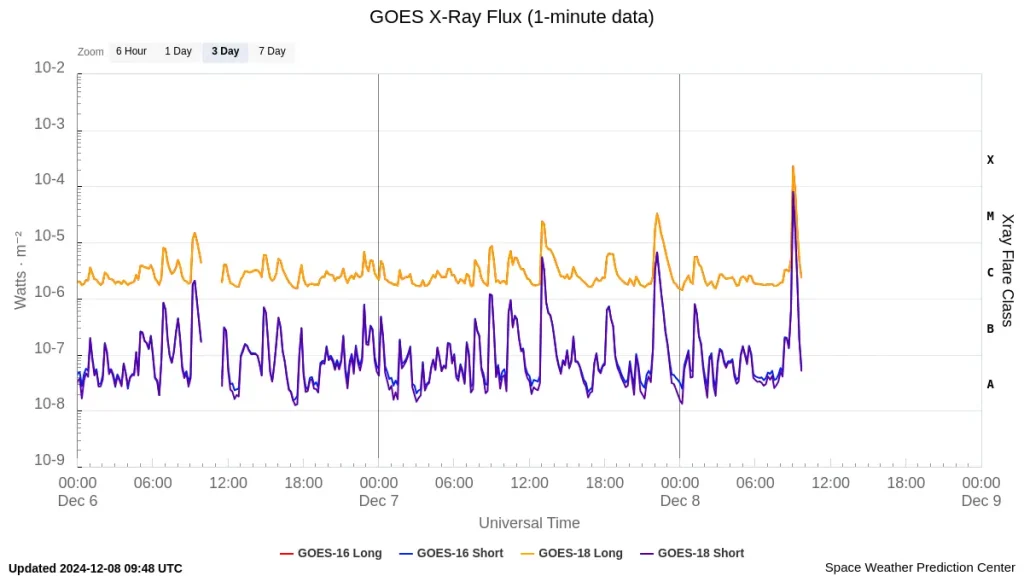
A major solar flare measuring X2.2 erupted from Active Region 3912 at 09:06 UTC on December 8, 2024. The event started at 08:50 and ended at 09:10 UTC.
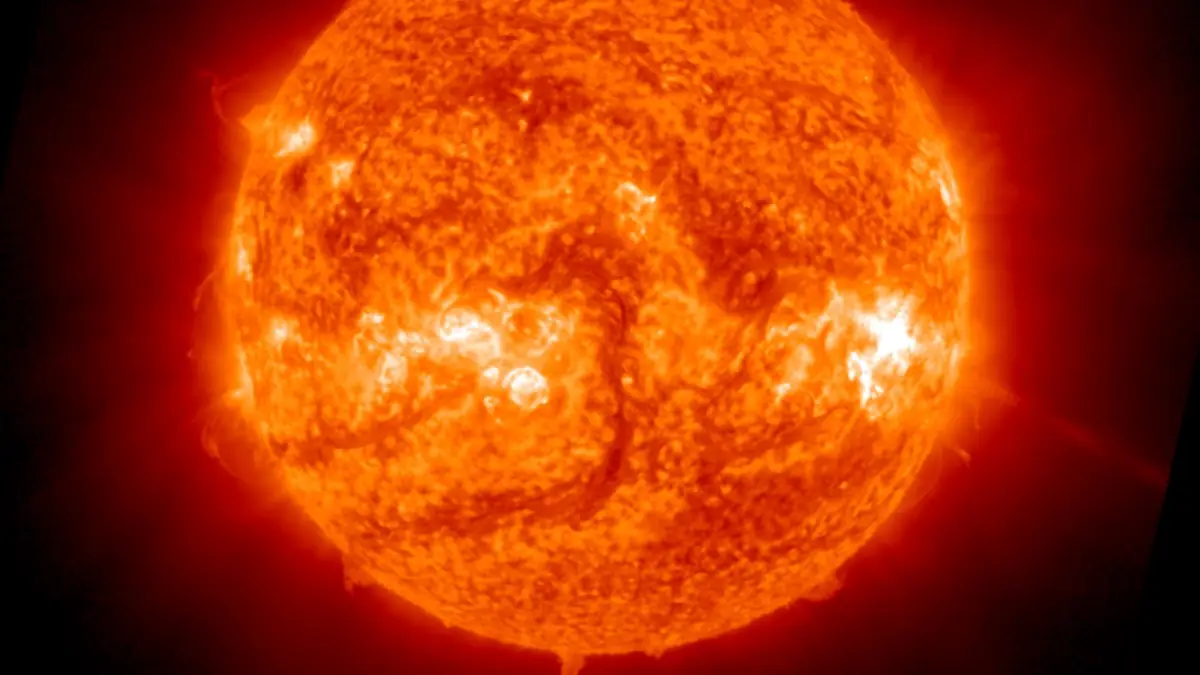
X2.2 solar flare on December 8, 2024. Credit: NOAA/GOES-16, SUVI 304, The Watchers
A Type II Radio Emission with an estimated velocity of 626 km/s was associated with the event, indicating a coronal mass ejection (CME) was produced.
Additionally, a 10cm Radio Burst lasting 3 minutes and with a peak flux of 870 sfu was associated with this event, indicating significant radio noise. This noise is generally short-lived but can cause interference for sensitive receivers including radar, GPS, and satellite communications.
Radio frequencies were forecast to be most degraded over the Southwest Indian Ocean at the time of the flare.
The location of the responsible region suggests at least part of this CME might be Earth-directed.
Subsequent analysis suggests a possibility for a weak glancing blow on December 11 at best. This might couple with influence from a positive polarity coronal hole high speed stream (CH HSS), but nothing more than isolated active geomagnetic field periods are expected.
Region 3912 has ‘beta-gamma’ magnetic configuration and is capable of producing more strong eruptions on the Sun.
Despite a gorgeous X2.2-flare earlier today, the Sun continues to have poor aim. The #solarstorm launched will graze Earth to the west. Sadly, the coming fast solar wind streams might deflect the structure even further to the west. Expect only mild impacts by midday December 11. pic.twitter.com/PtPQ5gF6M1
— Dr. Tamitha Skov (@TamithaSkov) December 8, 2024


Unfortunately, we don’t have high-quality Solar Dynamics Observatory (SDO) images of this event—or any SDO images at all—since November 26, due to a major flood in the Joint Science Operations Center (JSOC) server room caused by a 4-inch chilled-water pipe break.
The flooding caused extensive water damage to the lab housing the machines that process and distribute data from the Helioseismic and Magnetic Imager (HMI), Atmospheric Imaging Array (AIA), and the IRIS spacecraft.
As a result, science data processing for these instruments has been severely disrupted, and access to archived data at JSOC is currently unavailable. The Stanford JSOC team is actively assessing the damage and planning recovery efforts, but restoration is expected to take a significant amount of time.

I'm a dedicated researcher, journalist, and editor at The Watchers. With over 20 years of experience in the media industry, I specialize in hard science news, focusing on extreme weather, seismic and volcanic activity, space weather, and astronomy, including near-Earth objects and planetary defense strategies. You can reach me at teo /at/ watchers.news.

Commenting rules and guidelines
We value the thoughts and opinions of our readers and welcome healthy discussions on our website. In order to maintain a respectful and positive community, we ask that all commenters follow these rules.