
Atlas 5 Centaur Rocket Body breaks up in orbit into a debris cloud of 40 plus objects
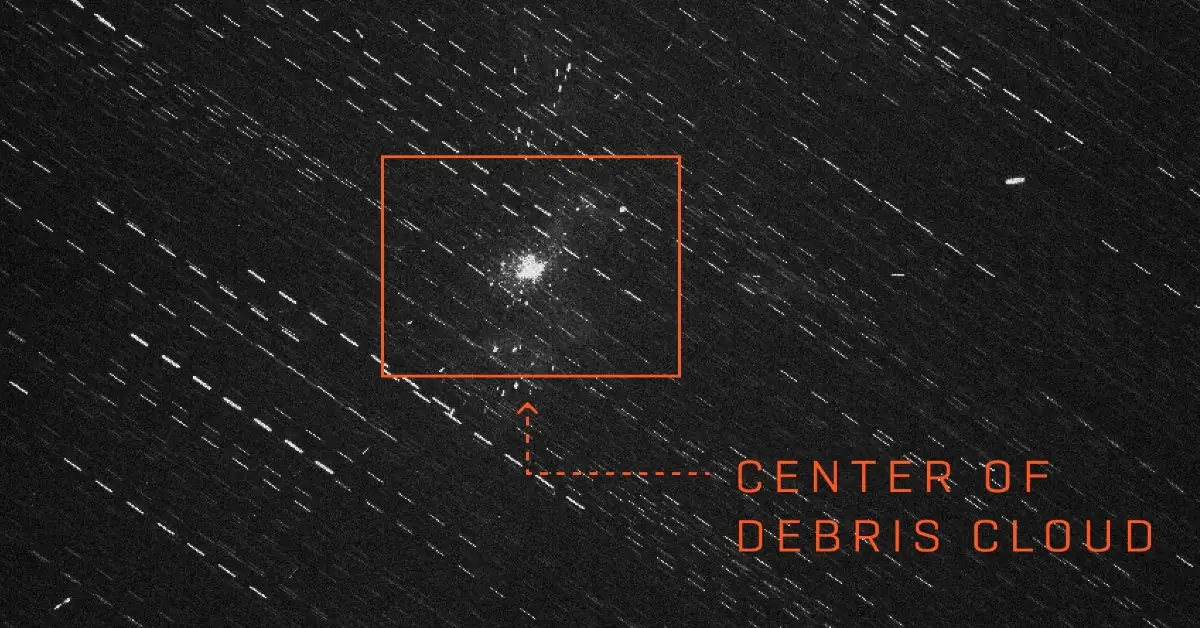
Image credit: Slingshot Aerospace
The body of the Atlas 5 Centaur rocket that delivered the GOES 17 satellite in 2018 broke up in a highly elliptical orbit at around 05:21 UTC on September 6, 2024, creating a debris cloud of 40+ objects.
- The breakup was observed by Slingshot Aerospace at 05:32 UTC from an observation site in Chile.
- They detected a debris cloud of more than 40 objects related to the fragmentation of the rocket, which currently doesn’t appear to pose a threat to any active spacecraft.
Slingshot Aerospace, a satellite tracking company based in Colorado, observed the breakup of the Atlas 5 Centaur rocket body at 05:32 UTC on September 6 from an observation site in Chile.
The rocket body, with NORAD ID: 43227, underwent fragmentation at around 05:21 UTC on September 6. This rocket was used to deliver the GOES 17 satellite into orbit on March 1, 2018.
According to Slingshot Aerospace, they were tracking more than 40 objects related to the breakup of the rocket body in the form of a debris cloud.
Slingshot Orbital Alert
— Slingshot Aerospace (@sling_shot_aero) September 6, 2024
Slingshot Aerospace has detected what appears to be a breakup of the ATLAS 5 CENTAUR Rocket Body in a highly elliptical orbit (HEO). This rocket delivered GOES 17 into orbit on March 1st, 2018. pic.twitter.com/RWDKMOKgGt
Slingshot Orbital Alert (Post 2/2)
— Slingshot Aerospace (@sling_shot_aero) September 6, 2024
The Slingshot Global Sensor Network is currently tracking 40+ objects related to the breakup of an ATLAS 5 CENTAUR Rocket Body (NORAD ID: 43227) at ~05:21 UTC this morning (September 6th, 2024). pic.twitter.com/I5wfHrsUqI
“Following a detailed conjunction assessment – and given the highly elliptical orbit (34 953 km apogee; 7 634 km perigee; 9.4° inclination) – Slingshot has determined that the current debris cloud does not likely pose an immediate threat to any active spacecraft at present,” the company said.
“Currently, the closest predicted approach between debris from the Atlas 5 Centaur parent object and known debris is estimated at ~220 km [138 miles].”
“While our analysis suggests that, based on the available data, there is no immediate risk to active satellites, this event illustrates the critical role Slingshot’s technology plays in identifying and assessing risks to satellite operations.”

I am an Assistant Editor and Severe Weather & Science Journalist at The Watchers, specializing in real-time severe weather coverage, geophysical event reporting, and research-driven scientific analysis. You can reach me at rishav(at)watchers(.)news.

Commenting rules and guidelines
We value the thoughts and opinions of our readers and welcome healthy discussions on our website. In order to maintain a respectful and positive community, we ask that all commenters follow these rules.