
Long-duration M5.5 solar flare erupts from southeast limb, producing large CME

Featured image: CME produced by M5.5 solar flare on September 1, 2024. Credit: NASA SDO/AIA 304, SOHO/LASCO C2 and C3, Helioviewer, The Watchers
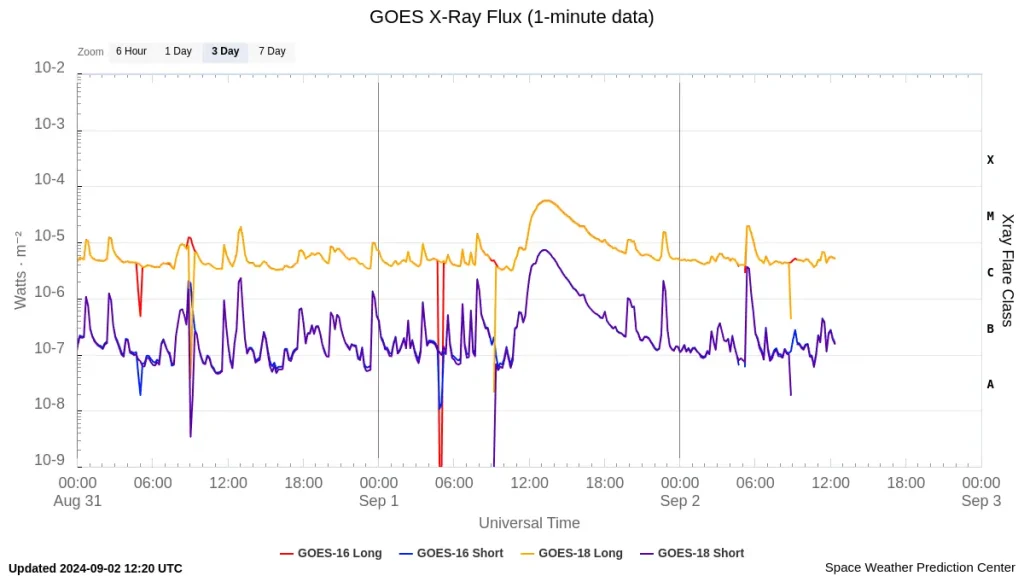
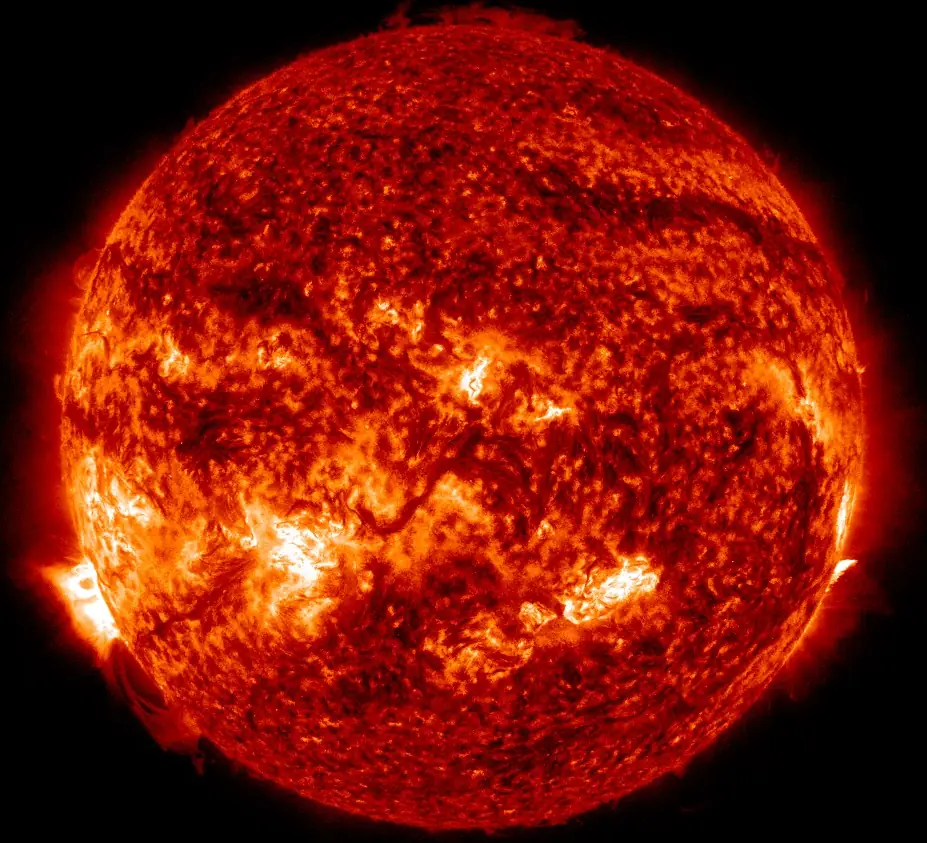
A long-duration solar flare measuring M5.5 erupted from an emerging region on the southeast limb of the Sun at 13:22 UTC on September 1, 2024. The region was numbered 3813 on September 2.
While a large coronal mass ejection (CME) was produced, the location of this region does not favor Earth-directed CMEs. The model runs show bulk of the CME is not Earth-directed, however, slight enhancements may be experienced due to shock wave effects on September 2 and 3.
This was quite possibly a much larger eruption, maybe even an X-class, but because it was on the far side of the Sun, behind the limb, instruments were unable to record the full extent of its intensity.


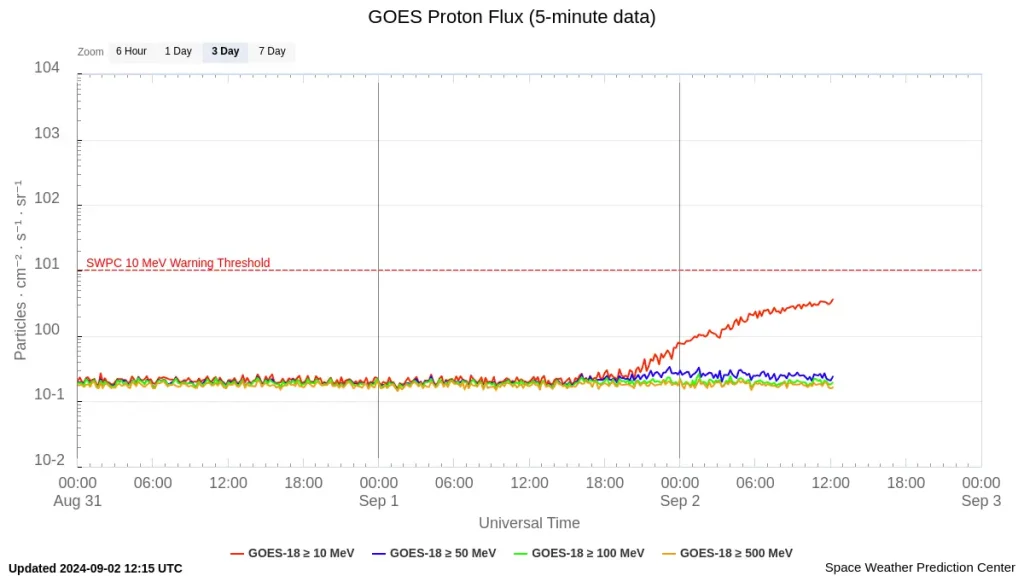
Proton flux count is steadily rising following the eruption but it’s still below the S1 – Minor solar radiation storm threshold.
Solar activity is expected to be at moderate levels over the next 3 days, with 60% of M-class and 10% of X-class flares.
The geomagnetic field is expected to be at quiet and unsettled levels on September 2, with a chance for active periods on September 3 and 4 due to CME shock arrival from the September 1 solar flare.
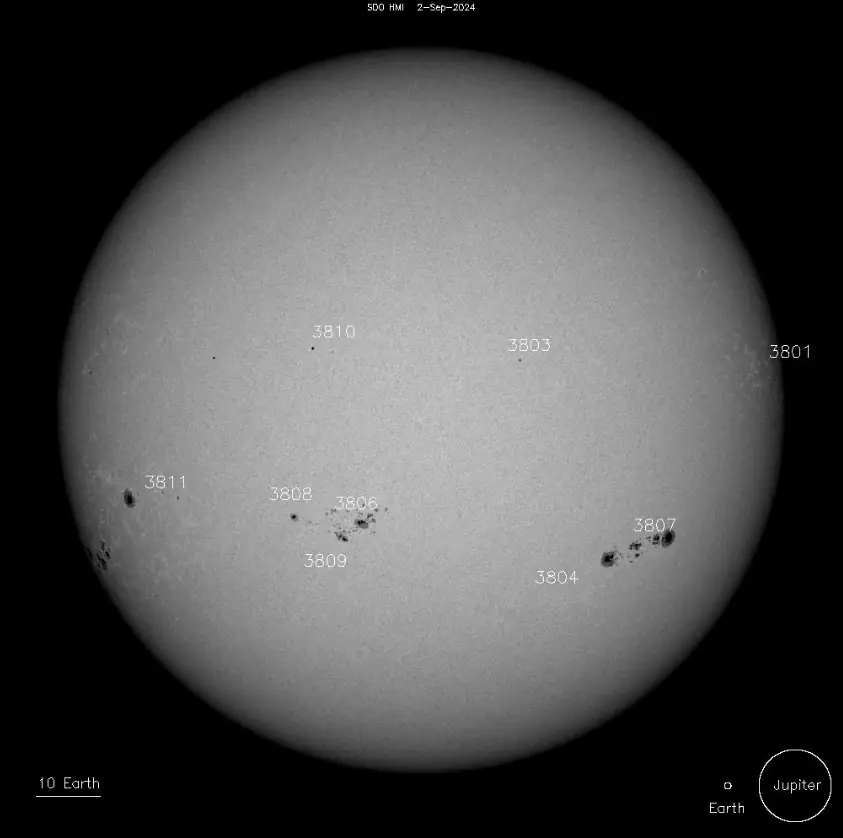
3799 – Alpha
3801 – Beta
3803 – Beta
3804 – Alpha
3806 – Beta-Gamma
3807 – Beta-Gamma
3808 – Beta
3809 – Alpha
3810 – Beta
3811 – Beta

I'm a dedicated researcher, journalist, and editor at The Watchers. With over 20 years of experience in the media industry, I specialize in hard science news, focusing on extreme weather, seismic and volcanic activity, space weather, and astronomy, including near-Earth objects and planetary defense strategies. You can reach me at teo /at/ watchers.news.

Commenting rules and guidelines
We value the thoughts and opinions of our readers and welcome healthy discussions on our website. In order to maintain a respectful and positive community, we ask that all commenters follow these rules.