
Heavy rains produced by Cyclone Yaku cause severe flooding and landslides in western Ecuador

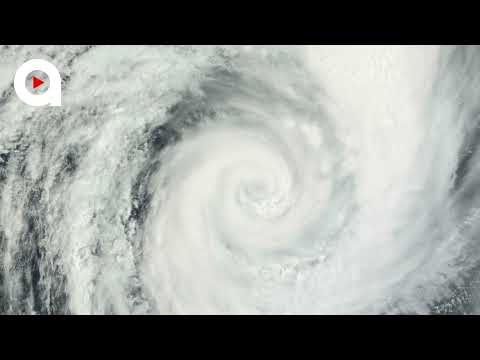
Image credit: NOAA/GOES-East, RAMMB/CIRA, The Watchers. Acquired at 12:50 UTC on March 9, 2023
Heavy rain caused by Cyclone Yaku produced severe flooding and landslides in western Ecuador, resulting in the deaths of at least 3 people. The worst affected was Chone Canton in Manabí Province. The National Meteorology and Hydrology Service of Peru (Senamhi) described Yaku as an unusual and unorganized tropical cyclone.
The Risk Management Secretariat of Ecuador (SGR) reported that three people lost their lives due to the extreme weather, with two fatalities caused by a landslide and one due to the overflow of the Mosquito River. Furthermore, approximately 2 000 people have been affected, and one house has been destroyed.
According to El Comercio, 90% of downtown Chone was flooded on March 7. In addition, damaged homes and crops were reported in nearby rural areas, forcing authorities to declare a state of emergency.
Two additional rivers, Garrapata and Chone, have broken their banks, causing further damage and danger to residents in the area.

National authorities have taken swift action to provide assistance and humanitarian aid to those affected. However, with the floods causing the evacuation of the Chone Basic Hospital, the situation remains challenging.
Despite the efforts made by the authorities, further rainfall is forecast for March 9. However, there is hope that the situation may improve by March 10, with drier conditions expected across the affected Manabí Province.

The National Meteorology and Hydrology Service of Peru (Senamhi) has reported an unusual “unorganized tropical cyclone” off the north and central coast of Peru earlier this week.
This clockwise low pressure system is also responsible for the extreme rainfall in Tumbes, Piura, and Lambayeque, as well as the anticipated intensification of rains in La Libertad, Lima, and Ancash in the coming days.
Senamhi specialists identified the formation of this system at the end of February and have been closely monitoring its progress and potential impacts.
Cyclone Yaku, as it is known, is associated with the warming of the sea surface temperature and the second band of the Intertropical Convergence Zone (ITCZ).

References:
1 Ecuador – Lanslides and floods – DG ECHO – March 9, 2023
2 Inundaciones en Chone dejan USD 4 millones en pérdidas – Primicias – March 8, 2023
3 Ciclón Yaku se presenta frente al mar peruano – Senamhi – March 7, 2023

The Watchers team and our contributors bring the latest on extreme weather, earthquakes, volcanic eruptions, space weather, and all things science. We're all about making sense of the natural world and keeping you informed on what’s happening. Got a tip or a question? Hit us up using the form at newstips!
Published in the last 24 hours
- Marine iguanas in the Galápagos got shorter by as much as 6.8 cm (2.7 inches), or a fifth of their length, when El Niño left them short of the seaweed they can digest, and the biggest ones shrank the most and lived the longest Epicenter
- Neptune's moon Triton has the coldest surface ever measured in the solar system, minus 391 degrees Fahrenheit, yet Voyager 2 caught geysers on it blasting dark plumes 5 miles high Epicenter
- An 83-year-old lodge owner named Harry R. Truman refused to leave his home on Spirit Lake below Mount St. Helens in the spring of 1980, insisting the mountain would not get him, and the May 18 eruption buried him along with his 16 cats Epicenter
- When the Sun’s stormy peak dragged NASA's 77-tonne Skylab out of orbit earlier than expected in 1979, debris rained across Western Australia and the town of Esperance fined NASA $400 for littering; a California radio host finally paid it 30 years later Epicenter
